

BepiColombo reaches Mercury after eight years: What its twin orbiters will investigate
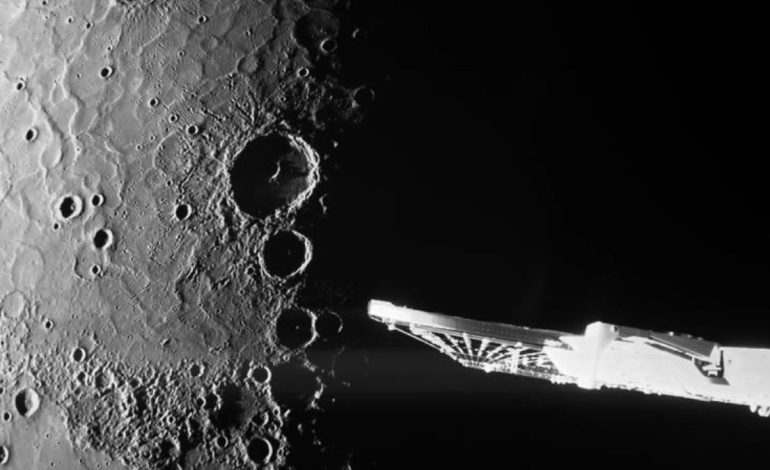
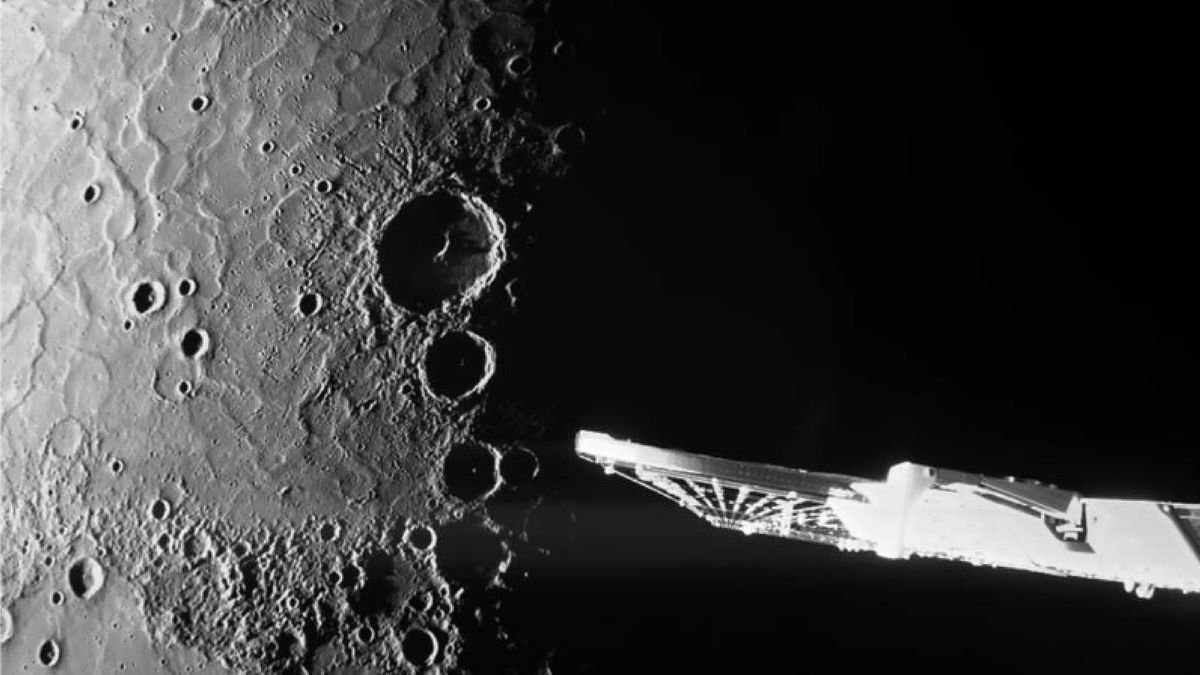
BepiColombo reaches Mercury’s orbit after an eight-year journey.(Image courtesy: ESA)

New Delhi: The European-Japanese BepiColombo mission entered orbit around Mercury on Saturday after an eight-year journey, becoming only the second spacecraft mission to orbit the planet. A software issue shortened a thruster firing during the manoeuvre, although the spacecraft was reported safe as engineers investigated the anomaly.
The thruster burn was “shorter than planned following a software issue”, the European Space Agency (ESA) said on Sunday. “The spacecraft is safe,” the agency confirmed, adding that engineers at the European space operations centre were investigating the anomaly.
BepiColombo is only the third mission to visit Mercury, following the US National Aeronautics and Space Administration’s (Nasa) Mariner 10 flybys in the 1970s and its Messenger orbiter, which operated from 2011 to 2015. The scientific objectives of the European-Japanese mission were also outlined in an RNA Media preview published on November 20.
Why reaching Mercury took eight years?
Mercury is the smallest planet and the closest to the Sun, but proximity does not make it easy to reach. A spacecraft travelling inwards must lose enough speed to be captured by Mercury’s relatively weak gravity while withstanding intense sunlight.
Launched in October 2018, BepiColombo followed a winding route involving nine gravity assists: one flyby of Earth, two of Venus and six of Mercury. Each encounter used a planet’s gravity to reshape its path, helping the spacecraft slow down after travelling nearly 10 billion kilometres.
Mercury’s surface can reach roughly 430°C, placing demanding requirements on thermal protection and scientific instruments. Sunlight at Mercury is about seven times as intense as it is at Earth.
Two orbiters, different scientific tasks
BepiColombo combines ESA’s Mercury Planetary Orbiter (MPO) with the Japan Aerospace Exploration Agency’s (JAXA) Mercury Magnetospheric Orbiter, known as Mio. The two travelled together but are designed to observe Mercury from different orbits.
MPO will map the surface, analyse its composition and investigate the planet’s gravity and interior. Mio will examine the magnetic field and magnetosphere, the region influenced by Mercury’s magnetic field where charged particles from the Sun interact with its environment.
Simultaneous measurements from different positions should help distinguish changes originating inside Mercury from those produced by the solar wind. The orbiters’ complementary instruments will also connect surface observations with conditions in the surrounding space.
What mysteries could they investigate?
Mercury possesses a magnetic field despite its small size, raising questions about its large metallic core. The orbiters will investigate how that field is generated and how it responds to solar activity.
Water ice presents another puzzle because permanently shadowed craters near the poles remain cold despite extreme heat elsewhere. Nasa’s Messenger previously found strong evidence of these deposits; BepiColombo will examine their distribution and possible origins rather than claiming a new discovery.
Scientists will also investigate impact craters, volcanic plains, extensive cliffs and shallow depressions known as hollows. These formations may reveal how Mercury’s surface evolved as the planet cooled and contracted.
What happens after the thruster glitch?
Under ESA’s published timetable, MPO and Mio are scheduled to separate on December 9-10, followed by the removal of Mio’s protective sunshield on December 16. MPO should reach its final science orbit in March, with routine scientific operations expected to begin on April 6, 2027.
The nominal science mission is planned for about one Earth year, with a possible extension. The remaining schedule is subject to operational adjustments as ESA investigates the shorter-than-planned burn, while the mission aims to improve understanding of rocky planets and their formation.