
Same goal, different approaches? How Trump and Vance are handling Iran war
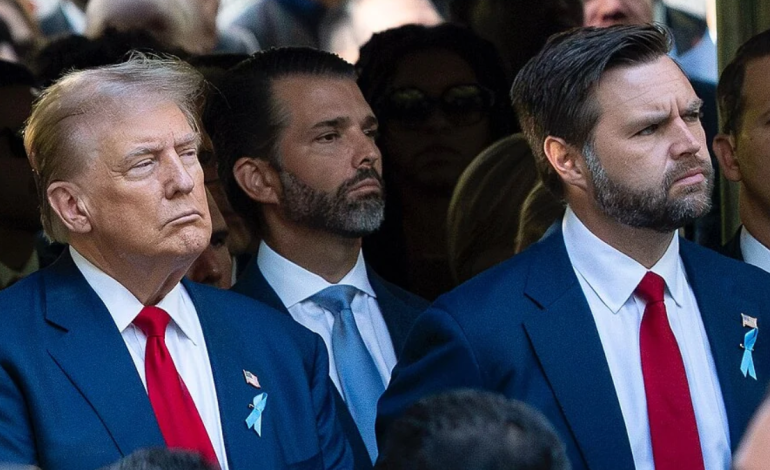
Vance seeks to avoid another long US war. (Image courtesy: Wikimedia)

New Delhi: The United States vice-president, JD Vance, has said Donald Trump, the US president, will not allow the war with Iran to become a prolonged military engagement, while defending the decision to strike the country’s nuclear programme. Trump, meanwhile, has maintained that Iran must not be allowed to acquire nuclear weapons, rejected the need for a new agreement with Tehran and warned of the threat posed by Iranian retaliation.
In an interview with Fox News on Monday, Vance said the administration would not commit American forces to a conflict lasting 10 or 15 years, or even two years. He said Trump was determined to prevent the conflict from becoming another extended American military engagement.
Vance also criticized those who wanted the United States to remain involved in the conflict indefinitely. “The people who want it to become a forever war, they can attack me all they want to, because we signed up to not do this,” he said.
At the same time, Vance defended Trump’s decision to target Iran’s nuclear programme, saying the president considered it a threat to US national security. He said he had full confidence that Trump would bring the conflict to an end with “great results”, but did not specify when American military involvement would end.
Trump rejects need for Iran deal
Trump’s public statements have centred on preventing Iran from acquiring nuclear weapons and retaining American leverage over Tehran. Unlike Vance, who has spoken at length about the limits of US military involvement, Trump has emphasized that Washington does not need a fresh diplomatic agreement to deal with Iran.
On November 12, Trump said the United States did not need a deal with Tehran, claiming Washington already had sufficient leverage through Iranian funds and control of the Strait of Hormuz. In a post on Truth Social, he wrote, “We don’t need a deal with Iran. Those days have long since passed.”
Trump also indicated that he wanted Vance to step back from Iran-related negotiations. In a Truth Social post earlier this week, Trump said he had asked the Vance to focus his “complete and total attention” on alleged corruption and crime in Democratic-run American cities and states, including Minnesota, California and Illinois.
Trump’s latest remarks have also highlighted the threat of Iranian retaliation. On Monday, when a reporter asked whether he was concerned about Iranian drones targeting him personally, Trump replied, “I’m worried about you, because if they get me, you’re gone too.”
The exchange took place amid continuing reports of Iranian drone activity against US-linked facilities in the Gulf. Bahrain’s military said it had intercepted drones before they could reach their intended targets.
As the Trump administration weighs its next steps in the conflict with Iran, US intelligence has reportedly detected possible Iranian plans for a dirty bomb or chemical attack targeting senior administration officials in Washington, RNA Media reported.
According to a CNN investigation citing seven US officials, the intelligence assessment identifies potential targets and locations but does not establish that Tehran has authorized an attack or that one is imminent. According to report, officials disagree over whether Iran has the capability to carry out such an operation. Intelligence agencies also reportedly picked up communications claiming that bomb-making materials had already been placed inside the United States, although the information remains unverified.
The reported threats have prompted several security meetings. The US treasury secretary, Scott Bessent; attorney general, Todd Blanche, and defence secretary, Pete Hegseth, along with other officials, were moved to military housing last week as a precaution. A dirty bomb uses conventional explosives to spread radioactive material, causing contamination rather than a nuclear explosion. Separately, US officials are assessing concerns that Iran could use chemical weapons against American troops in West Asia, prompting contingency planning and additional safety measures.
Iran’s mission to the United Nations rejected the chemical weapons allegations as “false and fabricated”, while White House spokeswoman, Lauren Bis, said there were no credible threats to the US homeland.
US-Iran negotiations remain stalled
The intelligence assessment comes as diplomatic efforts to end the conflict remain stalled. Iran has demanded the release of frozen assets held abroad, sanctions relief and an end to the US naval blockade of its ports in exchange for reopening the Strait of Hormuz. Tehran has indicated that it is prepared to reopen the waterway within two days if Washington accepts its seven conditions, but the US has not publicly agreed to the demands.
The USS Theodore Roosevelt began operating in the Middle East on Monday, bringing the number of US aircraft carrier strike groups in the region to three, alongside the USS George HW Bush and USS George Washington. US Central Command (Centcom) said the carrier was in its area of responsibility as part of a scheduled deployment. Its arrival comes amid the ongoing Iran war and rising tensions in the Gulf, following recent Iranian drone attacks targeting Bahrain.
Against this backdrop, Trump is expected to discuss the Iran conflict with the Chinese president, Xi Jinping, and Russian president, Vladimir Putin, during their meeting in Shenzhen on Thursday. Trump has indicated that Iran could be discussed alongside nuclear weapons reduction, although Beijing has not confirmed whether Tehran will be formally included on the agenda.