


Japan drills with long-range Type 25 anti-ship missile in first deployment beyond base
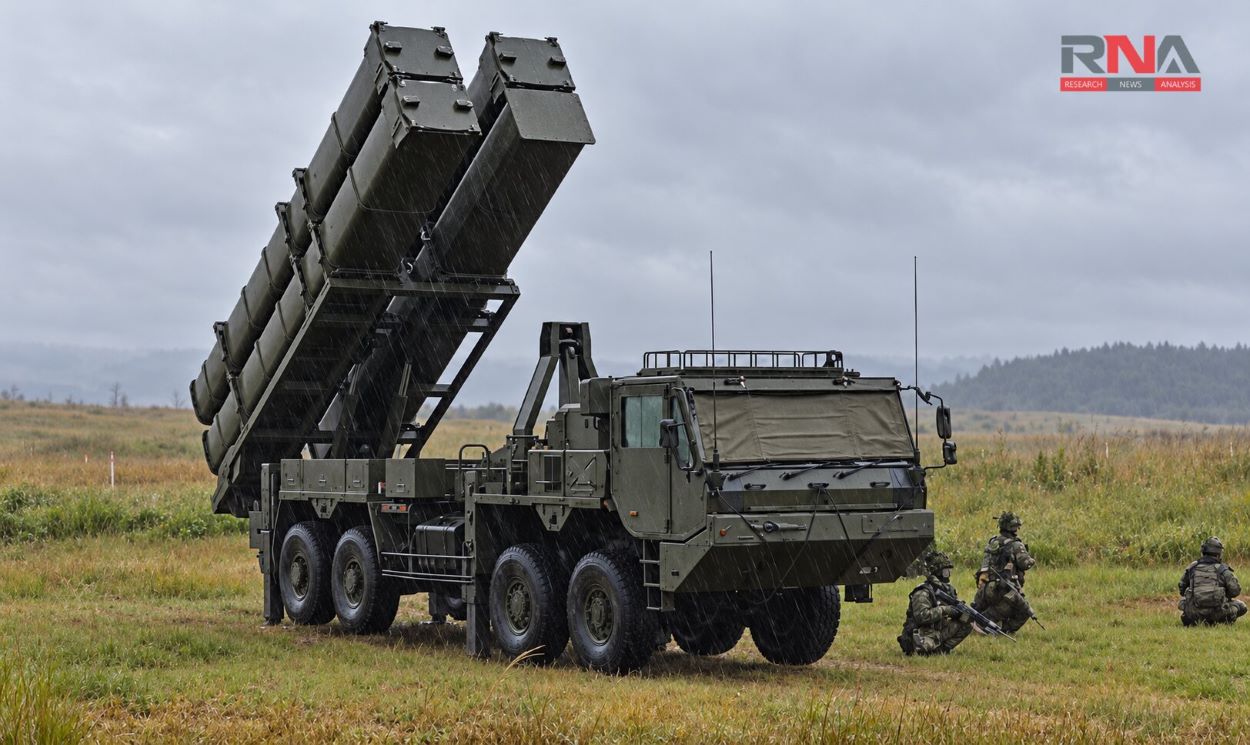
This digitally enhanced screenshot from a widely circulated video on social media shows Japanese troops doing drills with Type 25 surface-to-ship guided missiles.

New Delhi: Japan has taken its new Type 25 long-range anti-ship missile system beyond its home base for the first time, rehearsing deployment and launch procedures during the Keen Sword 27 military exercise with the United States. The drill marks a practical step in Tokyo’s effort to strengthen its ability to engage hostile ships before they approach Japanese territory.
The deployment was demonstrated to reporters on Monday at the Onohara training area, which straddles Nagasaki and Saga prefectures on Kyushu, Japan’s southwestern main island. Personnel moved a truck-mounted launcher into position and practised preparations for engaging vessels at sea, although no missile was fired.
According to the Ground Self-Defense Force’s Western Army, as reported by Defence Blog, the training included receiving targeting information from US forces and higher headquarters before rehearsing an engagement. Elements of the 4th Division and the 2nd Artillery Brigade, which oversees missile regiments in Kyushu, participated in the activity.
The launcher displayed to journalists belonged to the 5th Surface-to-Ship Missile Regiment, based at Camp Kengun in Kumamoto prefecture. Stars and Stripes reported that it moved into firing position in less than two minutes and was not carrying live missiles, citing a Japanese Joint Staff spokesman, Commander Atsushi Kubo.
The Type 25 is the ground-launched development of the upgraded Type 12 surface-to-ship missile, manufactured by Mitsubishi Heavy Industries. Its range is widely reported at approximately 1,000 kilometres, compared with about 200 kilometres for the original Type 12, although Japanese officials have declined to disclose its precise reach.
That increase substantially extends the area in which Japanese ground units could threaten hostile ships, including across parts of the East China Sea. Depending on the launch location, the reported range could also bring sections of China’s coastline and the Korean Peninsula within reach.
he Ground Self-Defense Force formally announced the weapon’s designation and deployment to Camp Kengun on March 31 this year after completing development of the upgraded ground-launched Type 12. Its official announcement described the programme as part of efforts to intercept and repel invading forces early and at a distance.
The emphasis on information supplied by other formations highlights a central operational requirement: a missile’s reach must be matched by the ability to locate targets beyond the launcher’s own horizon. In practical terms, the exercise rehearsed the connection between receiving targeting information, preparing the weapon and conducting a simulated attack.
Keen Sword 27 runs from October 19 to October 29, involving approximately 45,000 Japanese personnel and 12,000 US service members, alongside contingents from seven other countries. Australia, Canada, France, Germany, the Netherlands, New Zealand and the Philippines are participating in parts of the exercise.
Japan’s joint staff exercise outline lists coordinated anti-ship operations, integrated air and missile defence, amphibious operations and logistics among the principal training activities. It also includes cyberdefence, space awareness and electromagnetic warfare, reflecting the wider coordination required to support dispersed forces across Japan and its surrounding waters.
The missile deployment forms part of Japan’s broader shift towards standoff weapons and the counterstrike capability adopted in its 2022 security strategy. Under that policy framework, counterstrikes are subject to Japan’s conditions governing the use of force and must remain within the minimum necessary for self-defence; pre-emptive strikes remain prohibited.
The immediate task, however, is turning newly delivered equipment into an effective operational capability. At his October 20 news conference, the chief of the ground staff, General Masayoshi Arai, emphasized the importance of training units to move from their permanent bases and undertake missions wherever circumstances require.