


HAL tests LUH emergency-landing capability at maximum weight as certification continues
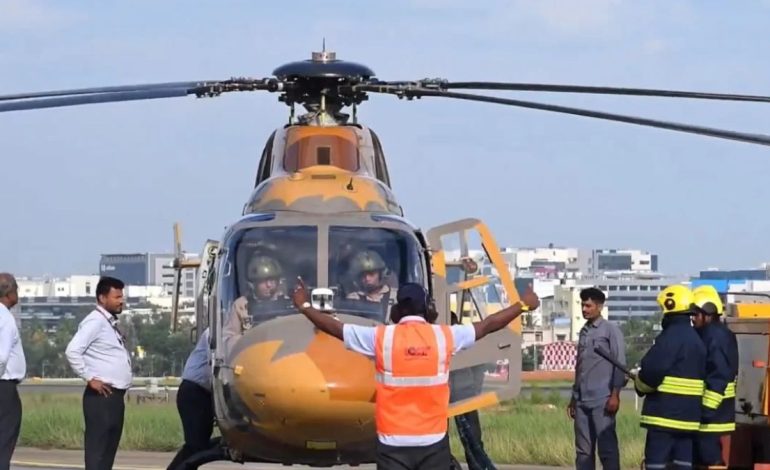
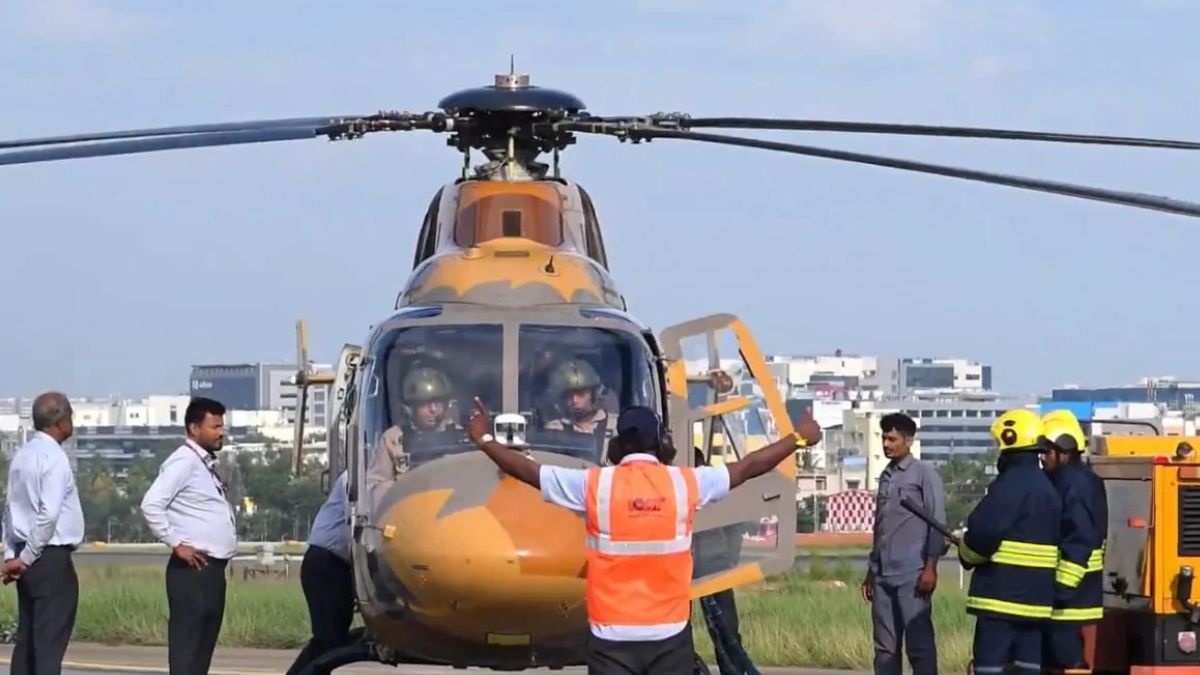
HAL’s Light Utility Helicopter undergoes testing as certification trials continue. (Image courtesy: Screen short via X/@HALHQBLR)

New Delhi: Hindustan Aeronautics Limited’s (HAL) indigenous light utility helicopter (LUH) has undergone an autorotation landing demonstration at maximum all-up weight during a new phase of safety trials. The test evaluates the single-engine aircraft’s ability to make a controlled landing after losing engine power, a key requirement before operational induction.
In posts on X on Monday, HAL described the demonstration as the first part of a test series. Autorotation allows airflow through the rotor to keep its blades turning without engine power, enabling a pilot to control the descent and attempt a landing.
Maximum all-up weight includes the aircraft, crew, fuel and payload within approved limits. Evaluating emergency recovery at this loading tests a demanding operating condition, although HAL disclosed neither numerical performance margins nor a certification outcome.
HAL said the helicopter uses a 750-kilowatt engine and characterized the probability of power loss as “close to zero”. It published no failure-rate data to substantiate that description, while autorotation itself cannot guarantee a safe landing in every emergency.
Why the trials matter
HAL’s September 2024 procurement records show it commissioned the Indian Institute of Technology, Madras to model the LUH’s autorotation characteristics. The study was intended to examine emergency recovery performance at different combinations of altitude and air speed.
The three-tonne-class helicopter, developed by HAL’s rotary wing research and design centre, is intended for reconnaissance, surveillance, logistics, troop movement and casualty evacuation. It is designed to replace ageing Cheetah and Chetak helicopters used by the Indian Army and Indian Air Force, especially in mountainous terrain.
Certification and deliveries
The Army variant received initial operational clearance from the Centre for Military Airworthiness and Certification (Cemilac) in February 2021. Final military type certification and mission-equipment integration remain pending, according to subsequent reporting. Its Ardiden 1U turboshaft engine comes from France’s Safran Helicopter Engines.
Hindustan Times reported on October 13 that trials also involve refining autorotation performance and integrating an automatic flight control system to reduce pilot workload and improve stability.
HAL aims to deliver the first 12 limited-series helicopters to the Army and Air Force in financial year 2027-28, subject to certification. Monday’s demonstration does not itself constitute final clearance or induction into service.