


Trump throws Zelenskyy under the bus? Ukraine says Starlink restrictions could cost lives
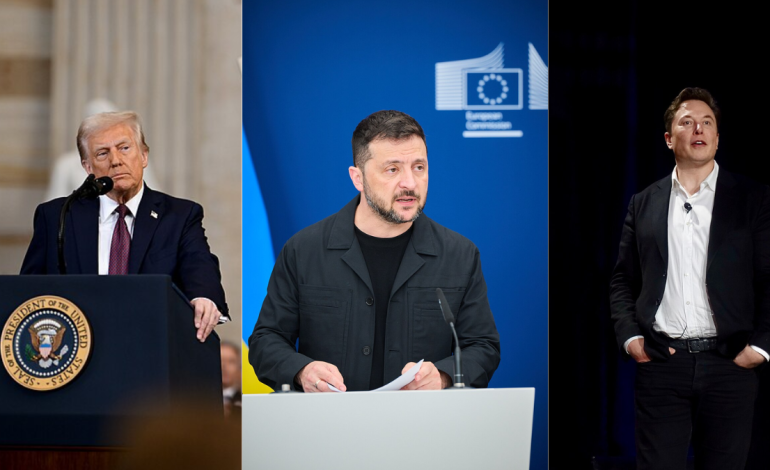
Ukraine says Starlink restrictions could cost lives. (Image courtesy: Wikimedia)

New Delhi: The Ukrainian president, Volodymyr Zelenskyy, has accused the United States of knowing the consequences of restricting Ukraine’s access to Starlink satellite communications, warning that the move could cost lives amid Russian attacks. In an interview with Piers Morgan Uncensored, Zelenskyy said he believed the decision was deliberate and admitted that he felt betrayed by the United States president, Donald Trump.
The dispute comes amid a series of decisions by Trump that have raised concerns in Kyiv, including easing restrictions on Russian diesel exports, announcing an energy ceasefire without detailed terms and criticizing Zelenskyy for failing to reach a peace deal with the Russian president, Vladimir Putin. The developments have also drawn attention to the November 3 US midterm elections, with rising fuel prices putting pressure on Trump’s administration.
Zelenskyy questions Starlink restrictions
Asked whether he believed the Starlink restrictions were deliberate, Zelenskyy said, “I am sure they knew what they did, absolutely.” He added that the service had been blocked at around 1.00am without warning, disrupting Ukrainian military missions.
Starlink, operated by Elon Musk’s SpaceX, supports Ukrainian military communications and drone operations, including interceptor drones used to defend against Russian aerial attacks. Ukrainian officials said the restrictions affected terminals travelling at speeds above 160 kilometres per hour, disrupting both attack and defensive missions.
According to reports, Musk said that Starshield, the military-related satellite system used by Ukraine, was owned and controlled by the US government. He added that restrictions on its speed or usage were decided by the US military and ultimately Trump. While this points to US government authority over Starshield, it does not independently establish that Trump personally ordered the specific restrictions.
Starlink has also featured in concerns over Russian military communications, after reports that Russian forces obtained terminals through unofficial channels. Restrictions on Russian access reportedly disrupted some of their operations, highlighting the importance of satellite connectivity to both sides in the war.
Trump’s criticism deepens rift with Zelenskyy
Asked whether he felt betrayed by Trump, Zelenskyy replied, “Really, yes,” while clarifying that the situation involved more than his personal feelings. He said Ukraine was losing a strong partner.
Recently Trump also suggested that Ukraine should have new leadership. Zelenskyy rejected the suggestion, saying the choice of president belonged to the Ukrainian people.
The US president has also pressed Kyiv to stop attacking Russian oil refineries, linking the strikes to rising fuel prices. His position marks a growing source of tension with Ukraine, which argues that Russian energy revenues help finance Moscow’s military campaign.
Russian diesel deal raises questions ahead of midterms
Trump’s administration has backed an arrangement allowing more than 300,000 metric tonnes of Russian diesel to enter international markets, with additional shipments expected. The move has attracted criticism because Western sanctions were introduced to restrict Russian revenues following its full-scale invasion of Ukraine in February 2022.
The decision comes as the administration faces pressure over fuel costs ahead of the November 3 midterm elections, when control of Congress will be contested. Trump’s focus on lowering energy prices provides a possible domestic context for his decision, although the elections alone do not establish why he changed his approach towards Moscow.
The arrangement has also raised questions about the consistency of Washington’s policy towards Russia, particularly as Ukraine continues to seek military and intelligence support from the US.
Energy ceasefire fails to stop Russian strikes
Trump announced that Russia and Ukraine had agreed to stop attacks on energy infrastructure. However, Zelenskyy said Kyiv had not been informed of the arrangement before the announcement and that Russian attacks continued afterwards.
Ukraine reported strikes on power plants and other critical infrastructure, leaving around 600,000 people without electricity. Zelenskyy said Ukraine was prepared to halt attacks on Russian energy facilities if Moscow reciprocated.
The continued bombardment has raised doubts about the ceasefire’s effectiveness. It has also added to concerns over intelligence sharing, after Ukrainian officials reported receiving no advance warning before recent Russian missile attacks. Trump has denied that Washington stopped sharing intelligence with Kyiv.
Zelenskyy seeks support from Britain
During his London visit, Zelenskyy met King Charles III and held talks with the British prime minister, Andy Burnham, seeking continued support as uncertainty over US policy grows.
Burnham reaffirmed Britain’s backing for Ukraine and pledged to accelerate the supply of air-defence missiles used against Russian drone attacks. Zelenskyy also sought discussions on Starlink access and intelligence sharing.
The latest developments have placed Ukraine’s dependence on Western military support at the centre of its diplomatic efforts. For Kyiv, the immediate challenge is to maintain its ability to defend against Russian attacks while navigating a changing relationship with Washington and pursuing a ceasefire that both sides observe.