


Pentagon probes F-35 parts diverted to Hong Kong as report says China has them
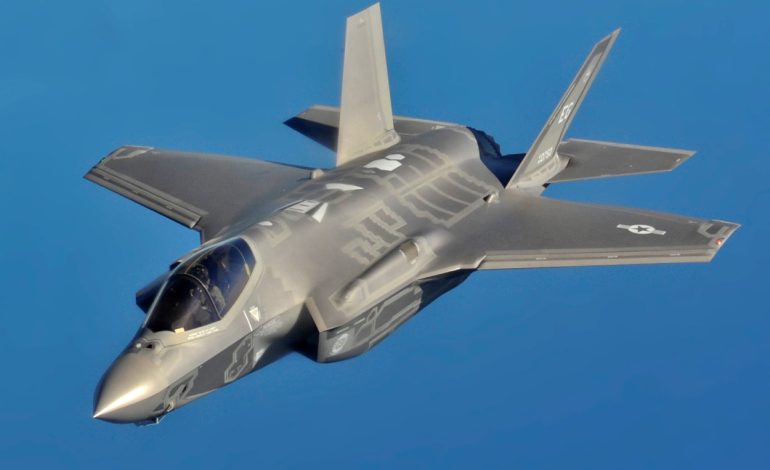
A US Air Force F-35A Lightning II Joint Strike Fighter. (Photo: US Air Force/Public Domain)

New Delhi: The Pentagon is investigating how components of an F-35 stealth fighter reached Hong Kong during shipment from Australia to the United States, following a report that Chinese authorities have taken possession of them. The incident has prompted efforts to recover the equipment and congressional scrutiny, although Australia maintains that the missing parts were not sensitive.
Bloomberg had reported that the components included a cockpit canopy and a weapons-bay door being transported for repair or disposal. The shipment was unexpectedly diverted months ago, but the circumstances behind its arrival in Hong Kong remain unclear.
The F-35 Joint Program Office acknowledged a shipment problem and said it was working with US authorities and industry partners to recover the components, investigate what happened and prevent a recurrence. Its public statement did not establish whether Chinese specialists had examined the equipment or obtained protected technical information from it.
China’s foreign ministry said it was unaware of the incident, while the Hong Kong government declined to comment on individual cases. Lockheed Martin, the aircraft’s manufacturer and prime contractor, did not immediately respond to the Associated Press’s request for comment on Wednesday.
Australia plays down sensitivity
The Australian defence minister, Richard Marles, confirmed on Tuesday that Canberra was assisting the United States and Lockheed Martin. Speaking in Adelaide, he said Australia was examining events at its end of the supply chain but remained confident about its engagement with the programme.
“My understanding is that there is a sense of comfort, and we’re not talking about sensitive equipment here or sensitive parts,” Marles said. Asked again about the components’ sensitivity, he reiterated that this was his understanding while directing detailed questions to the United States and Lockheed Martin.
His qualified assessment leaves an important question unresolved: precisely what information, if any, could be extracted from the missing equipment. Marles identified Lockheed Martin as the contractor responsible for managing the global supply chain and said Washington and the company would lead the response.
Politico first reported the diversion on September 18, describing components transported by an intermediary acting for Lockheed Martin. According to Anadolu’s account of that reporting, State Department and Pentagon officials began briefing congressional national security staff in June, indicating that the matter had been under examination well before it became public.
Why the components matter
The concern surrounding the canopy reflects its role beyond simply covering the cockpit and providing the pilot with visibility. PPG, which supplies F-35 cockpit transparencies, says its products are designed to meet stealth requirements as well as standards for optical clarity and durability.
The weapons-bay door belongs to another part of the aircraft’s low-observable design: carrying weapons inside the fuselage helps reduce its radar signature. Lockheed Martin explains that the F-35’s stealth depends on several features working together, including its shape and the internal placement of weapons, fuel and sensors.
Physical access could therefore be useful even to an adversary already holding design information, according to the former US House Armed Services Committee staff member, J.J. Gertler, quoted in the reporting. He argued that an actual component could help verify or refine knowledge previously obtained through other means.
That possibility does not establish that the missing parts have compromised the aircraft’s overall stealth performance. The available public statements leave both the extent of any examination and its potential operational consequences unresolved.
A supply chain already under scrutiny
The incident also draws attention to longstanding weaknesses in accounting for F-35 spare parts across an international support network. A May 2023 report by the US Government Accountability Office (GAO) explained that participating countries draw on a common pool of US government-owned spares managed by prime contractors, with equipment held at more than 50 domestic and overseas facilities.
The watchdog found that one prime contractor had recorded losses involving more than one million parts, valued at over $85 million, since May 2018, with fewer than 2 per cent reviewed by the programme office. Crucially, its definition of losses included equipment that was lost, damaged or destroyed – the figures did not mean that a million components had been stolen or reached foreign governments.
Those findings do not explain the Hong Kong diversion, but they provide relevant context for questions about tracking, contractor responsibility and disposal procedures. The immediate task is to recover the equipment and establish how it was diverted; determining whether the episode also exposed protected technology will require evidence beyond its arrival in Hong Kong.