

Russian strikes push Ukraine towards a harsher winter as attacks target economy and infrastructure
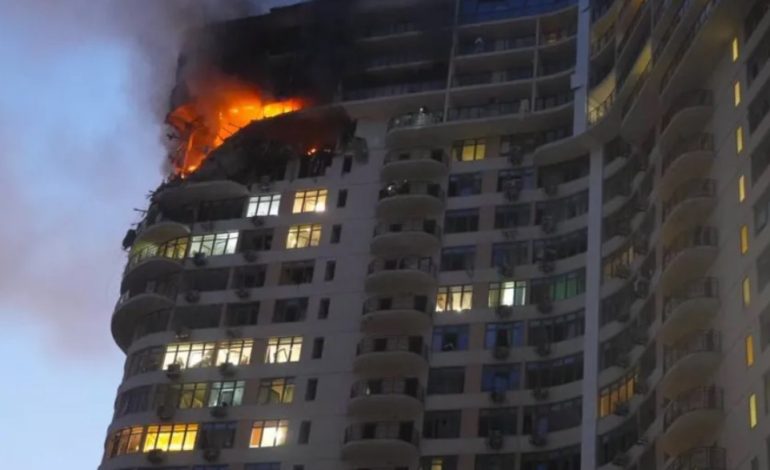
This photo released by Ukrainian state emergency service shows an apartment building in Odesa burning after a Russian missile strike.

New Delhi: Russia has intensified its aerial campaign against Ukraine, killing 11 peopl and injuring 96 others in attacks across several regions as Kyiv prepares for another difficult winter. The latest strikes point to an increasingly broad Russian strategy in which pressure on civilian infrastructure, energy networks, transport and export routes is becoming as important as operations on the battlefield.
Ukrainian officials said Russian drones and missiles struck residential areas and infrastructure in places including Kramatorsk, Zviahel, Zaporizhzhia, Kryvyi Rih and the Odesa region on Saturday. In Kramatorsk, three people were killed in separate attacks on civilian vehicles, while a strike on a grocery store in Zviahel killed two people, according to local authorities.
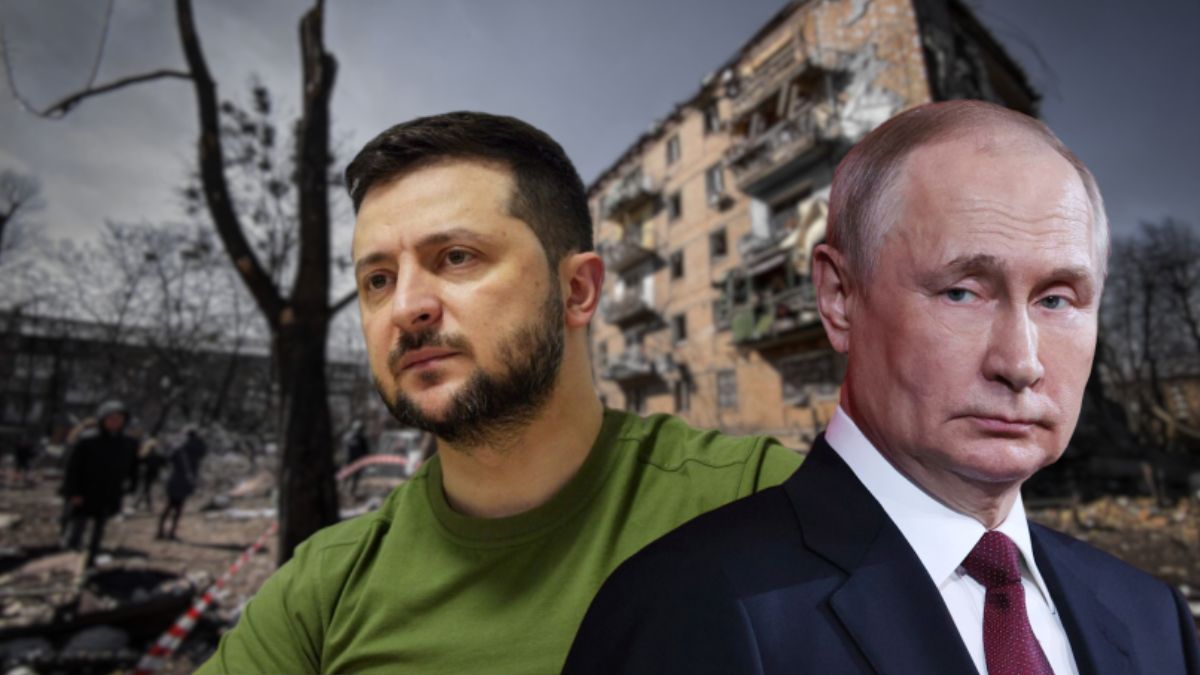
The scale of the latest aerial offensive was underscored by the Ukrainian president, Volodymyr Zelenskyy, who said Russia had launched nearly 500 drones against Ukrainian targets from early Saturday. Ukrainian officials have increasingly argued that Moscow is trying to erode the country’s economic capacity and public resilience rather than relying exclusively on attempts to gain territory.
Odesa suffered particularly heavy attacks, with 37 people, including an infant, reported injured in a series of overnight strikes in the region. Russian attacks have also increasingly focused on Ukraine’s southern infrastructure, where ports remain vital to the country’s ability to export agricultural products, iron and steel.
The economic consequences are becoming harder for Kyiv to absorb. Ukraine’s economy minister, Oleksandr Kravchenko, said damage to infrastructure and fixed assets caused by Russian airstrikes had approached $10 billion during this year, while disruption to economic activity and the effective obstruction of maritime exports had reduced gross domestic product by about 1.5 percentage points.
That pressure comes at a particularly difficult moment for Ukraine’s finances. Reuters reported that defence spending had reached about $42 billion, exceeding the roughly $39 billion generated through domestic revenue and borrowing, while the cost of the war has risen to about $190 million a day.
The timing of the attacks is also significant because Ukraine is entering the period when damage to energy infrastructure can have an immediate impact on civilian life. Repeated strikes on power generation, fuel distribution and other critical facilities threaten not only electricity supplies but also heating, water services, transport and industrial production when temperatures fall.
Ukraine has already experienced several winters in which Russian missile and drone attacks were used to put its power system under sustained pressure. The difference now is that the cumulative damage is being compounded by attacks on ports and other economic arteries, leaving Kyiv with fewer resources with which to repair infrastructure and finance the war effort.
The pattern reflects a broader change in the character of the conflict. With the front line showing limited movement, Russia and Ukraine have increasingly sought to damage the logistical and economic foundations that sustain the other’s military capacity.
Russia has also been employing newer, faster jet-powered drones in its attacks on Kyiv, adding another challenge for Ukrainian air defences. The Financial Times has reported that Moscow’s deployment of newer Geran-series systems reflects a wider effort to increase the speed, range and resilience of its unmanned attacks while maintaining the ability to launch them in large numbers.
For Ukraine, the problem is therefore no longer simply how to intercept individual missiles or drones. It is how to protect a dispersed national infrastructure against repeated attacks while simultaneously replacing damaged equipment, maintaining essential services, supporting the armed forces and keeping the economy functioning.
The attacks also come as diplomatic activity has shown tentative signs of returning. Kyiv is preparing for possible trilateral discussions with Russia and the United States in October, while Zelenskyy has said he would be prepared to meet the Russian president, Vladimir Putin, at the G20 summit in Miami in December.
Moscow, however, immediately rejected the proposed Miami meeting, with Kremlin spokesperson Dmitry Peskov saying that any direct encounter would have to take place in Russia. The disagreement illustrates the gap between renewed diplomatic contacts and the positions of the two sides on the conditions for negotiations.
The conflict is also producing effects beyond Ukraine’s borders. Moldova temporarily closed its airspace after a drone was detected near its border with Ukraine, while the continuing use of long-range drones has increased concerns in neighbouring European states about accidental incursions and the wider risks created by the expanding air war.
For Kyiv, the immediate challenge is to enter winter with enough energy capacity, air-defence protection and financial resources to withstand another sustained Russian campaign. The significance of Moscow’s latest attacks lies not only in the casualties they have caused, but in their attempt to make the cost of sustaining Ukraine’s resistance progressively higher.
With the ground war producing few decisive territorial changes, the struggle is increasingly becoming a contest of endurance. Russia appears to be betting that sustained pressure on Ukraine’s economy and civilian infrastructure can weaken its capacity to continue the war, while Kyiv is relying on air defences, western financial support and continued access to export markets to prevent that strategy from succeeding.