



Iran strike on US warplanes in Jordan exposes deeper cost of a war becoming a contest of endurance
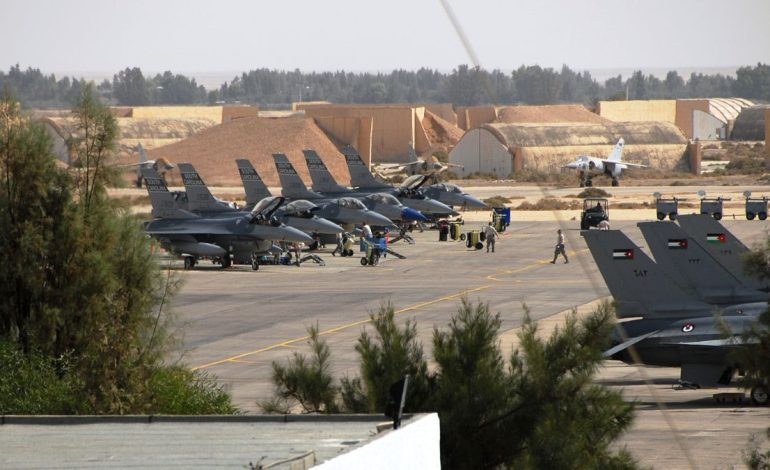
Muwaffaq Salti Air Base. Image courtesy: Wikimedia Commons

New Delhi: Iran struck Muwaffaq Salti Air Base in Jordan overnight from Tuesday into Wednesday damaging an A-10 Thunderbolt II and about eight F-15 fighters as Tehran sought to demonstrate that it can still reach key US forward operating hubs despite more than six months of American attacks on its military infrastructure. The strike, part of Iran’s wider campaign against US assets across the West Asia, has renewed scrutiny of the operational and economic costs Washington is absorbing as the conflict drags on.
The attack underlines the extent to which Tehran can continue imposing military and economic costs on the United States despite the destruction inflicted on Iran’s conventional forces. Degrading an adversary’s military capacity is not the same as removing its ability to retaliate.
An A-10 Thunderbolt II was badly damaged in the overnight attack, reportedly losing a wing, while about eight F-15 fighters sustained lighter damage and were returned to service, CBS reporter Jennifer Jacobs said, according to Reuters. Muwaffaq Salti has become one of Washington’s key operating hubs in the campaign against Iran, giving the strike significance beyond the immediate aircraft damage.
That makes the attack part of a wider Iranian effort to complicate America’s forward-basing model across the West Asia. The US operates from a network of facilities in Jordan and the Gulf, giving it reach and persistence, but also creating fixed targets that must be protected against ballistic missiles and drones.
Mounting cost of a prolonged campaign
The cumulative cost is becoming harder to dismiss. Reuters reported in early September that 18 US service members had been killed and more than 750 wounded since the conflict began on February 28. A May Congressional Research Service assessment tallied 42 US military aircraft lost or damaged during Operation Epic Fury, including losses from hostile action, friendly fire, accidents and other operational incidents. A KC-135 tanker crashed in western Iraq in March while supporting operations against Iran, killing all six crew members.
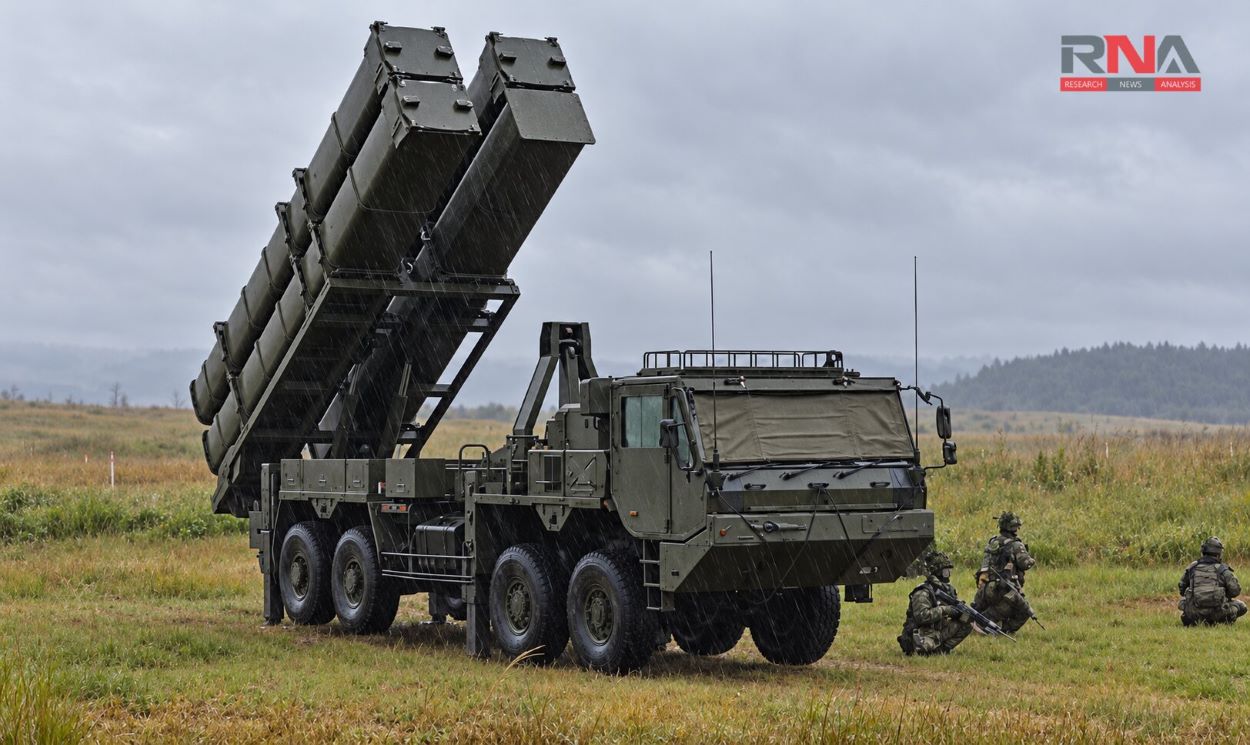
The war is also creating a broader readiness problem. As RNA Media had reported earlier, the US military has consumed large quantities of precision munitions, including virtually all of its available Atacms and PrSM stocks, while fighters, air-defence systems and warships have been shifted into the region from Europe and the Indo-Pacific.
Longer deployments, depleted interceptor inventories and the need to replenish stocks can affect US force availability elsewhere.
Washington argues that Iran has paid a far greater military price. US Central Command says Operation Epic Fury damaged or destroyed more than 85 per cent of Iran’s ballistic-missile, drone and naval defence-industrial base, knocked out 82 per cent of its air-defence missile systems and destroyed 161 vessels.
The Jordan strike nevertheless shows that Iran retains enough residual capability to threaten American forces and infrastructure across the region.
Tehran and Washington trade messages of endurance
Iran’s Islamic Revolutionary Guard Corps has warned that further American attacks will bring a sharper response, while Tehran has threatened an expanded restricted navigation zone around the Strait of Hormuz.
Washington’s message is equally explicit. After Iranian missiles targeted US warships, American forces struck Iranian crude carriers, while the US secretary of state, Marco Rubio, warned that repeated attempts to hit American ships would cost Iran more tankers.
The rhetoric reflects the increasingly attritional character of the conflict. The United States president, Donald Trump, speaking last week, described the war as “small potatoes” and argued that Iran could not hold out indefinitely.
Tehran, by continuing to strike bases and shipping, is trying to demonstrate the opposite: that severe military losses have not translated into political capitulation.
RNA Media earlier reported that the renewed confrontation had spread across the Gulf, with tankers and warships coming under attack and Tehran claiming the capture of an advanced American autonomous underwater drone near the Strait of Hormuz. The Jordan strike now brings the vulnerability of land-based US air power into the same escalation cycle.
Hormuz turns battlefield pressure into global economic cost
Hormuz remains the economic lever in that strategy. Before the latest disruption, roughly a fifth of global oil supplies moved through the strait. Reuters reported that flows fell below two million barrels per day after running at about eight million to nine million barrels per day before fighting resumed.
Brent crude has consequently moved above $100 a barrel, while higher diesel, aviation and freight costs are turning a regional military confrontation into a wider inflation and trade problem. The disruption is also forcing energy traders and shipping companies to adapt to fewer transits, higher insurance costs and more expensive alternative routes.
The Jordan strike is therefore less important for the number of aircraft damaged than for what it reveals about the direction of the conflict.
The US retains overwhelming conventional superiority and has inflicted far greater destruction on Iran. Tehran, however, is showing that residual missile capacity, pressure on Hormuz and the ability to threaten forward bases can still impose military, economic and political costs.
After more than six months of war, neither side appears close to a decisive battlefield breakthrough. The contest is increasingly about convincing the other that continuing the conflict will become more expensive than changing course.



1 Comment
[…] International September 10, 2026 […]