
UN expert warns Gaza rubble clearance could destroy evidence of Israeli war crimes
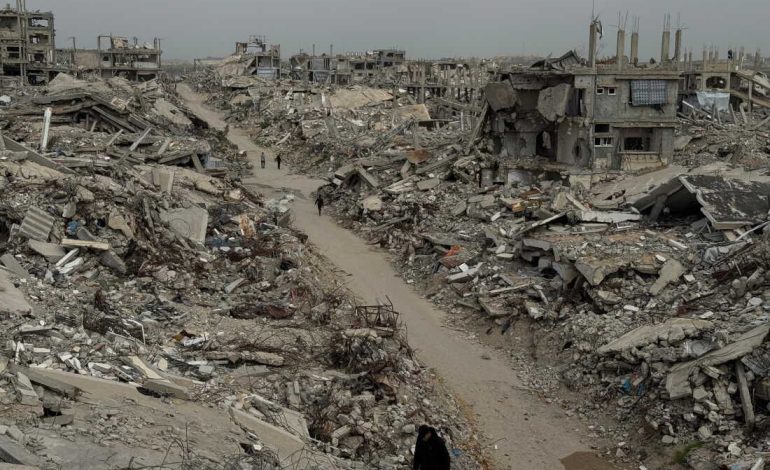
It is widely believed that several thousand bodies of Palestinians lay trapped under the rubble of buildings destroyed by Israeli bombing in almost every part of the Gaza strip. (Photo: X/@MarioNawfal)

New Delhi: The United Nations special rapporteur on the occupied Palestinian territories, Francesca Albanese, has warned that Israel’s large-scale removal of rubble from Gaza could destroy evidence of possible atrocity crimes and impede the recovery of thousands of bodies. She said reconstruction must not erase material that could prove crucial to investigations into alleged war crimes, crimes against humanity or genocide.
Albanese called for debris-removal operations to begin only after potential evidence had been systematically documented and human remains identified. Any clearance programme should be designed and led by Palestinians, with appropriate international assistance and forensic safeguards, she said in a statement issued through the UN human rights office.
The rapporteur said Gaza’s ruins could not be regarded merely as construction waste because they also represented possible crime scenes, burial sites and a physical record of Israel’s military campaign. States and companies knowingly involved in destroying evidence of international crimes could potentially incur criminal responsibility, she warned.
The UN estimates that the conflict has generated approximately 61 million tonnes of rubble and debris, which could take about seven years to clear. The wreckage contains unexploded ordnance, hazardous materials and human remains, making its removal both a humanitarian necessity and a highly sensitive forensic undertaking, according to Reuters.
Palestinian authorities estimate that more than 8,000 people remain buried beneath destroyed buildings, although the number cannot be independently verified under present conditions. A Palestinian recovery team searching wreckage in Gaza City in August reportedly found the remains of 112 members of one clan, highlighting the scale of the challenge.
Albanese’s intervention followed reports that heavy machinery had been used to crush, mix and transport debris from areas under Israeli military control, including cemeteries and locations where bodies were believed to be buried. Gaza’s civil defence service has said that adequate machinery and forensic equipment could substantially accelerate the recovery of remains, but restrictions on their entry have hampered operations.
The international court of justice, acting in the genocide case brought by South Africa, ordered Israel in 2024 to take effective measures to prevent the destruction of evidence connected with allegations under the Genocide Convention. The provisional measures did not amount to a final finding that genocide had occurred, and the case remains before the court.
Israel’s foreign ministry, the prime minister’s office and the military did not immediately respond to requests for comment on Albanese’s statement. Israel has repeatedly rejected allegations of genocide and deliberate attacks on civilians, saying its military campaign targeted Hamas and that the Palestinian group operated from densely populated civilian areas – an assertion Hamas denies.
The conflict began after the Hamas-led raids on Israel on October 7, 2023, which killed about 1,200 people and resulted in 251 people being taken hostage, according to Israeli figures. Gaza health authorities say more than 73,000 Palestinians were killed during the subsequent Israeli military campaign, although their count is widely believed to be substantially less than the real figure.
Albanese is an independent expert appointed by the UN Human Rights Council and does not speak for the UN as an institution. Israel, the United States and some European governments have strongly criticized some of her previous statements, while Palestinian groups, international rights organizations and an overwhelming majority of UN member states have supported many of her calls for accountability.