India and Belgium issue joint statement, aim to double trade in five years, boost defence and tech ties
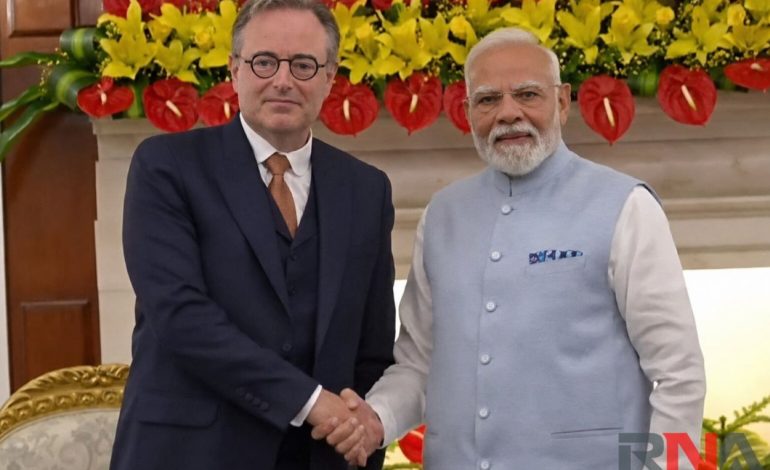
Video screenshot of PM Narendra Modi (R) shaking hands with his Belgian counterpart Bert De Wever during their talks at Hyderabad House, on September 3, 2026.

New Delhi: India and Belgium have set a target of doubling bilateral trade over the next five years while expanding cooperation in defence manufacturing, counterterrorism, semiconductors, critical minerals and clean energy. The decisions followed talks between the prime minister, Narendra Modi, and the Belgian prime minister, Bart De Wever, in New Delhi on Thursday.
The wide-ranging joint statement issued on Thursday reflected an effort to move the relationship beyond its traditional dependence on diamonds and commercial exchanges. The two governments outlined plans to institutionalize political, economic and security engagement and develop partnerships in strategically important technologies.
De Wever is visiting India from Wednesday to Friday (September 2−4), accompanied by Belgium’s minister of defence and foreign trade, Theo Francken, and a delegation of officials and business leaders. It is his first visit to India since taking office in February 2025 and the first by a Belgian prime minister in nearly two decades.
The leaders welcomed the establishment of an India-Belgium Investment Fast-Track Mechanism, which is intended to help companies resolve regulatory difficulties and facilitate investments in both countries. Modi also announced that the India-Belgium Business Forum would become a regular mechanism and said financial, fintech and regulatory institutions would work more closely together.
The two sides proposed developing an Indo-Belgian economic and investment corridor through cooperation between Belgium’s sovereign wealth fund, SFPIM, and India’s National Investment and Infrastructure Fund. They also agreed to explore collaboration between the Belgian Investment Company for Developing Countries and the Indian fund in sectors of mutual interest.
The trade target comes after India and the European Union concluded negotiations on their Free Trade Agreement at the India-EU Summit in New Delhi on January 27 this year. Modi and De Wever called for its timely implementation and urged negotiators to conclude separate India-EU agreements on investment protection and geographical indications.
Diamonds remain central to India-Belgium commerce, linking Antwerp with the processing and trading centres of Mumbai and Surat. The two governments, however, identified pharmaceuticals, biotechnology, chemicals, advanced manufacturing, semiconductors, defence, critical minerals, renewable energy, ports and logistics as sectors capable of broadening the economic relationship.
Defence emerged as a major component of the talks, with the two defence ministries signing a letter of intent to establish regular exchanges, staff talks, training, research cooperation and defence-industrial partnerships. The leaders also encouraged companies to pursue co-development, co-production and technology partnerships, building on agreements concluded between Indian and Belgian defence firms.
Belgian industrial participation is already visible in India’s Zorawar light tank programme, whose turret and 105mm gun are based on technology from Belgium-headquartered John Cockerill Defense. Modi cited the tank as an example of the two countries’ growing cooperation in advanced defence equipment.
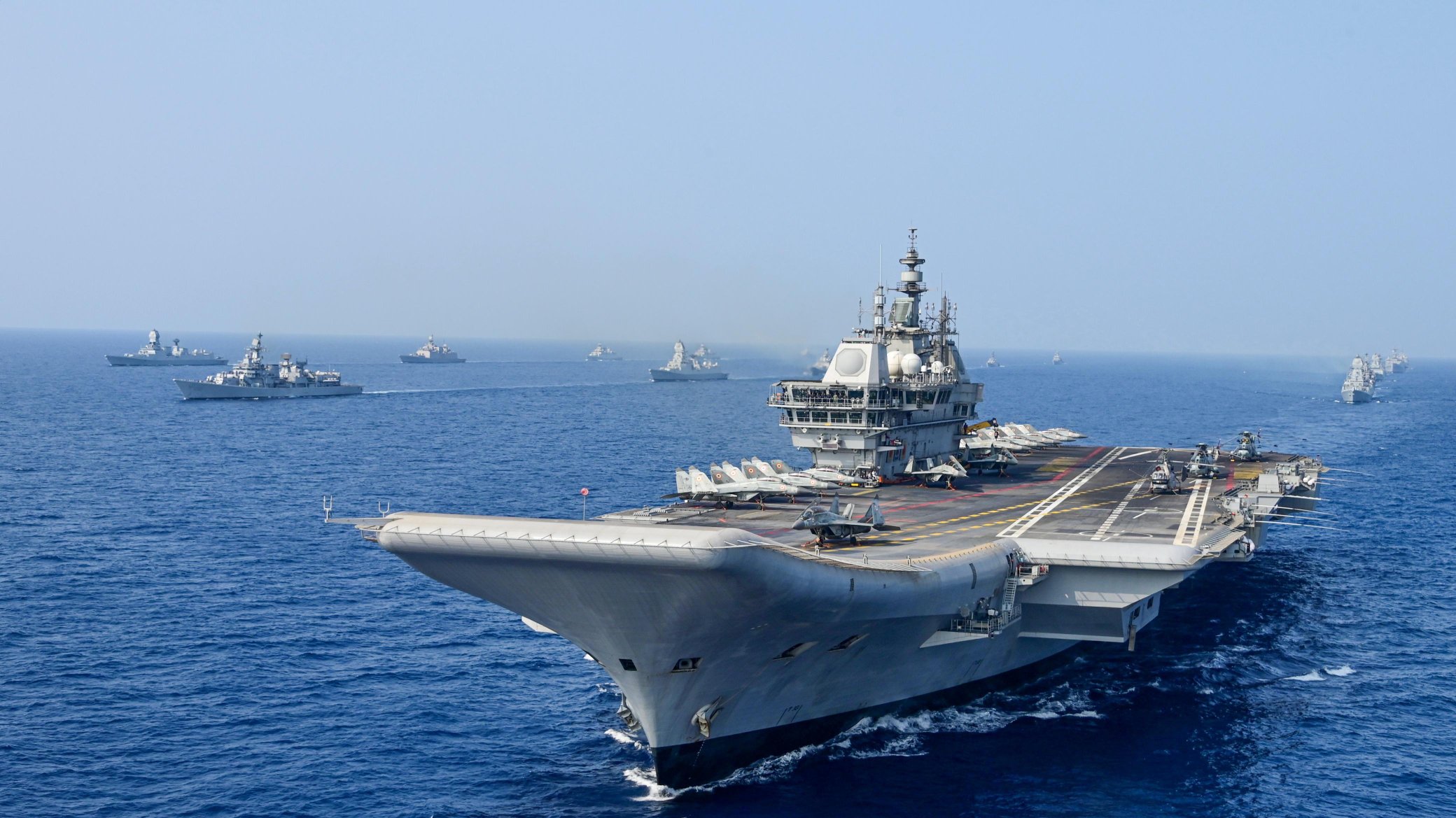
The two governments will also expand military education and maritime-security exchanges, including cooperation in emerging technologies and the Indo-Pacific. Belgium plans to send the frigate Leopold I to India from November 5 to November 8, while defence-management institutions from the two countries will undertake reciprocal study visits.
Belgium has appointed a resident defence attaché in New Delhi, and India plans to post one at its embassy in Brussels. In separate talks on Thursday, India’s defence minister, Rajnath Singh, and Francken agreed to expand cooperation through high-level visits, training, capacity building and a structured defence dialogue.
Counterterrorism featured prominently in the discussions, with De Wever expressing Belgium’s solidarity with India against terrorism, including cross-border terrorism. He reiterated Belgium’s condemnation of the April 2025 Pahalgam attack, while both leaders called for action against terrorist networks, safe havens, financing channels and entities sanctioned under the United Nations security council’s 1267 resolution.
The two governments will examine the creation of a joint working group on counterterrorism to address evolving threats. The CBI and Belgium’s federal police also signed an agreement covering transnational organized crime and cybercrime, including information-sharing, capacity building, the exchange of best practices and cooperation in tracing fugitives.
In clean energy, the countries renewed their 2015 cooperation framework and expanded its scope to cover green hydrogen, solar power, energy storage, offshore wind, bioenergy, small hydropower and pumped-storage projects. Modi also highlighted bilateral participation in a large green-ammonia project being developed at Kakinada in Andhra Pradesh.
Critical-mineral processing and recycling were identified as another area for collaboration as both countries seek more dependable industrial supply chains. The leaders also backed deeper links between Belgium’s imec research centre and India’s semiconductor ecosystem, including Indian chip companies, universities, the ChipIn Centre and C-DAC.
Maritime cooperation will extend to port development, dredging, logistics, connectivity and offshore-wind infrastructure. The Antwerp/Flanders Port Training Centre and the Jawaharlal Nehru Port Authority are expected to explore training and capacity-building programmes for India’s port and maritime personnel.
The two sides agreed that visa-processing capacity should be increased as business, academic and professional exchanges expand. They encouraged airlines to examine the feasibility of direct India-Belgium flights and called for continued negotiations on a mobility and migration agreement covering professionals, students, researchers and skilled workers.
Modi invited leading Belgian universities and academic institutions to establish campuses in India under the National Education Policy. The two countries also plan to strengthen cooperation in vocational education, apprenticeships, qualification recognition, startup incubation, astronomy, astrophysics and space technology.
In another major diplomatic endorsement, Belgium reiterated its support for India’s permanent membership of a reformed and expanded UNSC. The two countries also agreed to support each other’s candidatures for non-permanent membership – India for the 2028–29 term and Belgium for 2037–38.
On international issues, the leaders backed efforts to secure a comprehensive, just and lasting peace in Ukraine through dialogue and diplomacy in accordance with the UN Charter and international law. They also discussed instability in West Asia and emphasized the need to protect maritime routes and maintain safe and unimpeded commercial shipping.
The two prime ministers recalled the sacrifice of more than 9,000 Indian soldiers in Belgium’s Flanders Fields during World War I and noted that Belgium was among the first European countries to establish diplomatic relations with independent India. The countries will mark the 80th anniversary of diplomatic relations in 2027, with De Wever inviting Modi to visit Belgium at a mutually convenient time.