
Myanmar terror-training case: Delhi high court rejects Ukrainian nationals’ plea against extended NIA probe
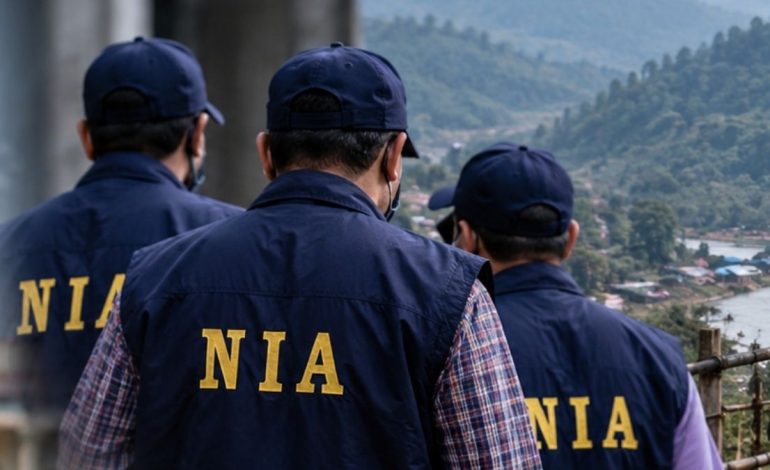
Image courtesy: AI generated picture vi DALL-E

New Delhi: The Delhi high court on Monday dismissed a petition filed by six Ukrainian nationals challenging the extension of the National Investigation Agency’s probe from 90 days to 180 days in the alleged Myanmar terror-training case. Justice Madhu Jain rejected the plea against the trial court order that had allowed the NIA additional time to complete its investigation.
The detailed reasons for Monday’s decision had not been made public when ANI reported the ruling. The dismissal means the June 4 order extending the investigation period remains in force. The six Ukrainian nationals remain in judicial custody. The case also involves US national Mathew Aaron Van Dyke, who was arrested as part of the same investigation.
Ukrainians challenged 180-day investigation period
The NIA had moved the special NIA court at Patiala House courts on June 3 seeking an extension of the investigation period under Section 43D(2)(b) of the Unlawful Activities (Prevention) Act (UAPA). The special NIA court on June 4 extended the investigation period, and consequently the detention of the accused, beyond 90 days and up to 180 days. The initial 90-day period would have expired on June 10.
The Ukrainian nationals challenged that order, arguing that extending the period before the completion of 90 days affected their statutory entitlement to seek default bail. During the proceedings, their counsel argued that the right to default bail was linked to the right to life and personal liberty under Article 21 of the Constitution and questioned the trial court’s decision to grant another 90 days at one stretch.
The NIA opposed the plea, saying the special court had considered the report submitted by the special public prosecutor and applied its mind before allowing additional time. The agency also told the high court that the investigation was continuing and that its application had avoided disclosing sensitive details about the progress of the probe.
Earlier appeal was held not maintainable
Monday’s ruling follows an earlier Delhi high court decision on August 4 concerning the route through which the extension order could be challenged.
A division bench comprising Justice Prathiba M Singh and Justice Vikas Mahajan held that an order extending the UAPA investigation period from 90 days to 180 days was an interlocutory order and could not be appealed under section 21 of the NIA Act.
The bench said such an extension did not finally reject an accused person’s right to default bail but postponed its availability while the extended investigation period remained in force. At the same time, the high court held that the extension order could still be subjected to judicial review and directed that the challenge be placed before the appropriate roster bench for consideration under the court’s inherent jurisdiction.
Justice Madhu Jain subsequently heard the challenge. ANI reported on August 24 that the court had reserved its order after hearing the NIA and the petitioners and fixed Monday for pronouncement. The dismissal brings that challenge to an end, subject to any further legal remedy the petitioners may pursue.
Seven foreign nationals arrested in March
The case stems from an NIA FIR registered on March 13, under section 18 of the UAPA. According to the Delhi high court’s August 4 judgment, the six Ukrainian nationals were arrested the same day at airports in Delhi and Lucknow. Van Dyke was also arrested on March 13 in connection with the same case.
The Ukrainian nationals are Hurba Petro, Slyviak Taras, Ivan Sukmanovskyi, Stefankiv Marian, Honcharuk Maksim and Kaminskyi Viktor. The seven were initially placed in NIA custody before being remanded to judicial custody.
What NIA has alleged
The NIA has alleged that the Ukrainian nationals entered India on tourist visas, travelled to Mizoram and subsequently crossed into Myanmar without the required permissions. According to the agency, the Ukrainians crossed into Myanmar for pre-scheduled training involving Myanmar-based ethnic armed groups.
The NIA has alleged that some of these groups supported proscribed Indian insurgent organizations through weapons, other hardware and training. The agency has also alleged that the accused were involved in drone-related training and in moving consignments of drones from Europe to Myanmar via India.
Earlier reporting by the Indian Express, citing NIA material, said investigators were examining training related to drone warfare, operations, assembly and jamming technology, as well as the wider network that may have facilitated the movement of drones.
These allegations remain under investigation and have not been established as facts by a court. Monday’s ruling deals only with the legality of extending the investigation period. It does not determine the guilt or innocence of the seven accused. With the Ukrainian nationals’ challenge dismissed, the NIA investigation can continue under the extended period authorised by the special court, while the detailed reasoning behind the high court’s latest decision is awaited.