


Nepal flash flood: Kathmandu seeks answers as India rushes 10 tonnes of relief, global support pours in; death toll nears 100
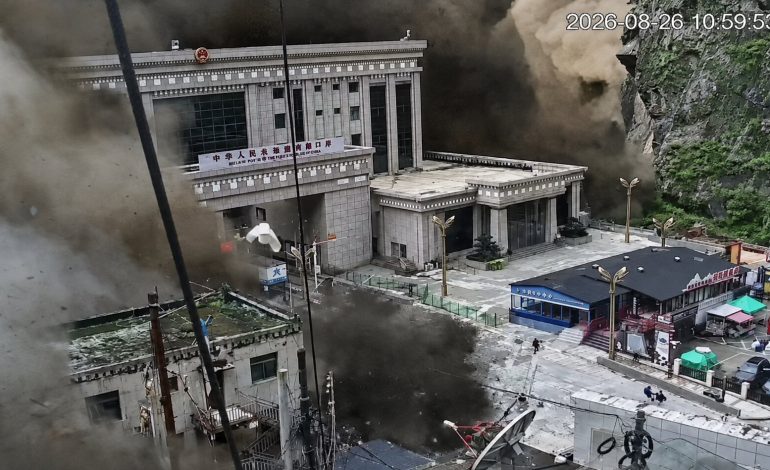
This screenshot from a widely circulated CCTV video shows a torrent of muddy water and debris slams into the Rasuwagadhi border complex on the Nepal–Tibet frontier during the devastating flash flood, on August 26, 2026.

New Delhi: Nepal was racing to rescue survivors and determine what unleashed a catastrophic flash flood from the Tibetan frontier on Wednesday, as the death toll approached 100 and hundreds of travellers and residents remained unaccounted for. India dispatched 10 tonnes of emergency supplies and medicines by an Indian Air Force aircraft, while China, the United States, the European Union and the World Bank offered assistance.
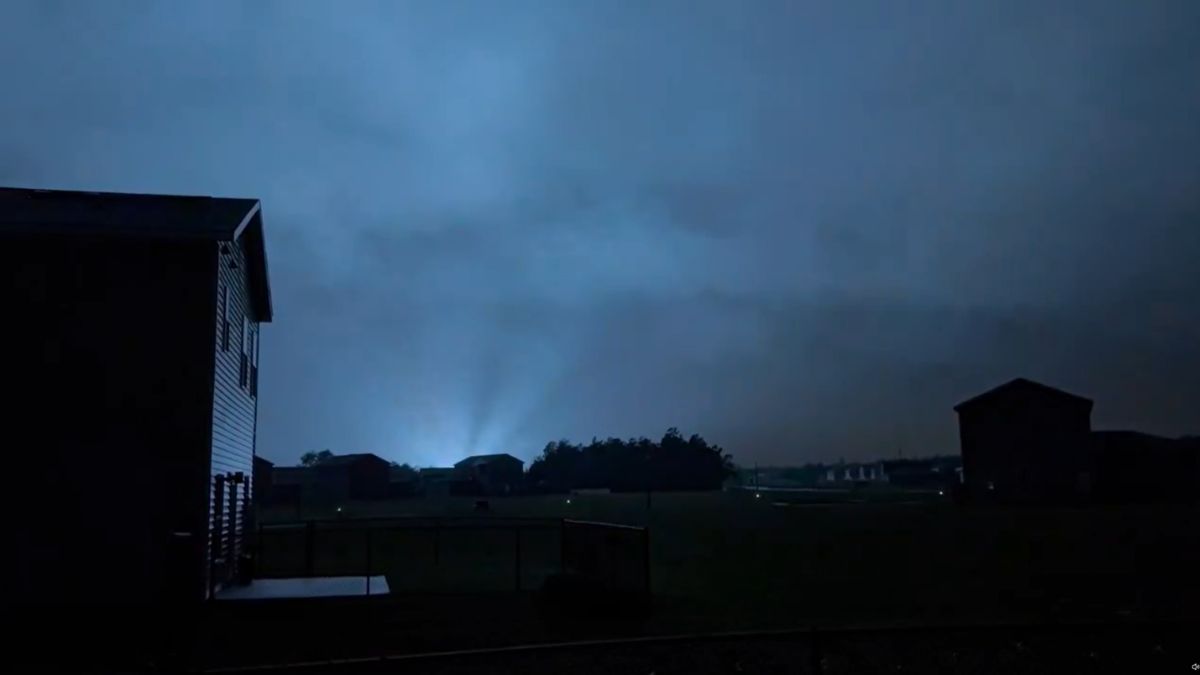
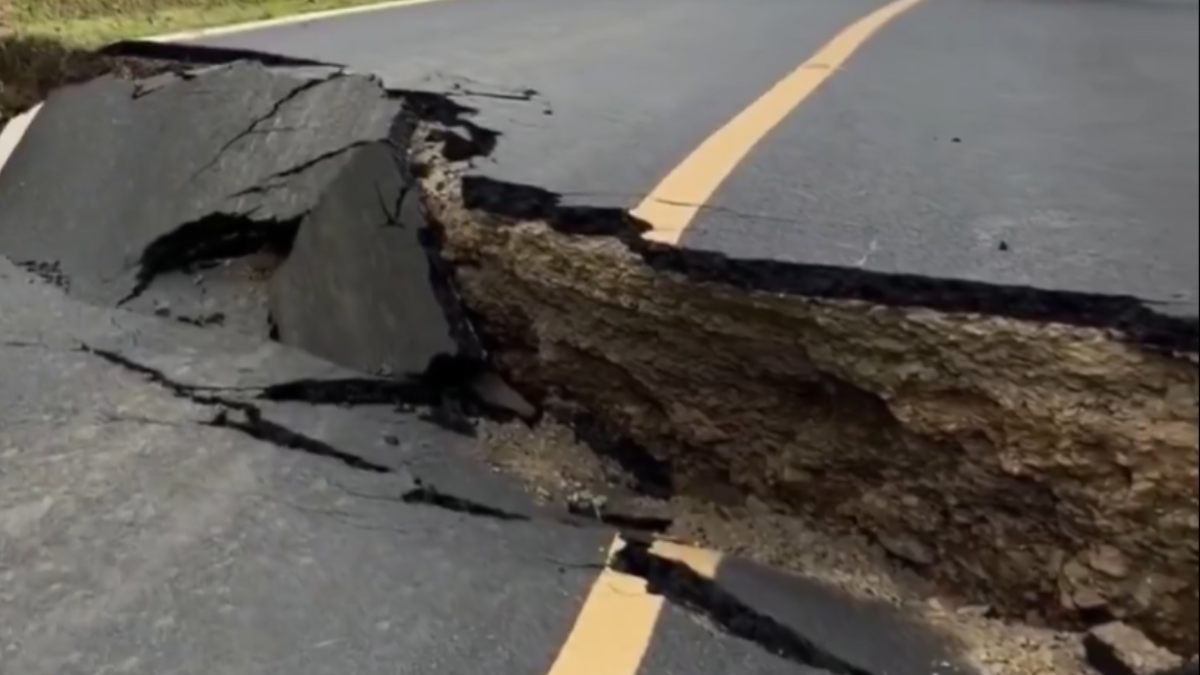
The disaster struck the Bhote Koshi river system in Nepal’s Rasuwa district shortly after 8.30am, sending a dense torrent of water, mud and rock through settlements near the Rasuwagadhi border crossing. Houses, bridges, vehicles, roads, hydropower installations and communications infrastructure were swept away as the surge travelled downstream towards Nuwakot and Dhading.
At least 98 bodies had been recovered by late Wednesday, according live reports from the disaster-hit areas. The number was expected to rise because rescuers had yet to reach several devastated areas and dozens of local residents, security personnel, workers and tourists remained missing.
As RNA Media reported earlier, provisional list released by the Nepal Tourism Board said 384 travellers – 291 foreigners and 93 Nepali citizens – were unaccounted for, including 105 Indian tourists and 37 people identified as non-resident Indians. Authorities were reconciling information from tour operators, foreign missions and security agencies, meaning that those listed as missing had not necessarily been confirmed as flood victims.
Some Indian media reports said many of the missing Indians were believed to have been travelling towards the Kailash Mansarovar region through Nepal and Tibet. The Indian embassies in Beijing and Kathmandu opened emergency channels and began coordinating with local authorities to locate affected citizens.
What caused the flood remained unclear, with Nepali officials investigating whether a magnitude-4.4 earthquake in Tibet dislodged a mass of ice and rock shortly before the water surged downstream. The foreign minister, Shisir Khanal, told the Nepali parliament that the earthquake was recorded at 8.37am and the flood was reported three minutes later, but emphasized that a direct connection had not been established.
A preliminary examination of Planet Labs satellite imagery by Nepal’s National Disaster Risk Reduction and Management Authority indicated that an ice-and-rock slide occurred about 20 kilometres northeast of the Rasuwagadhi crossing. The debris appears to have entered the Lhende Khola and generated a powerful surge towards Timure and the wider Bhote Koshi–Trishuli river system.
The Kathmandu-based International Centre for Integrated Mountain Development said an ice avalanche was the suspected trigger but cautioned that the cause was still unconfirmed. Its specialists also warned that material remained lodged upstream, raising the risk of another sudden release and prompting evacuation orders in vulnerable settlements.
Bad weather and the destruction of roads, electricity networks and telecommunications links were complicating both the investigation and the rescue operation. Nepali and Chinese officials were unable to contact some security personnel stationed near the border, leaving the authorities without reliable eyewitness information from the flood’s suspected point of origin.
The uncertainty has renewed questions about the absence of a formal Nepal-China arrangement for exchanging real-time information on glacial lakes, landslides and river blockages. As Kathmandu Post reported, the two countries discussed such a mechanism after another destructive flood in the same region in 2025, but no binding agreement was finalized.
Nepal mobilized is army, police and armed police, supported by helicopters, drones, sniffer dogs and medical teams. The country’s prime minister, Balendra Shah, said more than 250 people had been rescued and hospitals in Kathmandu had reserved beds for the injured, while the government assumed responsibility for emergency food, treatment and temporary shelter.
Official assessments cited in live reports indicated that at least 19 motorable bridges and about 40 kilometres of roads had been damaged. The government declared affected municipalities in Rasuwa, Nuwakot and Dhading crisis-hit zones, enabling the rapid mobilization of domestic resources and foreign assistance.
As RNA Media reported earlier on Wednesday evening, the prime minister, Narendra Modi, spoke to Shah and conveyed India’s condolences, assuring him that New Delhi was ready to provide all possible humanitarian assistance. Shah thanked Modi and said the offer reflected the enduring friendship between the two countries.
Later in the evening, an Indian Air Force C-130J left Hindon airbase near Delhi carrying 10 tonnes of humanitarian assistance and disaster-relief supplies. The consignment included temporary shelters, blankets, hygiene kits, solar lamps and essential medicines, according to officials in New Delhi.
Announcing the dispatch, the external affairs minister, S Jaishankar, said India stood with Nepal and its people during the crisis. Indian disaster-response personnel and additional aircraft were also kept ready as New Delhi and Kathmandu assessed requirements for rescue equipment, earthmovers and further relief supplies.
China deployed hundreds of rescuers, vehicles, search dogs and emergency equipment in the affected Tibetan region, where the Gyirong border port suffered extensive damage. The president, Xi Jinping, ordered an intensified search for missing people, the relocation of communities at risk and stronger monitoring to prevent secondary disasters.
The United States conveyed its readiness to assist, while China offered immediate financial support through government channels. The World Bank informed Nepal that as much as NPR 25 billion could potentially be mobilized for emergency relief and reconstruction, although the amount, financing terms and division between grants and loans had not been finalized.
The European Union activated the Copernicus Emergency Management Service to map the flood-affected areas and support responders with satellite-derived information. The European Commission president, Ursula von der Leyen, said the bloc was prepared to mobilize further assistance if requested by Nepal.
Indian authorities also increased surveillance downstream because the Bhote Koshi joins the Trishuli and ultimately enters India through the Gandak river system. Bihar evacuated about 5,000 people from vulnerable areas and prepared to move several thousand more, while districts in Bihar and Uttar Pradesh were instructed to monitor river levels and keep emergency teams ready.
The disaster illustrates the danger posed by cascading Himalayan hazards, in which an earthquake, ice avalanche, landslide or river blockage can create a destructive flood with little warning. Scientists have stressed that it is too early to attribute this particular event to climate change, but say rapid changes in glaciers, snow, permafrost and mountain slopes make cross-border monitoring and real-time early-warning systems increasingly urgent.

1 Comment
[…] Latest news August 26, 2026 […]