India warns UNSC against legitimizing terrorists. Why Pakistan, China drive New Delhi’s demand for terror-sanctions reform
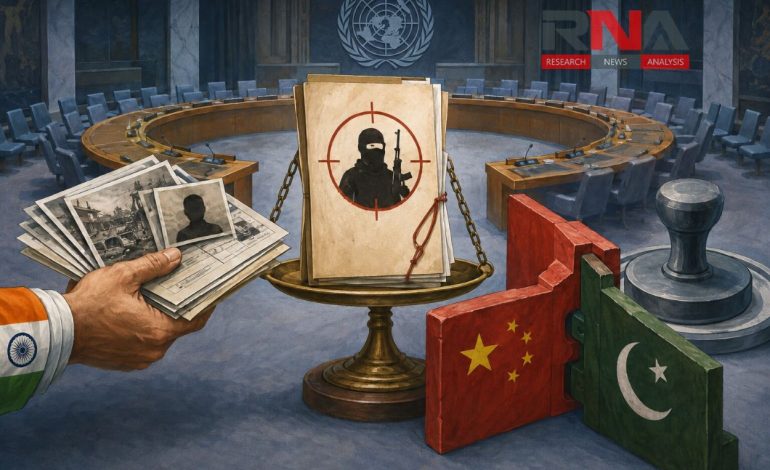
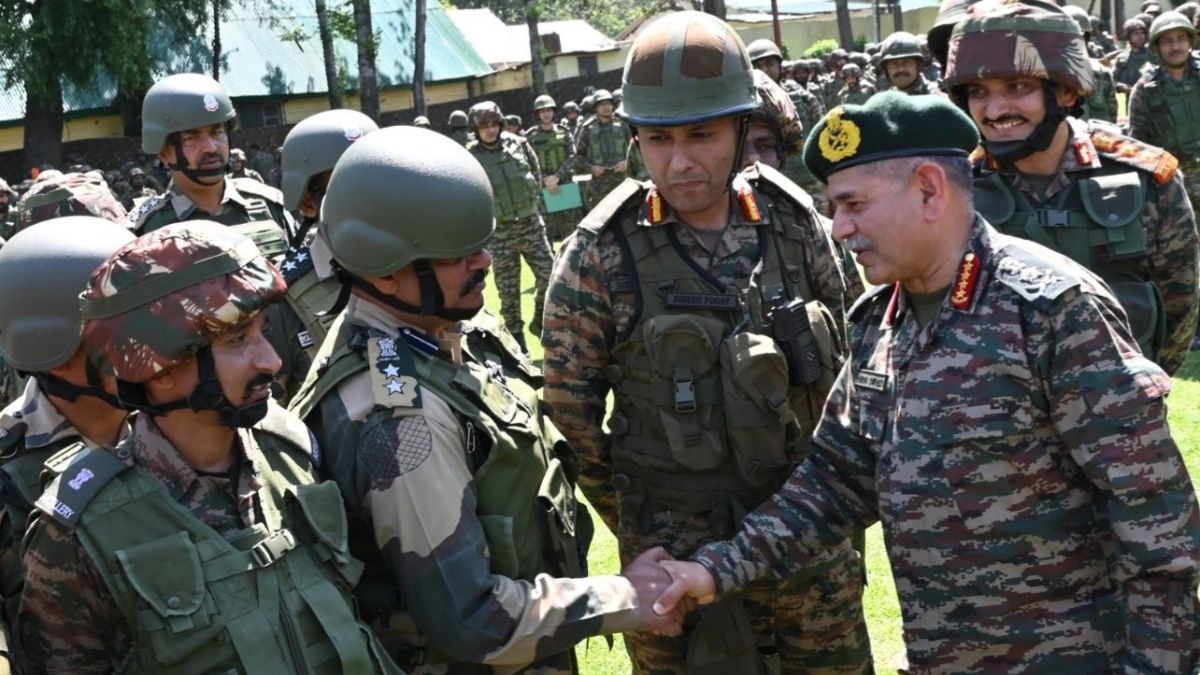
RNA Media illustration for representation.

New Delhi: India has warned that membership of the United Nations security council (UNSC) must not be exploited to shield established terrorists or secure politically motivated sanctions against organizations without supporting evidence. Addressing an open debate on the Council’s working methods on August 19, 2026, the chargé d’affaires at India’s Permanent Mission to the UN, Yojna Patel, demanded greater transparency and objectivity in terrorist listings and delistings.
Patel said UNSC membership carried substantial responsibilities and must not become a platform for advancing narrow national interests. She cautioned against attempts to remove terrorists from sanctions lists as well as proposals to designate organisations solely on political considerations rather than established criteria and credible documentation.
The Indian diplomat also criticized the prolonged delay in appointing chairs and vice-chairs of the UNSC’s subsidiary bodies, several of which administer sanctions and counterterrorism mandates. Eight months into 2026, important positions remained vacant, prompting India to seek a “definitive and non-negotiable” timeline for completing the appointments.
India further argued that elected members should have a greater voice in consequential decisions, including the selection of the UN secretary-general. Patel renewed New Delhi’s demand for an expansion of both permanent and non-permanent membership, saying a structure created after the Second World War could not indefinitely determine how the Council operated.
Why Pakistan and China are central to India’s warning
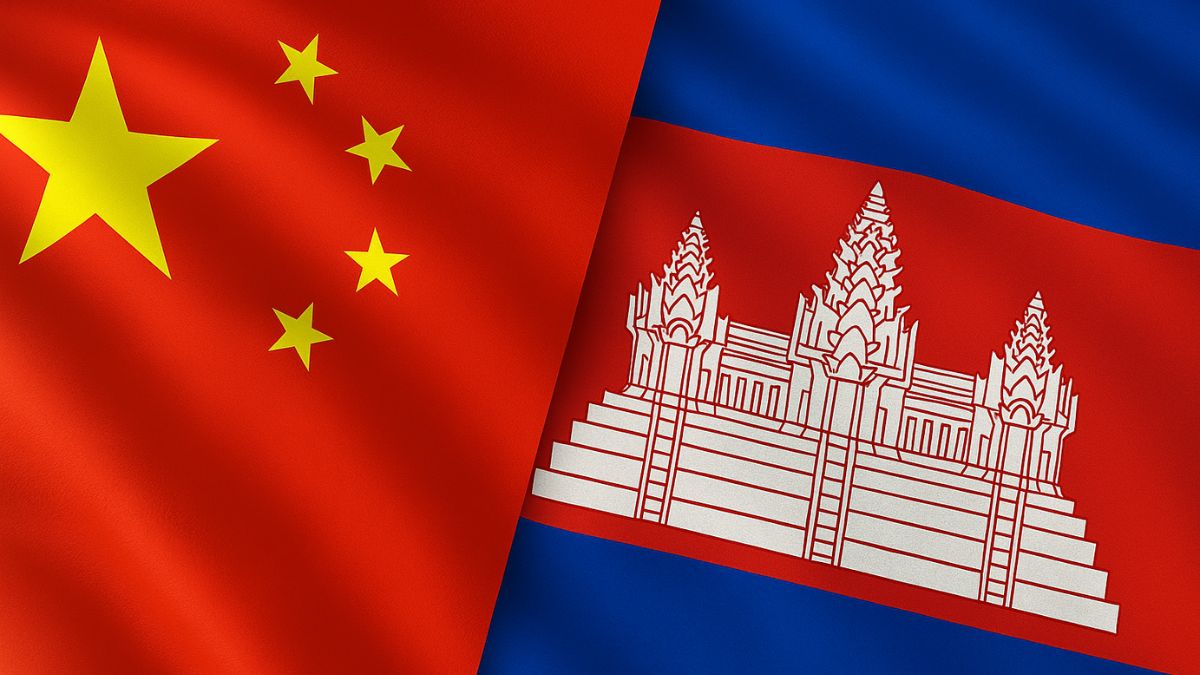
Patel did not identify any country, but her formulation can reasonably be read as a pointed reference to Pakistan and its principal diplomatic partner, China. Pakistan is serving as a non-permanent UNSC member for the 2025–26 term and chaired the UNSC’s 1988 Taliban sanctions committee in 2025, besides serving as a vice-chair of the UN counterterrorism committee.
The immediate background includes a joint Pakistan-China proposal, submitted in September 2025, to place the Balochistan Liberation Army and its Majeed Brigade under the 1267 sanctions regime. The proposal remained blocked in June this year after the US, Britain and France opposed it, reportedly because the documentation did not adequately establish the association with al-Qaida or Islamic State required by that particular sanctions framework.
That distinction is important because the American government has separately designated the Balochistan Liberation Army and the Majeed Brigade as foreign terrorist organisations over their involvement in deadly attacks. The issue at the UN was therefore not whether the groups had used terrorism, but whether the Pakistan-China submission met the narrower legal criteria governing the al-Qaida and Islamic State sanctions list.
India’s deeper concern arises from its experience of pursuing international sanctions against leaders of Pakistan-based Lashkar-e-Taiba and Jaish-e-Mohammed. New Delhi believes that diplomatic protection, procedural delays and selective demands for additional evidence have repeatedly prevented the UN system from acting promptly against people implicated in major attacks on India.
One factual distinction is necessary in the case of Lashkar-e-Taiba founder Hafiz Saeed. China did not block his original UN designation. Saeed was listed on December 10, 2008, after the Mumbai attacks and remains on the sanctions list, which subjects him to an assets freeze, travel ban and arms embargo; a petition he filed seeking delisting was rejected in 2019 after India and several other countries opposed it.
The China connection concerns other senior figures, including Saeed’s son, Hafiz Talha Saeed, whose proposed listing was held up by Beijing in 2022. China also delayed or blocked proposals concerning Jaish-e-Mohammed chief Masood Azhar, Mumbai attacks suspect Sajid Mir, Abdul Rauf Azhar, Shahid Mahmood and Abdul Rehman Makki, although it eventually lifted its hold on Makki and permitted his listing in January 2023.
The 1267 Committee makes decisions by consensus, allowing any of its 15 members to place a proposal on hold while seeking additional information. Although updated guidelines [pdf] require the member placing a hold to give reasons to the submitting state, much of the deliberation remains confidential, enabling a technical hold to function in practice as what India has described as a “disguised veto”.
Beijing has consistently maintained that such decisions must be based on evidence, objectivity and consensus, rather than political pressure. Pakistan, for its part, denies sponsoring terrorism against India, presents itself as a major victim of militant violence and argues that groups attacking Pakistani civilians and Chinese interests deserve comparable international action.
India’s argument is that these principles must be applied consistently: neither a longstanding ally should be shielded from evidence-based sanctions nor an adversary placed under a legally specific UN regime without proof that it satisfies the listing criteria. Its warning was therefore both a criticism of the China-Pakistan partnership and a broader demand that counterterrorism mechanisms be insulated from geopolitical bargaining.
For New Delhi, greater transparency would make countries publicly accountable for blocking credible proposals and discourage governments from converting sanctions committees into instruments of bilateral policy. The dispute ultimately strengthens India’s wider case that an unrepresentative and opaque UNSC cannot respond effectively to terrorism unless its composition, procedures and standards are comprehensively reformed.