Tit-for-tat over Hormuz as Trump claims US territory, Iran hits back by claiming California. But why California?
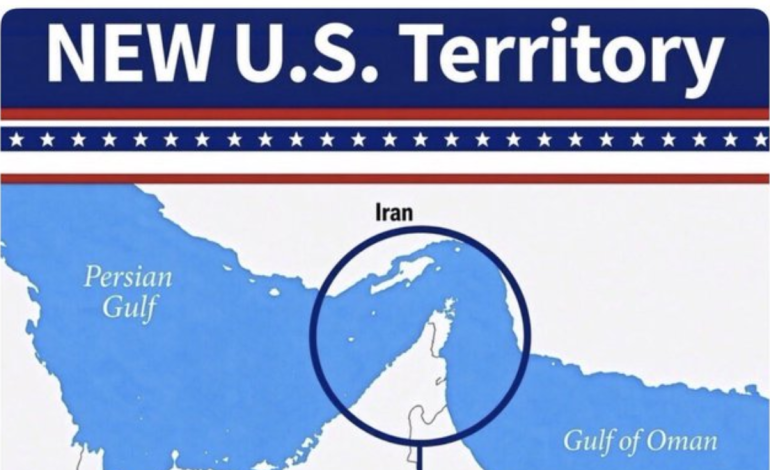
Trump’s Truth Social post showing the Strait of Hormuz marked as “NEW US Territory”. (Image courtesy: X/@WhiteHouse)

New Delhi: Iran has responded to The United States president, Donald Trump’s claim over the Strait of Hormuz by sarcastically labelling California the “new territory” of the Islamic Republic, turning the US president’s territorial rhetoric back on Washington. The exchange comes amid heightened tensions between Tehran and Washington over the strategic waterway.
Trump had posted a map on Truth Social showing the Strait of Hormuz marked as “NEW US Territory”, after previously saying that the strategic waterway could be made US territory once the conflict ends. The White House later reposted the image on its official X account.
In response, the official Iran in Hyderabad account on X posted a map of the United States with California highlighted in blue and labelled “NEW TERRITORY OF ISLAMIC REPUBLIC OF IRAN.” The post appeared to deliberately mirror Trump’s map, using the same language to mock the US president’s claim over Hormuz.
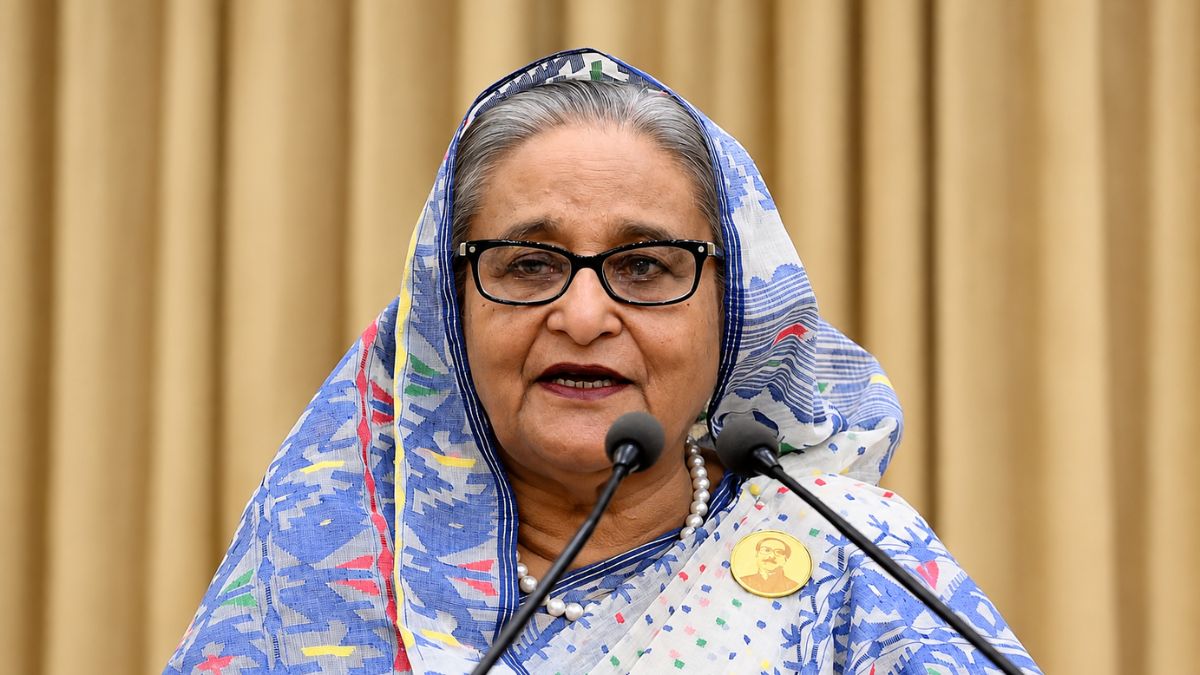
The Iranian deputy foreign minister, Kazem Gharibabadi also responded to Trump, saying that his delusion regarding the Strait of Hormuz would either be corrected or that Iran would correct it. His remarks reflected Tehran’s rejection of Washington’s assertion over the strategic waterway.
Why did Iran pick California?
California was a particularly pointed choice for Tehran because it is home to the largest Iranian-American population in the United States. A March 2026 analysis by the Pew Research Center, based on 2024 American community survey data, shows that approximately 375,000 Iranian Americans live in California, accounting for nearly half of the Iranian-American population in the country.
The Iranian Diaspora Dashboard, hosted by UCLA’s Center for Near Eastern Studies, puts the overall Iranian-American population in the United States at 794,915 now, based on the 2024 American Community Survey. Its latest update, published in 2026, uses 2020–2024 ACS data for state-level estimates and identifies California as the state with the largest Iranian-American population.
The community is particularly concentrated in the Los Angeles area, where Iranian-American life has developed around neighbourhoods such as Westwood, which became widely known as “Tehrangeles”. The community grew substantially after the 1979 Islamic Revolution, when large numbers of Iranians migrated to the United States.
By choosing California, Tehran was therefore able to turn Trump’s territorial imagery into a pointed reference to the US state with the country’s largest Iranian-American population, giving the response both a geographical and cultural significance.
Trump announces ‘crushing’ economic operation against Iran
The exchange comes as Washington is moving towards a new phase of economic pressure on Tehran. Trump has announced what he called the “MOST CRUSHING ECONOMIC OPERATION EVER TAKEN AGAINST ANY COUNTRY”, warning countries and businesses that help Iran that they could face severe economic consequences.
Trump described the campaign as “economic warfare and isolation on an unprecedented scale” and warned that countries whose financial institutions, businesses, airports or government entities provide a “lifeline” to Iran would face “TREMENDOUS Economic Consequences”.
He specifically named oil smuggling, swap lines, cash transfers, exchange houses, ship registries and front companies, saying such activities must stop. Trump called the campaign “ECONOMIC D-DAY” and urged US allies to join Washington in isolating Tehran.
The announcement comes as Iran faces growing economic pressure. Iran’s central bank governor, Abdolnaser Hemmati has said that none of the country’s blocked foreign funds have been released under the June agreement with Washington. He also pointed to falling oil and tax revenues as major pressures on Iran’s economy.
The latest escalation follows months of fighting and failed attempts to reach a lasting agreement. The US-Iran conflict has also centred heavily on the Strait of Hormuz, a key route for global oil shipments that has remained at the centre of the confrontation.
Since 60-day period ended on August 17 without a permanent deal, both sides have hardened their positions. Iran has threatened to shift towards a more offensive military posture if diplomacy fails, while Trump has moved towards greater economic pressure rather than ruling out further negotiations.