US-South Korea drills shortened after Trump order as North Korea keeps up missile pressure
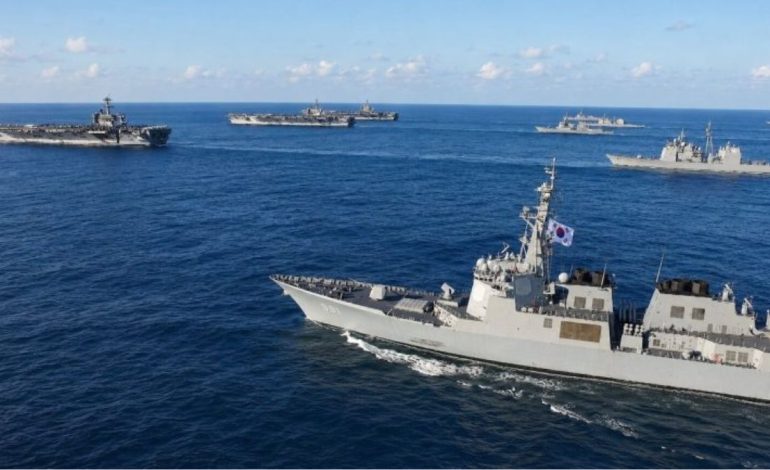
This screenshot from a South Korea defence ministry handout video shows US and South Korean warships in Exercise Ulchi Freedom Shield.

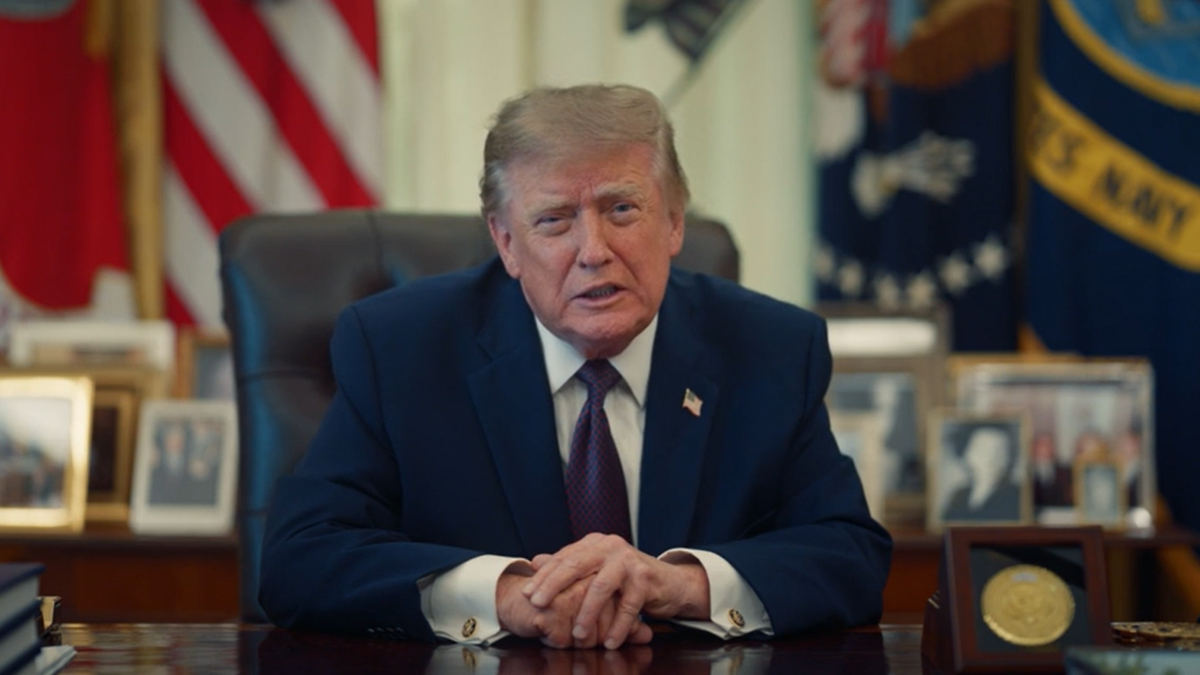
New Delhi: The United States and South Korea have agreed to end their annual Ulchi Freedom Shield military exercise on Friday, August 21, instead of August 27, six days earlier than originally planned, after US president Donald Trump ordered the Pentagon to “substantially reduce” the training. South Korea’s military said some joint field training exercises would also be downsized, even as North Korea continues to denounce the drills and conduct ballistic missile tests.
The decision puts into effect the reduction Trump ordered just before the exercises began on Monday. As RNA Media reported earlier, Trump cited the cost of the exercises, his relationship with North Korean leader Kim Jong-un and South Korea’s refusal to support US efforts involving Iran. Trump also argued that the drills sent an “inappropriate and hostile” signal to Pyongyang, which he described as “unthreatening and respectful”.
Why the drills matter
Ulchi Freedom Shield combines computer-simulated command-post training with field exercises intended to strengthen the ability of US and South Korean forces to operate together. About 18,000 South Korean troops were expected to participate this year, while the US maintains about 28,500 troops in South Korea.
This year’s training included live fire exercises for joint precision targeting and manoeuvre, a wet-gap crossing and distribution of pre-positioned military equipment. Such activities are intended to test how commanders, headquarters and field units coordinate during a crisis or conflict.
That is why repeated reductions can matter beyond the number of training days. Yang Uk of Seoul’s Asan Institute for Policy Studies told AP that military commanders rotate periodically and that long suspensions can leave incoming commanders unfamiliar with established procedures when exercises resume. Other analysts cited by AP have warned that prolonged reductions could affect alliance coordination and military readiness over time, although the allies have said they will continue to meet training objectives and maintain their combined defence posture.
North Korea missile pressure
The reduction comes as Pyongyang continues its missile activity. North Korea carried out two ballistic missile tests in less than a week, on August 6 and 12. South Korea’s military said the August 12 missile was launched from the Wonsan area and flew more than 700km before falling into the sea off the peninsula’s east coast.
AP described the August 12 launch as a likely protest against the upcoming exercises, while experts said North Korea has often used allied military training as a pretext to step up its weapons testing.
North Korea has consistently portrayed major US-South Korea exercises as preparations for invasion, an allegation rejected by Washington and Seoul, which describe the training as defensive. Its foreign ministry warned before Ulchi Freedom Shield that it would answer what it called an increasingly dangerous exercise with “a new level of a deterrent”. North Korea’s state-run Korean Central News Agency (KCNA) followed with further criticism of the drills and warnings of a response to what Pyongyang described as hostile actions.
The distinction is important. North Korea’s missile activity cannot automatically be attributed to the exercises, even though Pyongyang frequently cites allied training when justifying weapons tests. It has continued to expand its nuclear and missile capabilities since Trump’s talks with Kim collapsed in 2019.
Diplomacy versus deterrence
Trump’s decision revives a tension seen during his first term, when he suspended major exercises after meeting Kim in 2018 in an effort to facilitate nuclear diplomacy. Those negotiations eventually stalled, but Trump has continued to signal interest in renewed engagement with the North Korean leader.
South Korean president Lee Jae-myung has sought to keep both tracks open. He has stressed that a strong US alliance underpins South Korea’s security, while his office has expressed hope that Trump’s relationship with Kim could lead to “meaningful dialogue” between Washington and Pyongyang.