
From Kishtwar caves to Manipur’s jungles: 15 soldiers cited for Kirti, Shaurya Chakras
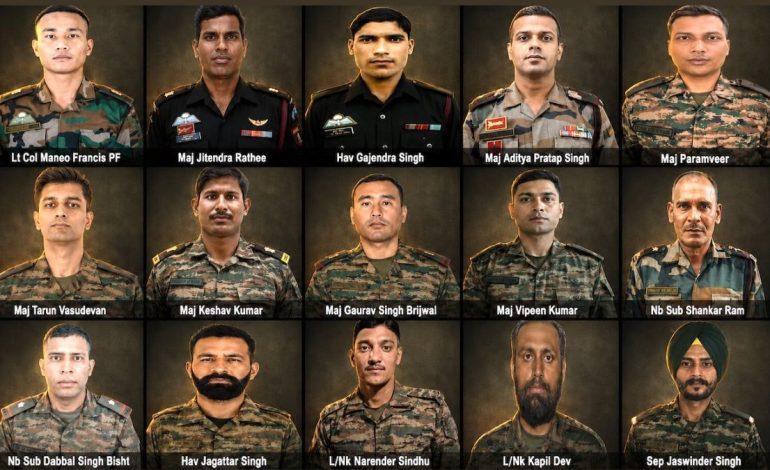
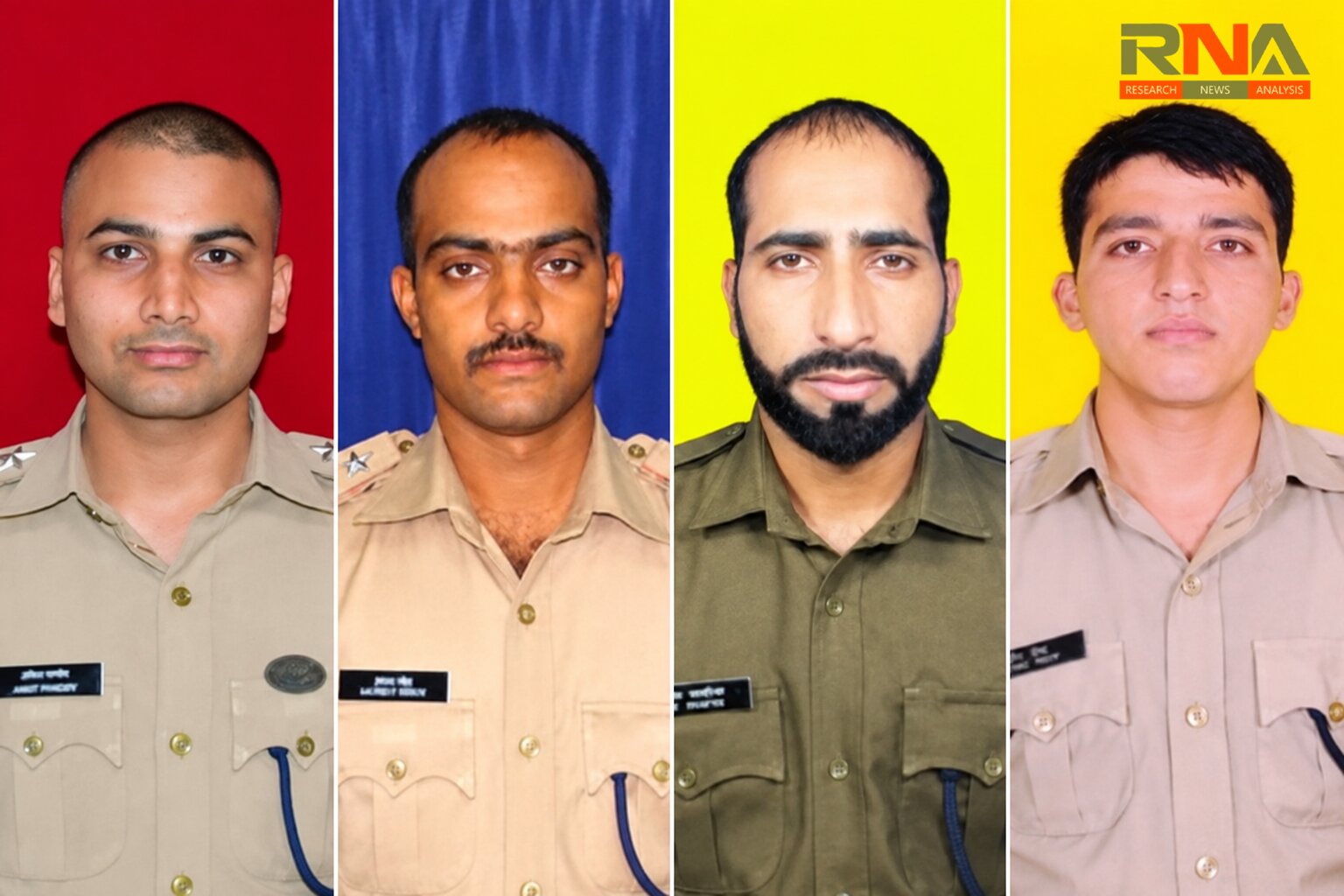
RNA Media collage of the gallantry award recipients.

New Delhi: Fifteen Indian Army personnel have been named in gallantry citations for the Kirti Chakra and Shaurya Chakra after displaying exceptional courage during counter-terrorist and counter-insurgency operations. The list includes three Kirti Chakra awardees, one Bar to the Shaurya Chakra and 11 Shaurya Chakra awardees, with two soldiers honoured posthumously.
The Kirti Chakra is India’s second-highest peacetime gallantry award after the Ashoka Chakra, while the Shaurya Chakra ranks third. A Bar to the Shaurya Chakra signifies that the recipient has earned the decoration for a second time.
Kirti Chakra
Lieutenant Colonel Maneo Francis PF, SC
The officer from the 21st Battalion, the Parachute Regiment (Special Forces), was cited for an operation against an insurgent group in Manipur between October 29 and November 4, 2025. He had established a coordinated intelligence network and overseen months of surveillance and mission-specific training before his team moved against the group’s hideout.
After seven days of close surveillance, the troops approached the hideout and called upon its occupants to surrender, but came under heavy automatic fire. Francis manoeuvred his assault group around the position, killed one sentry and then crawled through intense fire to outflank and eliminate a second insurgent who had pinned down the team.
The citation credited him with resolute leadership, meticulous planning, tactical skill and “raw courage under fire”. His actions led to the elimination of two heavily armed insurgents and helped dismantle the group’s operational presence in the area.
Major Jitendra Rathee
An officer of the 2nd Battalion, the Parachute Regiment (Special Forces), Rathee was tasked with hunting terrorist groups operating in the Kishtwar region of Jammu & Kashmir. On February 22, 2025, he led his squad towards a forest hideout after receiving precise intelligence about the presence of terrorists.
Rathee tightened the cordon around the hideout and moved close enough to deploy the Army dog Tyson, whose entry drew heavy and indiscriminate fire. Recognizing the danger to both the dog and his soldiers, he provided covering fire that allowed them to be extracted safely.
The officer then manoeuvred into an advantageous position and used incendiary grenades to kill one terrorist and set the hideout ablaze, trapping and injuring two others. He subsequently closed in and fired confirmatory shots, bringing the operation to an end with three foreign terrorists killed.
Havildar Gajendra Singh, posthumous
Serving as an intelligence troop havildar with the 2nd Battalion, the Parachute Regiment (Special Forces), Gajendra had spent considerable time tracking terrorist activity in the forests of Kishtwar. His intelligence work helped identify a particular jungle belt as a primary hideout area.
On January 18, 2026, he led a search team through dense forest at an altitude of more than 3,000 metres and detected a suspected hideout beside a near-vertical cliff. When he challenged the terrorists at close range, they opened fire and wounded both scouts accompanying him.
Gajendra charged forward, pulled the first scout to safety and administered emergency first aid before returning for the second soldier. He suffered multiple bullet wounds during the rescue but refused to disengage until both men had reached safety.
Despite bleeding heavily, he re-engaged the terrorists and critically wounded a wanted foreign terrorist before succumbing to his injuries at the site. The citation described his conduct as an act of extraordinary leadership, courage and comradeship at the ultimate personal cost.
Bar to Shaurya Chakra
Major Aditya Pratap Singh, SC, SM
Singh, an officer of the Rajputana Rifles serving with 44 Assam Rifles, led a patrol along an isolated track near the India-Myanmar border on July 5, 2025. The patrol was moving through thick forest and difficult terrain when insurgents attacked it with automatic weapons and grenades at about 4.45am.
The officer immediately returned fire and pulled his scout into cover, narrowly escaping bullets that struck his backpack. He then crawled towards the insurgent position under sustained fire and suffered splinter injuries while closing the distance.
Singh continued the assault despite his wounds, using a grenade and accurate fire to kill a wanted operational commander of a major insurgent group at close quarters. The troops also recovered a substantial cache of weapons and other warlike stores from the position.
The Bar recognizes Singh’s second Shaurya Chakra. His citation praised his “indomitable courage” and decision to continue leading the assault despite his injuries and the immediate danger to his life.
Shaurya Chakra
Major Paramveer
An officer of the Garhwal Rifles serving with 36 Rashtriya Rifles, Paramveer commanded an ambush along the Line of Control in the Machhadi sector on August 26, 2025. He placed his soldiers just 15 to 20 metres from the anticipated killing ground, using the terrain and natural cover to preserve surprise.
When three terrorists entered the ambush, Paramveer opened accurate fire and engaged all of them. After one wounded terrorist attempted to escape downhill, the officer left cover, pursued him and killed him despite the risk of exposing himself to hostile fire.
During the follow-up search, Paramveer spotted and killed a second terrorist concealed in thick bushes on the far bank of Naushera Nar. He then located the third behind a boulder and directed his elimination, ending the infiltration attempt without any casualties among his troops.
Major Tarun Vasudevan
Vasudevan, of the Rajputana Rifles and serving with 57 Rashtriya Rifles, led an ambush column during a counter-infiltration operation on October 13, 2025. The operation followed intelligence warning of a possible infiltration attempt or Border Action Team action close to an adversary’s post.
After his scout detected two heavily armed terrorists, Vasudevan allowed them to move closer to the ambush before initiating contact. He fought at close range and killed one terrorist during the ensuing exchange.
When the second man attempted to flee towards Shamshu Nar, the officer continued firing while moving and employed a Claymore mine to restrict the escape. His actions allowed the adjoining column to eliminate the second terrorist and bring the operation to a successful conclusion.
Major Keshav Kumar
An officer of the 12th Battalion, the Dogra Regiment, Kumar commanded an operation launched after intelligence was received about two terrorists hiding in a forest on February 2, 2026. He led his soldiers across difficult and unexpected approaches, occupied likely escape routes during the night and maintained surveillance over the suspected hideout.
Kumar personally searched four caves the following morning, progressively narrowing down the terrorists’ location despite the danger. When they opened indiscriminate fire, he maintained coordination between the forces involved and continued the engagement until one terrorist was killed.
The second terrorist remained trapped inside the cave and was subsequently eliminated after the security cordon was tightened. One of those killed was identified as a Category A++ terrorist accused of involvement in several killings of security personnel and civilians.
Major Gaurav Singh Brijwal
The 21 Grenadiers officer was leading a 48-hour ambush ahead of the security fence near the Line of Control on November 7, 2025, when his team detected three terrorists. He allowed the group to enter the selected killing ground and opened fire only after confirming that they were armed.
Brijwal wounded the lead terrorist before shifting position under heavy retaliatory fire to protect his soldiers. He then killed the first terrorist at close range and directed his covering party to block the escape of the remaining infiltrators.
The officer personally engaged and wounded a second terrorist as the group attempted to withdraw. His leadership and tactical decisions contributed to the eventual elimination of two terrorists and the defeat of the infiltration attempt.
Major Vipeen Kumar
Kumar, a Dogra Regiment officer serving with 11 Rashtriya Rifles, led the inner cordon during a counter-terrorist operation in Kishtwar district on February 21 and 22, 2026. The troops had to close in on well-entrenched terrorists through thick vegetation and steep, uneven ground.
Kumar manoeuvred his team forward without compromising surprise and sealed the likely escape routes. When the terrorists attempted to break contact, he led the engagement from the front and critically wounded one of them in a close-quarter exchange.
His fire prevented the wounded terrorist from escaping and confined him to a dhok, or temporary highland shelter. The tightened cordon subsequently enabled the forces to eliminate the terrorist in what the citation described as an exceptionally difficult operational environment.
Naib Subedar Shankar Ram
The 3 Assam Rifles junior commissioned officer was at a post in Imphal East district when insurgents subjected it to intense fire on November 28, 2025. He immediately responded with accurate medium-machine-gun fire but suffered a serious injury to his left hand during the exchange.
Despite heavy bleeding, Shankar refused evacuation, encouraged his soldiers to continue fighting and switched to his personal weapon. His counterattack critically wounded six insurgents and forced the attacking group to retreat across the border.
The officer also detected a bomb-laden drone approaching the position and alerted his troops in time to prevent casualties. The action resulted in the recovery of two automatic weapons and other warlike stores.
Naib Subedar Dabbal Singh Bisht
A junior leader of the 21st Battalion, the Parachute Regiment (Special Forces), Bisht fought alongside Lieutenant Colonel Maneo Francis PF during the November 4, 2025, operation in Churachandpur, Manipur. He helped establish the cordon after intelligence indicated that heavily armed insurgents were present in the area.
When a group attempted to break through the cordon under covering fire, Bisht held his position and channelled the insurgents into a killing zone. He then crawled into a new firing position to counter a cadre attempting to outflank him from the west.
His accurate fire pinned down the group, wounded two insurgents and killed one of them. The citation credited his tactical judgement and leadership with helping thwart the attempted breach.
Havildar Jagattar Singh
The soldier from the 4th Battalion, the Parachute Regiment (Special Forces), volunteered for a covert reconnaissance task in Jofar forest after intelligence about two terrorists was received on February 2, 2026. Moving discreetly with his buddy, he confirmed their presence and helped guide additional troops into the area.
During the search on February 3, Jagattar positioned his squad to cover the most likely escape route from a cave complex. The terrorists then launched grenades and opened intense small-arms fire in an attempt to break the cordon.
Jagattar held his position and killed one terrorist at close range as he attempted to escape. He subsequently assisted in clearing the hideout, recovering the bodies and securing arms and other material from the site.
Lance Naik Narender Sindhu, posthumous
Sindhu, of the Rajputana Rifles and serving with 9 Rashtriya Rifles, was part of a joint operation in the forests of Kulgam district on September 8, 2025. Terrorists opened indiscriminate fire from a hideout at about 8.15am and attempted to escape through the security cordon.
Sindhu initially withheld fire because other search parties were positioned in his line of engagement. After detecting movement at close range, he challenged the terrorist in accordance with the rules of engagement and was grievously wounded in the retaliatory fire.
Despite his wounds, Sindhu adjusted his position under fire and killed the terrorist with accurate shooting. The terrorist was later classified as a Category A+ operative, while Sindhu succumbed to his injuries after being evacuated.
Lance Naik Kapil Dev
A soldier of the Dogra Regiment serving with 11 Rashtriya Rifles, Kapil was selected to lead as a scout during an operation against terrorists who had escaped after a large hideout was discovered in Kishtwar on January 18, 2026. The security forces continued searching the forested area over the following weeks.
At about 6.15pm on February 4, Kapil spotted a terrorist hiding behind trees in the densely forested Dichhar area. He and his buddy moved closer before coming under fire from two directions.
Kapil held his ground and killed one terrorist with accurate fire, protecting the rest of the column from the immediate threat. The operation also resulted in the recovery of weapons, ammunition and other warlike stores.
Sepoy Jaswinder Singh
The soldier from the 7th Battalion, the Sikh Light Infantry, led an assault team during a high-risk intervention at a house in a remote village of Kathua district on January 23, 2026. Despite heavy rain, he approached through dense foliage, maintained visual contact with the support team and confirmed that no civilians were inside.
Jaswinder entered through an alternative route and detected an armed terrorist concealed in the kitchen. Realizing the danger to his team, he rushed the position and killed the terrorist with his personal weapon before the man could effectively respond.
The foreign terrorist was accused of involvement in several attacks in Kathua district since 2024. The operation was completed within minutes and led to the recovery of an M4 assault rifle and other warlike stores.
Taken together, the citations provide a picture of operations fought at extremely close range, often after days or months of intelligence gathering and surveillance. They also record repeated instances in which soldiers exposed themselves to hostile fire to protect comrades, preserve a cordon or prevent armed groups from escaping.