

What Pakistan Changed After Operation Sindoor: Procurements and Structural Reforms
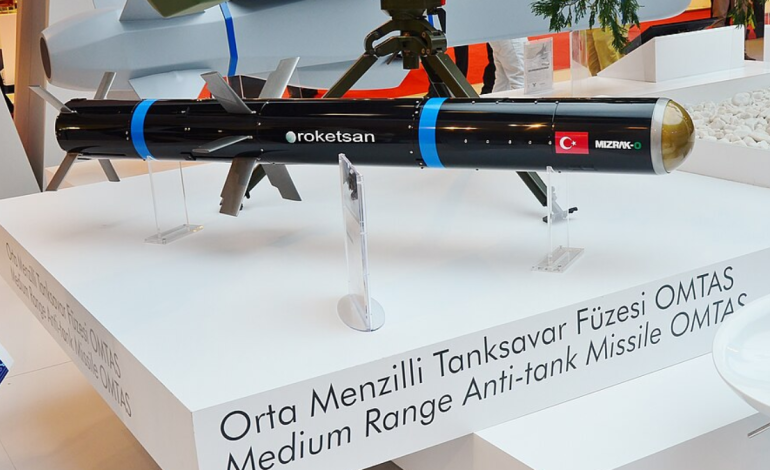
OMTAS missile. Image courtesy: Wikimedia

Following the India–Pakistan conflict of May 2025, Pakistan initiated one of the most extensive military modernisation and restructuring drives in its recent history. The changes spanned ground forces, aviation, unmanned systems, armour, naval assets, air defence, anti-armour capability, electronic warfare, munitions production, and constitutional command architecture. The following is a comprehensive account of what was changed and acquired.
Ground Forces and Precision Strike
Army Rocket Force Command: Pakistan established a new Army Rocket Force Command built around the FATAH-series Guided Multi-Launcher Rocket System. The artillery division at Gujranwala was reorganised into ARF Division (North), and the artillery division at Pano Aqil was reorganised into ARF Division (South). Additional missile regiments were placed under direct GHQ control, bypassing the traditional corps-level chain of command. The new structure represented a formal acknowledgement that Pakistan’s long-range precision strike capability required both reorganisation and significant expansion.
Artillery Ammunition Production: A new domestic 155mm artillery ammunition production facility was fast-tracked to address supply chain dependence on external sources and munitions stock shortfalls exposed during sustained engagements in the conflict.
SH-15 Mounted Gun Systems. Pakistan contracted over 25 regiments’ worth of Chinese SH-15 Mounted Gun Systems in a phased acquisition programme. The self-propelled artillery systems were acquired to address identified gaps in artillery mobility and survivability, and to standardise Pakistan’s artillery firepower around the 155mm calibre.
Army Aviation
Chinese Z-10ME attack helicopters were inducted into No. 31 Attack Helicopter Squadron of Pakistan Army Aviation, with the induction completed by August 2025. The acquisition replaced ageing attack helicopter fleets and addressed close air support deficiencies that the conflict’s operational tempo had made apparent.
Unmanned Aerial Systems
Pakistan established a dedicated unmanned aerial vehicle force, with emphasis on ISR drones for real-time battlefield awareness and targeting UAVs for precision engagement. Operational exercises for this force were centred on the Bahawalpur Corps. Alongside the formation of the dedicated UAV force, Pakistan signed contracts with China for CH-4 and CH-5 Unmanned Combat Aerial Vehicles and SA-180 loitering munitions, rebuilding an unmanned strike capability that had performed poorly during the conflict.
Armour
Chinese VT-4 main battle tanks were procured and redesignated as the MBT Haider for Pakistani service. The acquisition addressed identified gaps in armour modernisation and battlefield survivability that post-conflict operational assessments had highlighted.
Air Defence
The Pakistan Air Force acquired the Turkish KORKUT short-range air defence system, accompanied by associated crew training programmes. The KORKUT system was acquired specifically to address vulnerabilities in low-level air defence against aerial threats that Indian operations had exposed.
Anti-Armour Capability
Pakistan procured two distinct anti-armour systems from Turkey. The OMTAS anti-tank missile system provided a medium-to-long range guided anti-armour capability, while the ERYX anti-tank guided missile addressed close-range engagement requirements. Both acquisitions responded to anti-armour deficiencies identified in post-conflict operational assessments.
Naval Acquisitions
Pakistan contracted MILGEM-class corvettes from Turkey, adding modern surface warfare capability to the Pakistan Navy. Hangor-class submarines were also included in the post-conflict procurement drive, extending Pakistan’s naval modernisation into the underwater domain.
Electronic Warfare
An electronic warfare cooperation agreement with Turkey was signed in May 2025, within days of the ceasefire itself. The agreement covered cooperation in the electromagnetic and information warfare domains, addressing vulnerabilities that Indian operations had exposed with particular force during the conflict.
Constitutional and Command Restructuring
The most consequential changes were constitutional rather than military in the conventional sense. Pakistan passed the reported 27th Constitutional Amendment, which fundamentally restructured the country’s military command architecture. The office of Chairman Joint Chiefs of Staff Committee—previously the highest joint military post in Pakistan–was abolished entirely. In its place, two new posts were created.
The Chief of Defence Forces assumed consolidated joint military authority, with a formal flag adopted for the new post. The Commander, National Strategic Command—placed under an Army Lieutenant General—was given oversight of Pakistan’s nuclear command structure.
The combined effect of these changes was to centralise overall joint military authority under the Pakistan Army Chief, reorganise inter-services command integration under the Chief of Defence Forces structure, and restructure nuclear command authority under the Commander, National Strategic Command. The abolition of the Chairman Joint Chiefs of Staff Committee represented a significant departure from the previous command architecture, in which a joint chairman had served as the principal military adviser to the government above the individual service chiefs.