Satellite images show Iran accelerating construction at Pickaxe Mountain amid war with US. What is Tehran up to?
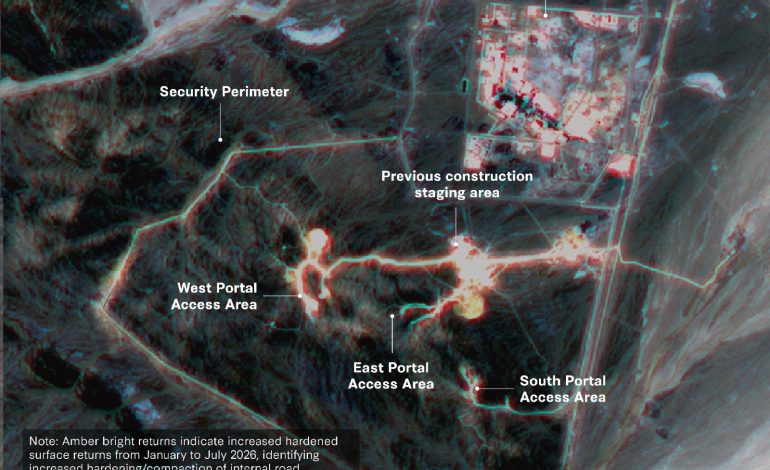
Pickaxe Mountain new satellite imagery by SkyFi posted by CSIS on X showing heightened construction activity in the underground complex.

New Delhi: Iran has sharply intensified construction at Pickaxe Mountain, a deeply buried and nuclear-linked complex near Natanz, with satellite imagery showing more activity there in 2026 than at any time since work began. The development has renewed questions over whether Tehran is merely completing a protected centrifuge-production facility or preparing an underground site capable of enriching uranium beyond the reach of conventional airstrikes.
A six-year assessment of satellite data by the Washington-based thinktank Center for Strategic and International Studies (CSIS) found that work had progressed from large-scale excavation to probable construction inside the mountain and reinforcement of its external infrastructure. The researchers used synthetic aperture radar, optical-change detection and high-resolution commercial imagery to examine five areas of interest and the roads connecting them.
The most recent images show tunnel portals being raised and hardened, internal roads being paved and access zones receiving additional reinforcement. Excavated earth has also been flattened or removed, and vehicle movement along the site’s road network has reached its highest level since construction started in 2020.
CSIS said these indicators collectively showed a “clear surge” in construction during 2026, although the imagery could not establish what was being built inside the tunnels. The researchers found no visible increase in internal security or sustained presence of vehicles unrelated to construction – signs that might be expected if sensitive nuclear machinery or fissile material were being handled.
The assessment therefore concluded that the facility probably remained under construction and was not yet ready to conduct uranium enrichment, assuming that enrichment was its intended purpose. Satellite surveillance alone, however, cannot determine whether machinery has already been moved into completed sections of the complex or reveal the layout and condition of underground chambers.
The findings follow reported Israeli intelligence assessments that Iran transferred centrifuges and associated components to Pickaxe Mountain in late 2025. US officials have reviewed those claims, but publicly available imagery has neither confirmed nor disproved them.
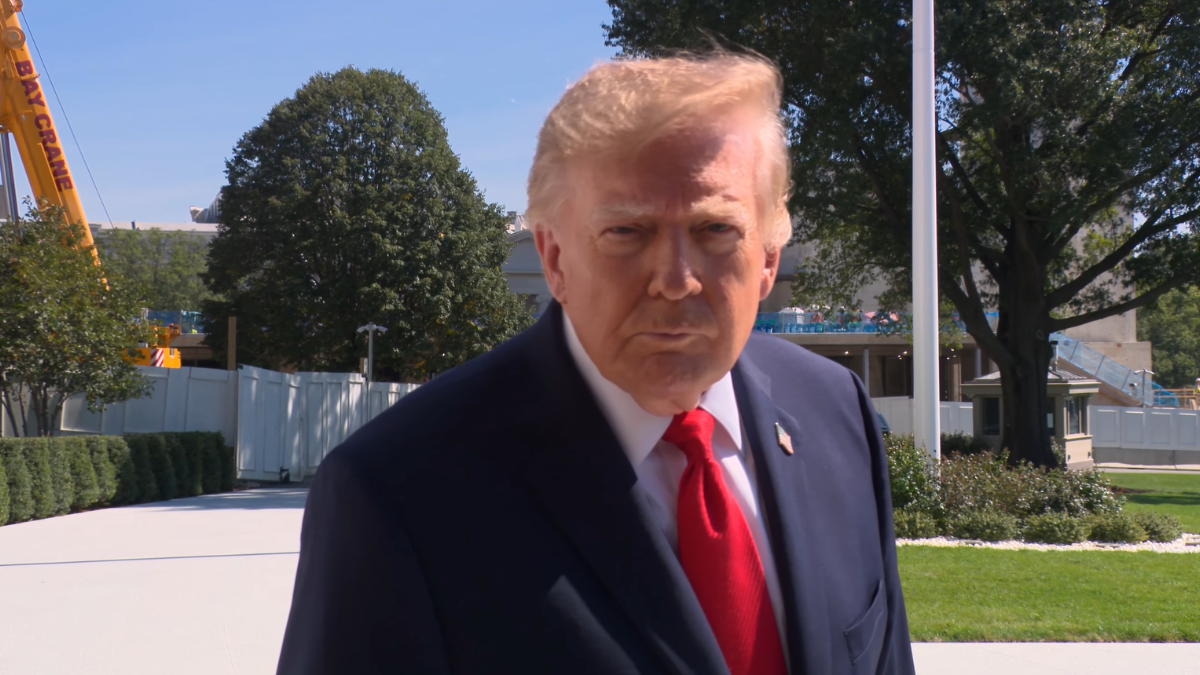
The US president, Donald Trump, renewed his threat against the complex on September 4, saying Washington could attack it “very soon” and was monitoring the movement of people at the site. He had issued a similar warning in July, when he said the United States was watching Pickaxe Mountain closely and would strike if necessary.
The US military has retained operational plans for attacking Pickaxe Mountain, according to American officials familiar with the preparations cited by CNN. The complex was reportedly included in a package of possible targets considered when the Trump administration examined options for escalating military pressure against Iran.
However, planners remain uncertain whether even the largest conventional bombs in the American arsenal could reach the main chambers under the granite ridge. The 13,600-kilogram GBU-57 Massive Ordnance Penetrator – the heaviest non-nuclear bunker-busting weapon operated by the United States – was designed to destroy deeply buried and reinforced targets, but Pickaxe Mountain may lie beyond its effective penetration depth.
Evidence has also emerged that the Pentagon has been testing or examining classified methods for attacking exceptionally deep underground structures. Four days before the US-Israel war against Iran began on February 28, the Defense Threat Reduction Agency approved an emergency contract worth $1.2 million to restore a subterranean testing installation at the White Sands Missile Range in New Mexico.
Federal documents described the work as preparation for a live-fire test intended to validate classified capabilities against an urgent threat, with completion required within two or three weeks. The test installation, known as the Alternate Seismic Hardrock in Situ Test Site, is excavated into granite – the same underlying rock that protects Pickaxe Mountain.
People familiar with the project told CNN that the preparations were connected to the Iran conflict and intended to examine ways of striking its deepest underground facilities. The US Air Force had separately awarded a contract in September 2025 for prototype work on a Next Generation Penetrator, which is expected eventually to replace the GBU-57 and attack targets buried at greater depths.
Iran maintains that its nuclear programme is exclusively peaceful and says there is no enrichment activity at Pickaxe Mountain. Tehran has described the American allegations as a pretext for further attacks, with its Khatam al-Anbiya central military headquarters warning that striking the complex could trigger renewed escalation across the region.
What the activity reveals – and what remains unknown
Pickaxe Mountain is the informal name for Kuh-e Kolang Gaz La, a mountain approximately two kilometres south of the Natanz uranium-enrichment complex and around 220 kilometres south of Tehran. “Kolang” translates as “pickaxe”, giving the secretive underground installation its widely used western name.
Iran began excavating the complex in late 2020 after an above-ground workshop at Natanz used to assemble advanced centrifuges was damaged in suspected Israeli sabotage. The head of Iran’s Atomic Energy Organization at the time, Ali Akbar Salehi, said the destroyed plant would be replaced by a safer facility inside the nearby mountain.
Commercial images show two pairs of tunnel entrances cut into opposite sides of the ridge, although analysts cannot confirm whether all four lead to a single interconnected complex. Differences in elevation between the eastern and western entrances have raised the possibility that the facility contains several underground levels rather than one continuous chamber.
The main sections are estimated to be at least 100 metres beneath the surface, with some assessments placing portions of the complex even deeper. Iran has constructed a wall-and-fence security perimeter around the mountain, hardened several portals with earth and reinforced concrete, and designed some approaches with bends that could prevent munitions from travelling directly down the tunnels.
The latest activity suggests that the most excavation-intensive phase may be ending in some areas and that workers are now preparing internal spaces, access routes and support infrastructure. Paved roads, strengthened entrances and the removal of spoil are consistent with a facility progressing towards installation work, but they do not identify the equipment intended for the chambers.
Analysts have outlined three main possibilities for the complex. It could remain what Iran originally declared – a protected plant for assembling advanced centrifuges – or it could contain an enrichment facility and additional laboratories associated with nuclear-sensitive work, including the conversion of highly enriched uranium into uranium metal.
The third possibility is especially sensitive because uranium metal has legitimate research applications but is also required to manufacture the core of a nuclear explosive device. There is currently no independently verified evidence that Iran is conducting weaponization work inside Pickaxe Mountain, and the movement of construction vehicles cannot establish such an activity.
The absence of International Atomic Energy Agency access has nevertheless deepened suspicion surrounding the facility. The IAEA has sought information about the complex, but inspectors have not entered it, leaving outside assessments heavily dependent on satellite imagery, intelligence reporting and Iran’s limited public explanations.
Iran’s estimated stock of about 440 kilograms of uranium enriched to 60 per cent adds to those concerns because the material is only a relatively short technical step from the 90 per cent level generally associated with nuclear weapons. Its exact location and condition remain uncertain following strikes on Iran’s declared nuclear facilities and the subsequent reduction in IAEA access.
For Tehran, Pickaxe Mountain offers both physical protection and strategic ambiguity: it can preserve nuclear expertise and equipment without necessarily operating an enrichment plant there. For Washington and Israel, the same uncertainty creates a difficult intelligence problem because waiting for conclusive proof could allow the site to become operational, but attacking on incomplete information risks widening the war and damaging prospects for diplomacy.
Destroying the underground chambers would be considerably harder than temporarily closing the complex. Precision attacks could collapse tunnel entrances, sever electricity, damage ventilation systems or obstruct access roads, but Iran could eventually excavate new approaches unless the internal structure itself were rendered unusable.
Analysts have also identified possible vulnerabilities around portal openings, power connections and suspected ventilation shafts, which could channel blast pressure into the complex. Exploiting them would require accurate engineering plans, precise intelligence about the underground layout and weapons capable of surviving impact with thick granite and reinforced concrete.
A ground raid or sabotage operation might theoretically inflict greater internal damage, but it would carry substantial military and political risks deep inside Iranian territory. Repeated air strikes could delay construction, yet they would probably reinforce Tehran’s determination to disperse and bury its remaining nuclear infrastructure.
Pickaxe Mountain consequently represents more than a difficult target: it illustrates the limits of military power in permanently eliminating nuclear knowledge and industrial capacity. Even a successful strike could only delay Iran’s programme unless it were accompanied by verifiable inspections, restrictions on enrichment and a wider political agreement addressing the security calculations driving Tehran’s underground expansion.