


Nvidia appoints Colette Kress as interim CEO after Jensen Huang’s shock resignation. Who’s the woman tasked with steering the AI giant through its biggest crisis?

Colette Kress. (Photo: Nvidia)

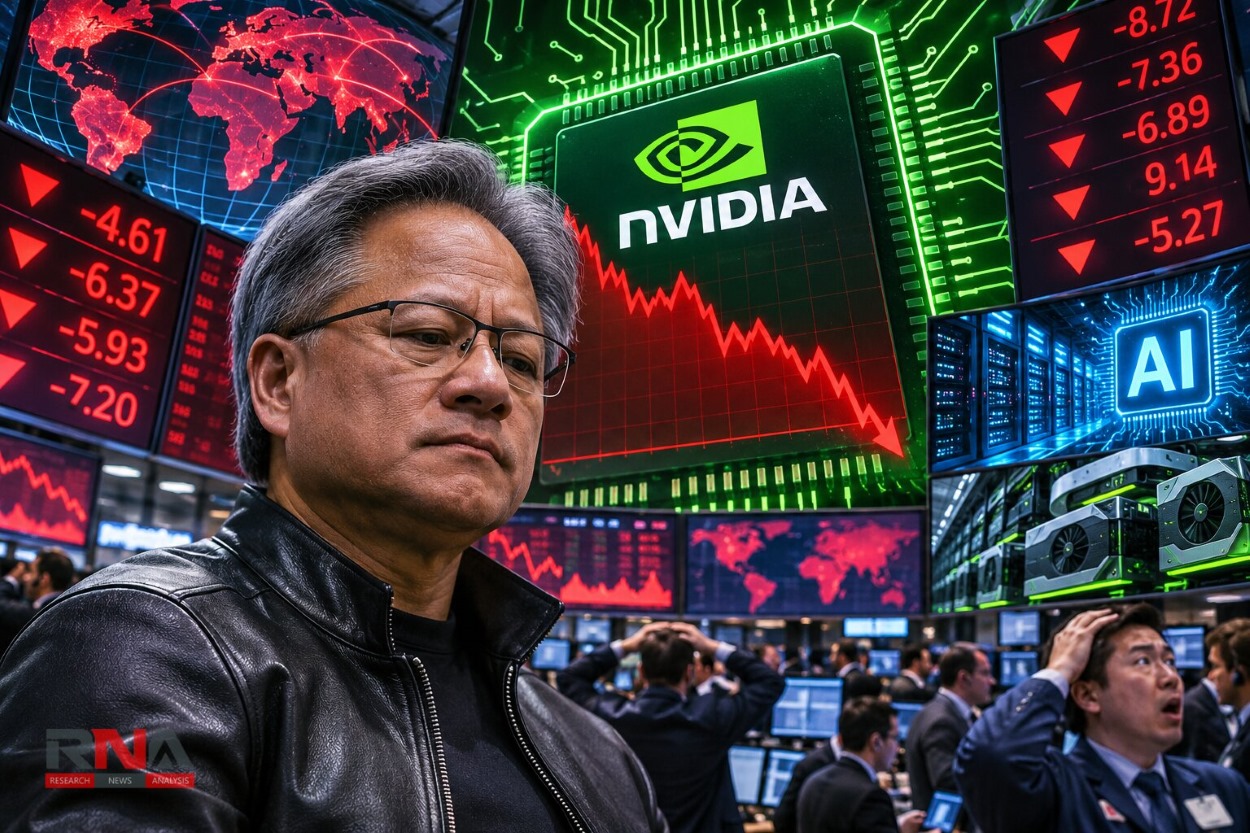
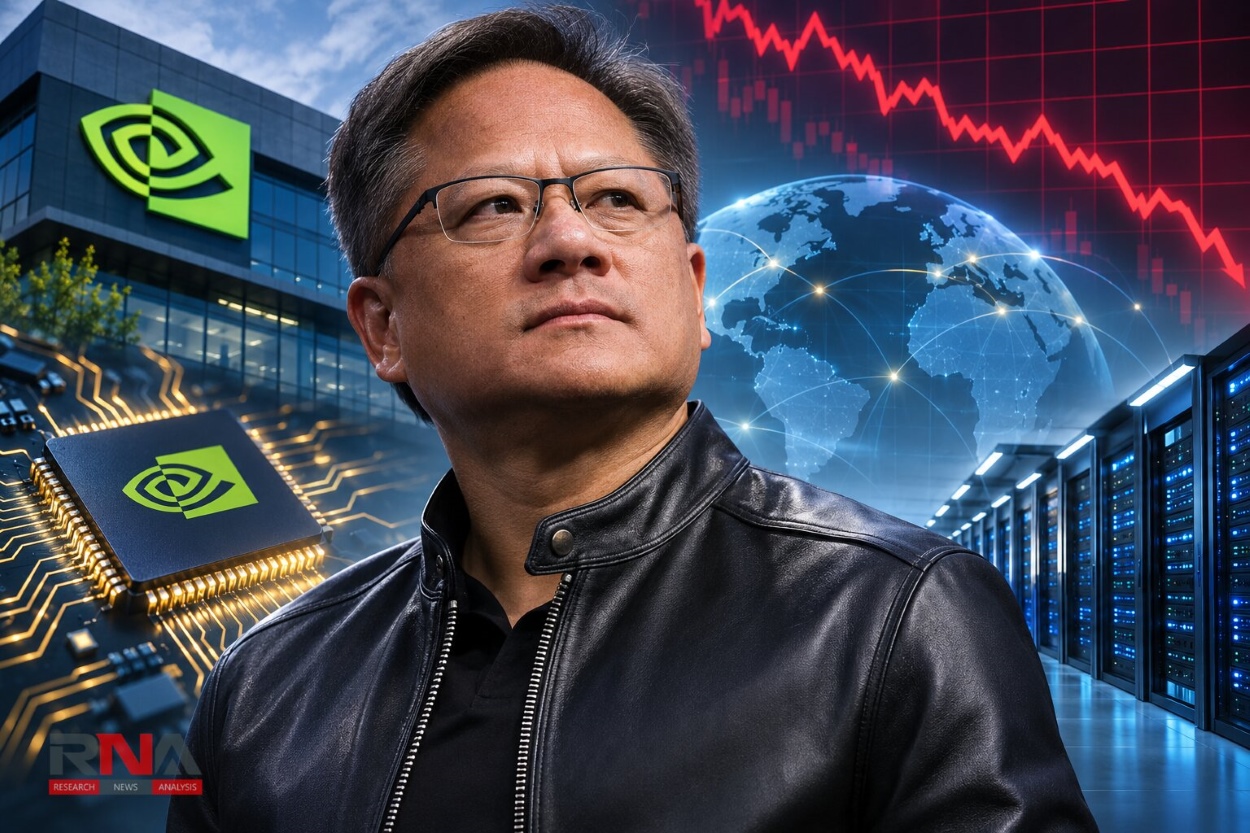
New Delhi: Nvidia has appointed its longtime chief financial officer, Colette Kress, as interim chief executive following the abrupt resignation of its co-founder, Jensen Huang, placing a seasoned financial executive at the helm of the world’s most influential artificial intelligence chipmaker during an unprecedented leadership crisis. The appointment, announced on Thursday comes as the company confronts allegations involving its former chief executive, concerns over possible Chinese intelligence activities and a sharp market sell-off that has unsettled the global AI industry.
Kress, who has overseen Nvidia’s finances since 2013, will retain her responsibilities as chief financial officer until a permanent chief executive is appointed, according to an official company announcement. Nvidia has also named Harvey C Jones, a veteran technology executive and former Synopsys chief executive, as its first board chairman, with directors beginning a search that will consider candidates from within and outside the company.
Huang’s departure follows allegations concerning extramarital relationships, including one involving Alice Huang, a Chinese businesswoman suspected by American authorities of intelligence links to Beijing, which China has denied. As RNA Media previously reported, the controversy prompted scrutiny of Nvidia’s corporate governance and national-security exposure, with the resulting rout in AI-linked stocks illustrating the industry’s dependence on Huang’s leadership.
Who is Colette Kress?
Kress, 59, is an American technology-industry executive with nearly four decades of experience in financial management, corporate strategy and operations across some of the world’s largest technology companies. Unlike Huang, whose reputation was built on engineering innovation and his ability to anticipate technological shifts, Kress has established herself through financial discipline, investment planning and managing the commercial demands of rapidly expanding technology businesses.
She joined Nvidia in September 2013 as executive vice-president and chief financial officer, when the company was principally associated with graphics processors for gaming and professional computing. During her tenure, Nvidia transformed into the dominant supplier of advanced processors for AI development, with annual revenue rising from approximately $4.13 billion in fiscal 2013 to $215.9 billion in fiscal 2026, according to Reuters.
Before joining Nvidia, Kress spent three years at Cisco Systems, where she was senior vice-president and chief financial officer of its business technology and operations finance organization. Her responsibilities extended beyond financial reporting to strategic planning, business development and operational oversight, giving her experience in coordinating large technology businesses.
Earlier, she spent 13 years at Microsoft, from 1997 to 2010, holding several senior financial positions, including chief financial officer of its Server and Tools division from 2006. She began her career at Texas Instruments, spending eight years in financial roles, and holds a bachelor’s degree in finance from the University of Arizona and an MBA from Southern Methodist University.
At Nvidia, Kress became an important figure in translating the company’s technological ambitions into commercial strategy, particularly as demand for AI infrastructure accelerated. She helped oversee financial arrangements involving major customers and partners, including Anthropic and CoreWeave, and regularly represented Nvidia alongside Huang during earnings calls and investor discussions.
Her financial success has also made her one of America’s wealthiest self-made businesswomen, with Forbes placing her 32nd on its 2026 list. According to Reuters, her Nvidia shareholdings were valued at approximately $750 million at Wednesday’s market close, compared with more than $1 billion when the stock reached its peak in October.
What Nvidia expects from its new chief
Kress’s immediate responsibility will be to restore confidence among investors, customers and employees while ensuring that Nvidia’s operations remain unaffected by the leadership upheaval. The company must also preserve its product-development schedule, sustain relationships with major cloud-computing providers and reassure customers that the transition will not interrupt deliveries of advanced AI processors.
Jones has expressed confidence in Kress’s understanding of Nvidia’s business, customers and operations, emphasizing that the company expects its commitments and technology roadmap to proceed without disruption. Kress, in her first statement as interim chief executive, pledged to build on the foundation established by Huang over 33 years and maintain Nvidia’s leadership in accelerated computing and artificial intelligence.
One immediate test will come on November 17, when Nvidia is scheduled to announce its third-quarter fiscal 2027 financial results, followed by a company-wide meeting on November 18. Investors will scrutinize not only revenue and earnings but also management’s ability to maintain the momentum of AI infrastructure spending without Huang’s direct leadership.
Kress will also inherit a sensitive geopolitical challenge involving American restrictions on advanced semiconductor exports to China, particularly as Washington examines the national-security implications of AI technology transfers. Although decisions on export controls rest with the US government, Nvidia’s commercial strategy and relationships with regulators will remain crucial, especially as the controversy surrounding Huang intensifies scrutiny of the company’s international partnerships.
Her appointment provides Nvidia with management continuity, but it does not resolve the longer-term question of who can replace Huang’s combination of technological vision, commercial influence and industry relationships. For Kress, the immediate task is therefore less about reinventing Nvidia than demonstrating that the company’s technological leadership and financial strength can survive the departure of the executive who built it.