


US tightens chip curbs, but India expects little impact
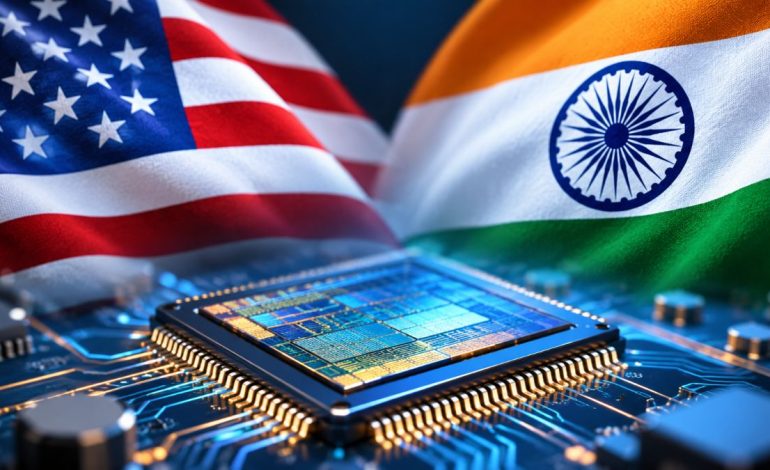
RNA Media illustration for representation.

New Delhi: India is less likely to face major disruptions from the latest US restrictions on advanced chip exports, the Ministry of Electronics and Information Technology (MeitY) secretary, S Krishnan, said. The development follows US decision on November 16 to tighten export and re-export regulations governing advanced artificial intelligence semiconductors.
The new rule restricts shipments of advanced chips to Southeast Asian countries such as Malaysia, Singapore and Thailand – countries that can give easy access to Chinese companies to train AI models, Reuters reported.
The regulations also introduce additional scrutiny of overseas data centres that provide substantial computing capacity to companies headquartered in countries of concern. The ultimate objective is to prevent restricted American semiconductor technology from indirectly reaching entities that could use it to strengthen their advanced AI and military capabilities.
However, India does not feature in the list as New Delhi is still seen as a trusted US partner.
The origins of the present semiconductor restrictions can be traced to 2019, when Trump 1.0 administration placed Chinese telecommunications giant, Huawei on the US Entity List, thus restricting its access to American technology and semiconductor supplies. The restrictions were subsequently strengthened in 2020 by expanding controls over foreign-made products developed using American technology.
In October 2022, the Biden administration introduced sweeping restrictions targeting China’s access to advanced computing chips and semiconductor manufacturing equipment. These measures were further tightened in October 2023 to close loopholes and prevent the acquisition of advanced processors through third countries.
Later, in January 2025, the Biden administration introduced the AI Diffusion Rule, seeking to establish a broader framework governing global access to advanced AI chips.
The Indian government launched the ₹76,000 crore India Semiconductor Mission in 2021, to encourage semiconductor fabrication, display manufacturing, chip design and assembly, testing and packaging facilities.
India and the United States have also expanded cooperation in this sector. Further, India’s participation in the US-led Pax Silica initiative reflects its growing engagement in securing critical technology and AI supply chains.
The move by US may not have a direct and immediate impact on India, but it will surely have long-term consequences. Therefore, it is pertinent for India to build indigenous capability for safeguarding its semiconductor mission.