
US serves summons on India in Pannun assassination-plot case; New York court clears move against Doval, ex-RAW chief
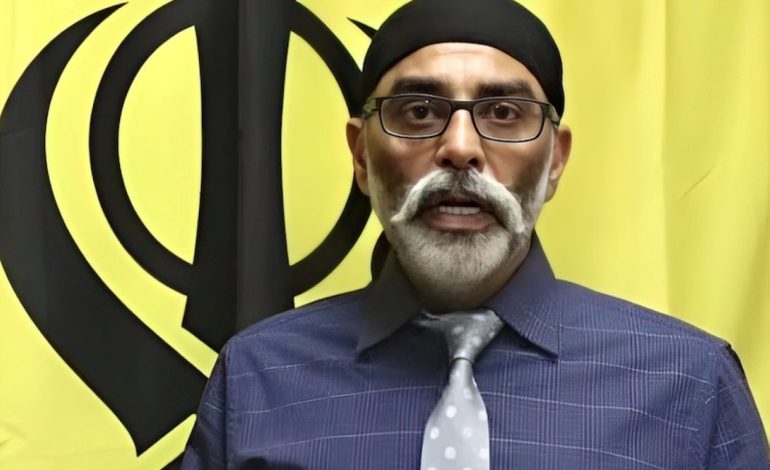
Gurpawant Singh Pannun. (Video screengrab)

New Delhi: The United States has formally transmitted court summonses to the Indian government in a civil lawsuit filed by Khalistani separatist Gurpatwant Singh Pannun over an alleged Indian-backed conspiracy to assassinate him on American soil in 2023. In a further development, a federal court in New York has authorized separate legal proceedings to serve India’s national security adviser, Ajit Doval, and former Research and Analysis Wing (RAW) chief Samant Goel through courts in New Delhi.
The developments bring renewed legal attention to a case that has complicated India-US relations since American prosecutors first disclosed the alleged assassination plot in November 2023. Although New Delhi has consistently rejected allegations of government involvement, the proceedings raise questions about sovereign immunity, the accountability of intelligence officials and the limits of foreign judicial jurisdiction.
According to media reports, the US state department informed the US district court for the southern district of New York that it had delivered the summons, complaint and notice of suit to the Indian embassy in Washington through diplomatic channels. The documents accompanied a diplomatic note signed on September 30 and delivered on October 9, with the department subsequently confirming the transmission in a letter dated October 20 and filed on October 28.
In the latest judicial development, federal judge Katherine Polk Failla on Monday permitted Pannun to serve Doval and Goel through Indian courts in Delhi by November 30. The order follows earlier unsuccessful attempts to deliver legal documents to the two officials, including a disputed attempt to serve Doval during his February 2025 visit to Washington.
Lawsuit names senior Indian security officials
Pannun, a US-based lawyer associated with the separatist organization Sikhs for Justice (SFJ), filed his civil lawsuit on September 17, 2024, seeking damages over the alleged attempt on his life. Besides the Indian government, the defendants named in the complaint include Doval, Goel, an individual identified as Vikram Yadav, Indian national Nikhil Gupta and unidentified persons allegedly connected with the conspiracy.
India designated Pannun a terrorist under the Unlawful Activities (Prevention) Act in 2020, having declared SFJ an unlawful association in 2019. New Delhi maintains that the organization’s campaign for an independent Khalistan threatens India’s sovereignty and territorial integrity, while Pannun continues to pursue separatist activities from North America.
The Indian government rejected the civil complaint when it was filed in September 2024, describing the allegations as unwarranted and unsubstantiated. However, the lawsuit has continued independently of the US justice department’s criminal prosecution arising from the same alleged assassination conspiracy.
What the diplomatic summons means
The state department’s involvement follows Section 1608(a)(4) of the US Foreign Sovereign Immunities Act, which provides for serving legal documents on foreign governments through diplomatic channels after prescribed alternative methods have proved unsuccessful. Under the legislation, foreign states generally enjoy immunity from American civil jurisdiction unless a recognized statutory exception applies.
Importantly, Washington’s transmission of the summons does not amount to an endorsement of Pannun’s allegations or a determination that India can legally be sued in an American court. The state department expressly stated that it was taking no position on whether service had been properly effected, the legal status of the defendants, the merits of the complaint or the defences available to them.
Under the statute, a foreign government ordinarily has 60 days after legally effective service to file a response or other appropriate pleading. Consequently, the proceedings could generate arguments over jurisdiction, immunity and the validity of service before a court considers the substantive allegations.
Criminal prosecution adds to legal pressure
The civil proceedings have acquired greater significance following Gupta’s guilty plea on February 13 this year to murder-for-hire, conspiracy to commit murder-for-hire and conspiracy to commit money laundering. According to the US justice department, Gupta worked at the direction of an Indian government employee to arrange the attempted killing, although his admission does not establish the liability of other defendants in Pannun’s civil lawsuit.
Gupta, who was arrested in Prague in June 2023 and extradited to the United States in June 2024, is now scheduled to be sentenced on November 20. Separately, American prosecutors have charged former Indian government employee Vikash Yadav with directing the alleged conspiracy, but those allegations against him remain subject to criminal adjudication.
India also conducted its own investigation after receiving information from Washington, with a high-powered committee submitting its findings in January 2025. The Union home ministry announced that the committee had recommended legal action against an unidentified individual and improvements in institutional safeguards, although it did not publicly disclose the individual’s identity.
The case nevertheless presents a sensitive diplomatic challenge because American judicial proceedings could require closer examination of alleged intelligence activities and questions of official responsibility. For New Delhi and Washington, the immediate test will be managing the legal dispute without allowing it to overshadow a strategic partnership encompassing defence cooperation, technology, intelligence-sharing and Indo-Pacific security.