
NIA charges US national, 6 Ukrainians under immigration law; UAPA probe remains open
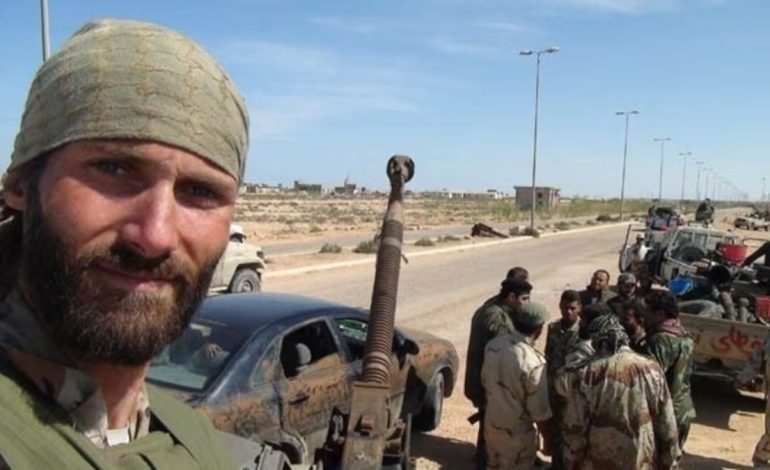
Matthew Aaron Van Dyke. Image courtesy: X.com/@Matt_VanDyke

New Delhi: The National Investigation Agency on Tuesday filed a chargesheet against US national Matthew Aaron Van Dyke and six Ukrainian nationals under the Immigration and Foreigners Act, 2025, without invoking provisions of the Unlawful Activities (Prevention) Act (UAPA) at this stage. The agency, however, told a special NIA court in Delhi that further investigation into possible offences under the anti-terror law remains open.
The six Ukrainians named in the case are Hurba Petro, Slyviak Taras, Ivan Sukmanovskyi, Stefankiv Marian, Honcharuk Maksim and Kaminskyi Viktor. All seven were arrested in March following an investigation into their alleged movement through India’s northeast and Myanmar and suspected involvement in drone-related training for Myanmar-based ethnic armed groups. The allegations have not been proved in court.
According to the chargesheet, as reported by ThePrint, the filing before the special judge, Prashant Sharma, invokes Sections 21 and 23 of the Immigration and Foreigners Act, 2025. The provisions deal with unlawful entry and other violations of requirements governing foreigners under the law.
According to the chargesheet, the seven entered India on tourist visas in December 2025, travelled through Guwahati and Mizoram and later crossed into Myanmar, where the NIA alleges they provided training to ethnic armed groups. The agency has also alleged violations connected with their movement and stay in India.
The absence of UAPA provisions from the present chargesheet does not mean that the anti-terror investigation has been closed. The NIA’s special public prosecutor, Rahul Tyagi, told the court that the UAPA-related strand of the case had been kept pending for further investigation, according to ThePrint’s report on the proceedings.
The chargesheet states that the agency has sought to continue the probe under Section 193(9) of the Bharatiya Nagarik Suraksha Sanhita, which permits further investigation after a police report has been filed. If additional evidence establishes a UAPA offence, the NIA can place it before the court through a supplementary chargesheet.
The original case was registered on March 13 under Section 18 of the UAPA, which covers conspiracy, attempts, abetment and facilitation relating to terrorist acts.
What led to the March arrests
Van Dyke was detained at Kolkata airport on March 13, while the six Ukrainian nationals were intercepted at Delhi and Lucknow airports. They were subsequently taken into NIA custody.
According to the FIR and court proceedings, the agency alleged that the accused had travelled into Myanmar to provide training in drone warfare, drone operations, assembly and jamming technology. It also examined whether drone equipment or related technology had been moved through India and whether the group had links with armed organizations operating in Myanmar.
These remain allegations made by the investigating agency and have not been established as findings of guilt.
The scope of the investigation widened in August when the NIA told a Delhi court that it had received information indicating possible involvement of certain Ukrainian and US nationals in a drone attack on a civilian aircraft in Myanmar. The agency was allowed to question Van Dyke and Viktor in Tihar Jail as part of that inquiry.
The NIA said electronic material seized during the investigation required further examination and corroboration. It has not established in court that all seven accused participated in the aircraft attack.
Defence cites absence of UAPA charges
Lawyers for the accused have pointed to the latest chargesheet while challenging the NIA’s earlier allegations. Van Dyke’s counsel, Rohit Dandriyal, questioned the absence of UAPA charges after months of custody, while counsel for the Ukrainian nationals, Nitin Saluja, reiterated that his clients were innocent.
Those submissions represent the defence position and do not dispose of the pending case. The seven remain accused under the Immigration and Foreigners Act, while the NIA continues investigating whether any UAPA offence can be established through further evidence.