

Manipur’s paid Telegram, WhatsApp sex-abuse network exposed; 13 held over explicit images and child porn
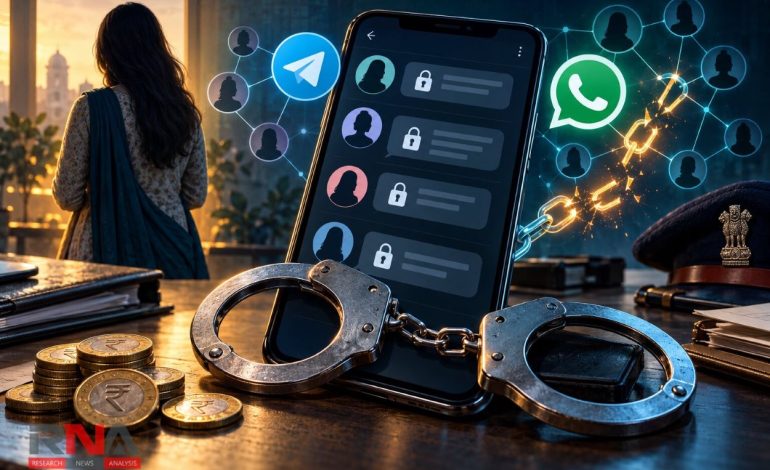
RNA Media illustration for representation.

New Delhi: Manipur Police have held 13 people, including a juvenile, in an investigation into a subscription-based network allegedly selling access to intimate photographs and videos of women circulated without their consent. Investigators said the Telegram channels and WhatsApp groups also distributed child sexual abuse material, prompting a wider inquiry into their operators, payment trails and sources of content.
The investigation, codenamed Operation Dignity, followed information received in early October about the circulation and sale of such material. At a police briefing on Tuesday, officials said more than 150 Telegram channels and WhatsApp groups had been identified, of which 38 had been disabled.
Police arrested 12 adults and detained a juvenile after registering a first information report at Moirang police station in Bishnupur district. Fourteen mobile phones and a laptop were seized as investigators examined the alleged network’s reach and sought to identify additional victims.
According to investigators, administrators attracted prospective customers by posting previews on publicly accessible channels before directing them towards restricted groups. Access was allegedly sold for ₹150 to ₹500 or more, with payments collected through UPI applications, including Google Pay, PhonePe and BHIM.
An officer told ThePrint that some memberships were renewed and that entry into private groups could require an introduction through existing contacts. These arrangements suggest that investigators are dealing with a continuing commercial operation, with controlled access and repeat payments, rather than isolated instances of forwarding images.
Police said the preliminary investigation had also uncovered exchanges of material between administrators, creating a secondary market for leaked photographs and videos. Investigators are examining allegations that content was obtained through hacking and other means, and that some suspects were directly involved in producing material through non-consensual sexual exploitation.
Most of the material involved women from Manipur, although an officer told ThePrint that images and videos of women from other states were also being traded. The officer said those held included college students and people who had dropped out of education.
The superintendent of police, Bishnupur, Ksh Ravikumar, said the operation involved coordination with police in other districts, and that one accused person was apprehended in Tamil Nadu with assistance from the state’s police. He said further action would target remaining administrators, suppliers of material and subscribers who paid for access.
The case has been registered under relevant provisions of the Information Technology Act, the Protection of Children from Sexual Offences (POCSO) Act and the Bharatiya Nyaya Sanhita. Police are continuing to investigate the wider network and financial transactions; the allegations against those held remain subject to investigation and judicial scrutiny.
Alongside the criminal inquiry, police said they were assisting victims with requests to remove material from online platforms, as well as legal aid and counselling. An officer told ThePrint that investigators were tracking UPI payments, bank transactions and mobile-device identifiers to establish connections within the network.
One service mentioned by police, StopNCII.org, creates a digital fingerprint of an intimate image or video on the affected person’s device, without uploading the original file. Participating platforms can use that fingerprint to detect matching content and remove it under their policies, although the service cannot erase material across the entire internet.
The service is intended for intimate material depicting adults and directs cases involving images taken when a person was under 18 towards specialist child-protection resources. India’s National Cybercrime Reporting Portal also provides a route for reporting online abuse, including child sexual abuse material.
Ravikumar urged affected women to report the offences, stressing that they were not responsible for the unauthorized circulation of their images and that police would protect their identities. He also cautioned parents and guardians that children could face unauthorized filming and exploitation even within trusted social circles.