
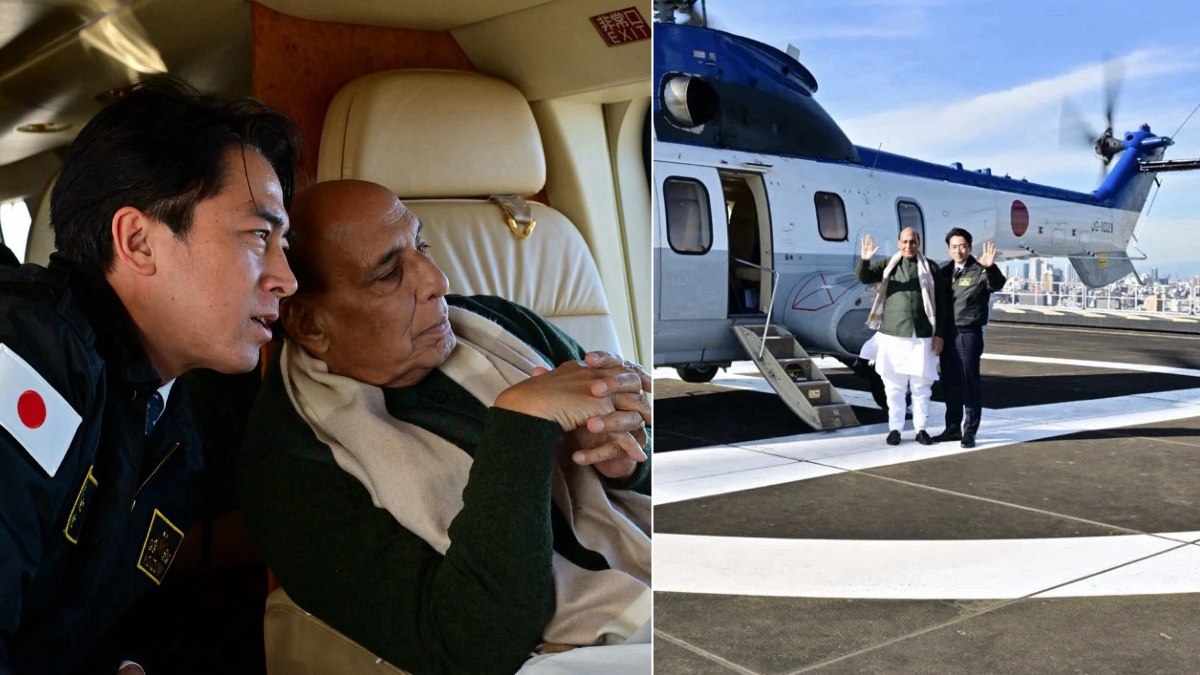
India opens door to Japanese military drills with first live-fire training agreement
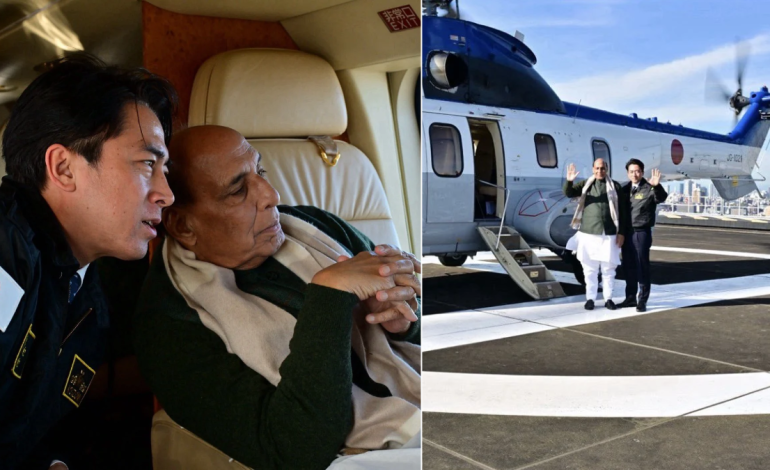
India opens door to Japanese military drills. (Image courtesy: X/@shinjirokoiz)

New Delhi: India has agreed to allow Japan’s defence forces to use its firing ranges for live-fire military training for the first time, including exercises involving surface-to-ship missiles. The two countries signed a letter of intent for the arrangement during the fourth India-Japan 2+2 Foreign and Defence Ministerial Meeting in Tokyo on Thursday.
The agreement adds a new area to India’s growing defence partnership with Japan. Both sides agreed to accelerate coordination between their defence authorities to make the arrangement operational as soon as possible.
The defence minister, Rajnath Singh, and the external affairs minister, S Jaishankar, represented India at the talks. They met their Japanese counterparts, the foreign minister, Motegi Toshimitsu, and the defence minister, Koizumi Shinjiro, to discuss military cooperation and regional security.
India and Japan also agreed to expand their joint military exercises. The plans include more complex drills, the use of unmanned systems and exercises organized at short notice. Both sides welcomed the first visit by Japanese fighter aircraft to India for the Veer Guardian 26 air exercise.
India also discussed closer defence manufacturing ties with Japan. The ministers called for progress on Unicorn-related arrangements and for India’s Acceptance of Necessity by February 2027. They also backed cooperation under the “Design with Japan, Make in India” framework and welcomed the third India-Japan Defence Industries Forum held in Tokyo in October.
Maritime security was another major area of discussion. India and Japan agreed to strengthen cooperation between the Indian Navy and the Japan Maritime Self-Defense Force in maritime surveillance, information sharing, search and rescue operations, and disaster relief.
The two countries will also explore joint work on mine countermeasures and naval shipbuilding and design. India will host the fifth Coast Guard Global Summit in February 2027, further expanding cooperation between the two countries’ coast guards.
India and Japan also agreed to improve the security of undersea communication cables across the Indo-Pacific. The discussions covered cooperation against cyberattacks, including threats to AI systems and critical infrastructure. Both sides will work towards renewing their existing cybersecurity cooperation agreement.
The two countries also plan to expand cooperation in space. Areas include tracking objects in space, using satellites to monitor maritime activity and discussing international rules for space operations.
On economic security, India and Japan raised concerns over export restrictions and trade practices that disrupt global supply chains. They agreed to work more closely in semiconductors, critical minerals, information and communication technology, clean energy and pharmaceuticals.
The ministers also identified artificial intelligence as an important area for joint research and development. They described India and Japan as “strategic research and development partners” and backed closer cooperation under the Japan-India AI Cooperation Initiative.
On counterterrorism, both countries “unequivocally and strongly condemned terrorism and violent extremism in all its forms and manifestations”, including cross-border terrorism. They called for action against UN-listed groups, including al-Qaida, ISIS/Daesh, Lashkar-e-Taiba and Jaish-e-Muhammed, and their support networks.
India and Japan also reiterated their support for reforming the UN Security Council, including an increase in permanent and non-permanent members. Both countries backed each other’s bids for permanent seats in a reformed council. They also confirmed mutual support for their respective non-permanent membership bids for 2028-29 and 2033-34.
The talks also covered India’s Indo-Pacific Oceans Initiative and Mahasagar vision, alongside Japan’s updated Free and Open Indo-Pacific policy. Both sides agreed to strengthen cooperation through the Quad and Asean. They welcomed the first India-Japan-Philippines Trilateral 1.5 Dialogue in October and the first India-Japan-Indonesia naval Passex exercise in February 2026.
India and Japan will mark 75 years of diplomatic relations in 2027 under the theme “India-Japan Year of Shared Horizons”. The two sides also agreed to hold their next 2+2 Ministerial Meeting in India at a mutually convenient date.