
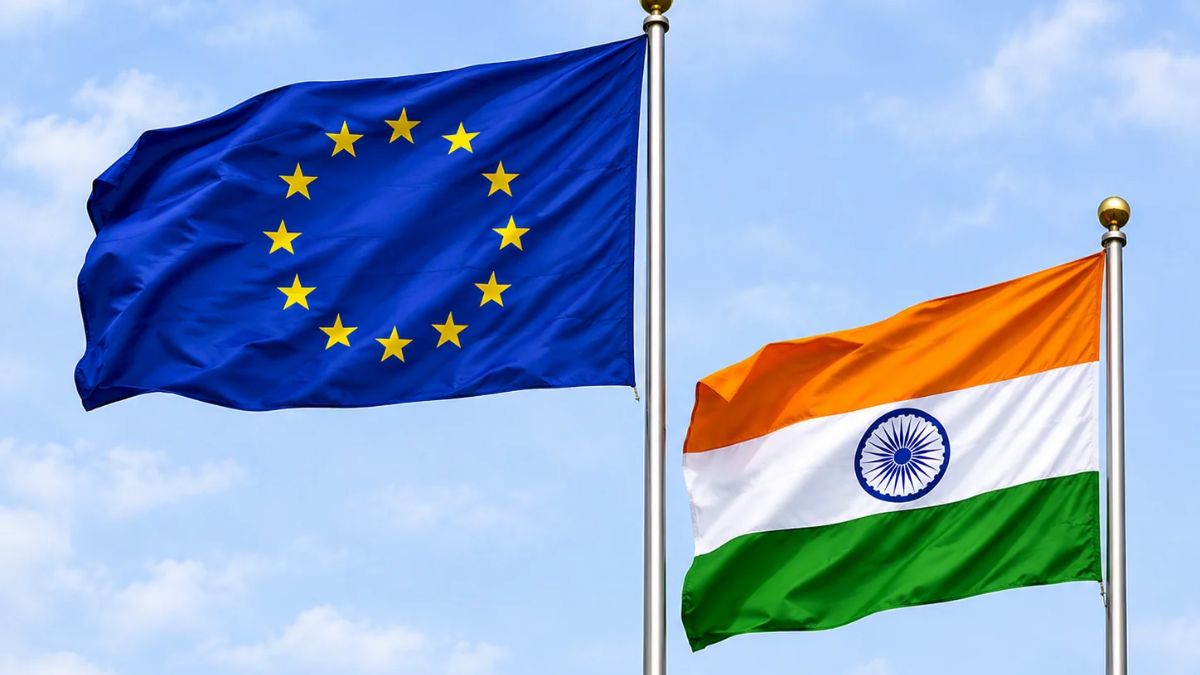



India, EU conclude negotiations on €93.5 billion Horizon Europe research programme
RNA Media illustration for representation.

New Delhi: India and the European Union have concluded negotiations on India’s association with Horizon Europe, the EU’s €93.5 billion research and innovation programme, opening new opportunities for scientific and technological collaboration. Once the agreement is signed and implemented, eligible Indian researchers, universities and businesses will be able to compete for direct European funding and lead multinational research projects, with participation envisaged from January 2027.
The European Commission announced the successful conclusion of negotiations on Friday, describing the development as an important step in strengthening the India-EU strategic partnership. EU commissioner for startups, research and innovation, Ekaterina Zaharieva, said the agreement would create opportunities for businesses and researchers, adding that India and Europe should work together to develop technologies shaping their future. The agreement still requires signing and completion of the necessary procedures before becoming operational.
Horizon Europe, which runs from 2021 to 2027, supports collaborative research involving universities, scientific institutions and businesses across participating countries. Its €93.5 billion budget covers the entire programme, rather than representing funding allocated exclusively to India.
Under the proposed arrangement, Indian institutions will participate in Pillar II – global challenges and European industrial competitiveness, the programme’s largest component. It supports multinational research projects in healthcare, artificial intelligence, digital technologies, advanced manufacturing, space, climate, energy and bioeconomy.
Indian organizations can already collaborate in certain Horizon Europe projects but generally must arrange their own financing. The association would allow eligible Indian participants to compete for direct EU funding under Pillar II on terms comparable to European partners, subject to project selection and programme rules.
The association represents the closest form of research cooperation offered by the EU to non-member countries. Participating countries contribute financially to the programme, although the European Commission has not publicly specified India’s contribution or detailed funding arrangements.
Exploratory discussions began on February 6 this year, which was followed by formal negotiations on July 17. Their conclusion on November 6 clears the way for signing the agreement, with January 2027 identified as the expected starting point.
The development builds on the India-EU Agreement for scientific and technological cooperation, signed in 2001 and renewed until 2030. Research and innovation also form part of the Joint EU-India comprehensive strategic agenda adopted at the January 27 summit.
Existing cooperation includes projects addressing marine pollution, waste to renewable hydrogen and electric-vehicle battery recycling, supported by approximately €60 million in joint investment. These initiatives demonstrate the expanding scope of scientific collaboration between Indian and European institutions.
The partnership has also advanced through the India-EU trade and technology council, which promotes cooperation in artificial intelligence, semiconductors, digital public infrastructure, high-performance computing, digital skills and sixth-generation telecommunications. The EU also launched its first European legal gateway office in India in February 2026 to facilitate legal mobility for skilled professionals in the information and communications technology sector.
The European Commission said 23 non-EU countries are currently associated with Horizon Europe, including Japan, South Korea, Canada, Switzerland and the United Kingdom. Australia has also concluded association negotiations, with its agreement awaiting signing.