
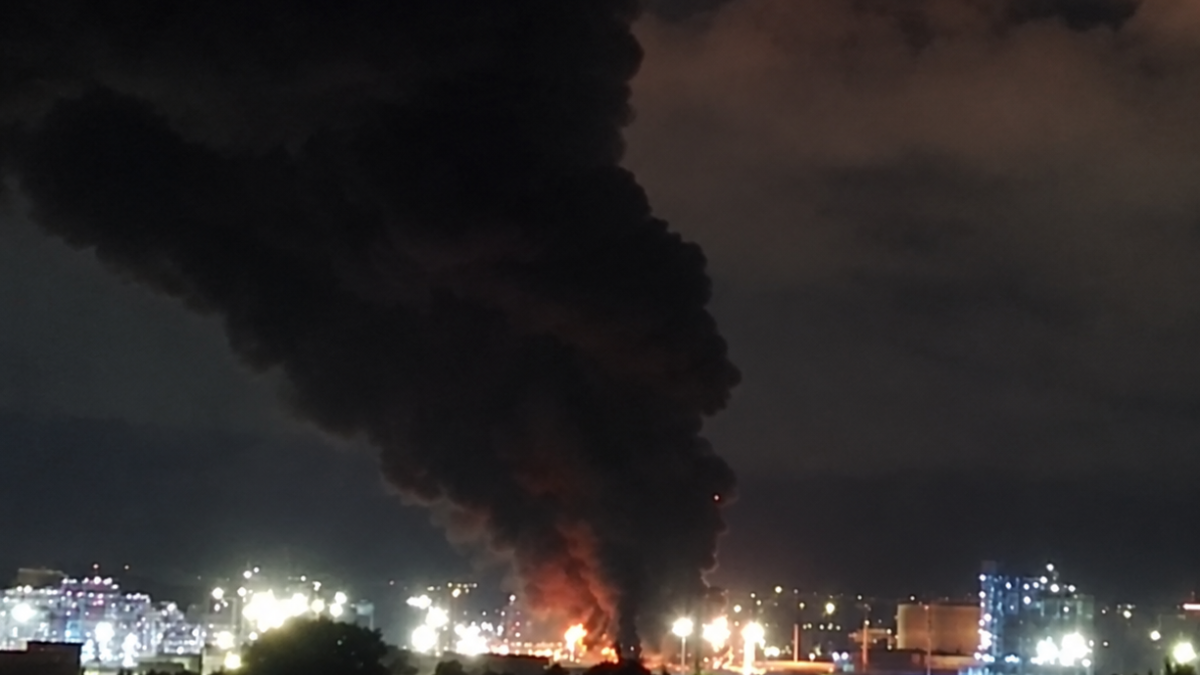



Fire at HPCL Visakhapatnam refinery after blast. What we know so far
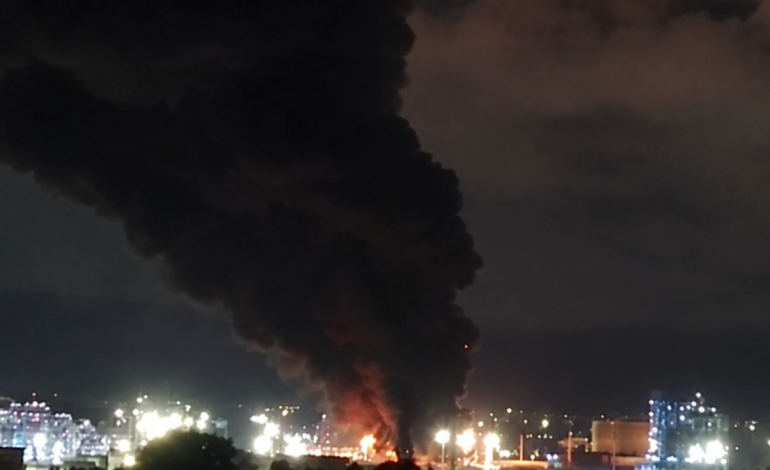
Visuals circulating on X show the refinery fire and thick smoke.

New Delhi: A reported explosion at Hindustan Petroleum Corporation Limited’s (HPCL) Visakhapatnam refinery triggered a major fire on Monday night, with flames and thick smoke rising from the facility. The fire broke out at a pitch intermediate storage tank in the refinery’s Residue Upgradation Facility (RUF) around 10pm on Monday. It was brought under control, with no casualties or injuries reported.
HPCL confirmed the incident in a post on X on Tuesday, saying its “fire & safety team of Visakh Refinery promptly activated the firefighting and emergency response measures”. The company said the blaze remained confined to the pitch tank area and was extinguished within a short time.
The fire did not affect operations across the refinery, with HPCL confirming that all units were functioning safely. The blaze was brought under control using the refinery’s firefighting systems, with assistance from the Andhra Pradesh fire department, revenue divisional officer, Dileep Chakravarthy, told reporters on Monday.
According to reports, incident involved sulphur pitch, a residual material generated during refining operations. The reported explosion preceded the outbreak of the fire, while the flames and smoke were visible from surrounding areas. Chakravarthy said an inquiry would be initiated to examine industrial safety arrangements at the facility in accordance with applicable norms.
What is HPCL’s Residue Upgradation Facility?
Residue Upgradation Facility (RUF) is an important part of the HPCL modernization plan at the Visakhapatnam refinery. The plant was commissioned in January 2026 and has a throughput of 3.55 million metric tonnes per annum (MMTPA), using state-of-the-art LC-Max residue hydrocracking process.
It is designed to convert nearly 93 per cent of low-value bottom oils, which are heavy residual products left after crude oil processing, into higher-value petroleum products. The technology is expected to improve the refinery’s distillate output by up to 10 per cent compared with pre-expansion levels.
The RUF also enables the refinery to process heavier crude varieties and improve the production of fuels such as diesel. HPCL has described the installation as the world’s first LC-Max unit, making it a significant part of the company’s effort to improve refining efficiency and increase the value extracted from crude oil.