
Explained: Why India wants to build the Siang Dam amid China’s Brahmaputra project and local protests
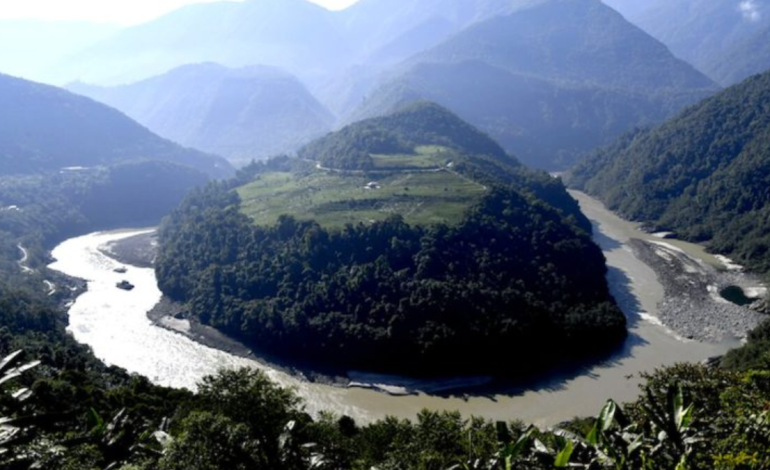
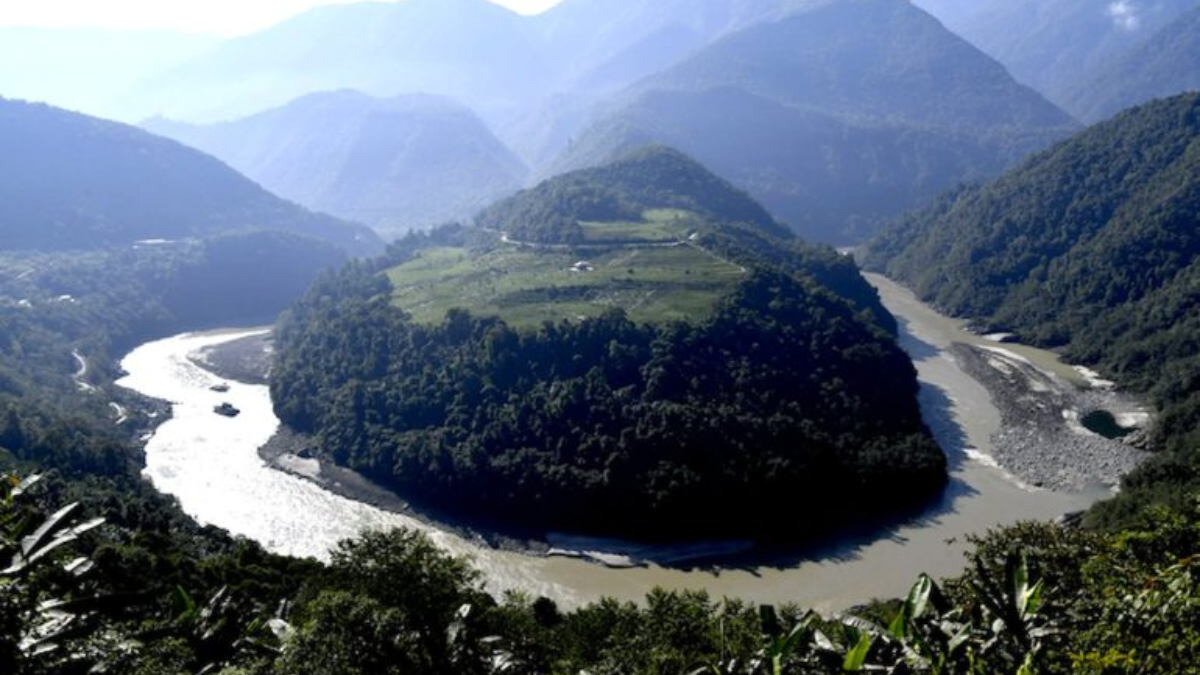
Yarlung Tsangpo river’s “great bend” in China’s Tibet Autonomous Region, close to India’s Arunachal Pradesh, where the megadam is being built. (Photo courtesy: China News Service)

New Delhi: India’s proposed 11,200MW Siang Upper Multipurpose Project (SUMP) in Arunachal Pradesh is facing opposition from indigenous communities even as the government considers it a strategic measure against China’s upstream hydropower development in Tibet. The dispute has intensified following protests, arson and vandalism in Pasighat, bringing concerns over national security, land rights and displacement into focus.
The unrest followed a 12-hour shutdown called by organizations opposing the project, as RNA Media earlier reported. An NHPC office and properties associated with political leaders were vandalised, while police personnel and protesters were injured.
Why does India want the Siang dam?
The SUMP is a proposed hydropower and water-storage project on the Siang river in Arunachal Pradesh. The river originates in Tibet as the Yarlung Tsangpo, enters India as the Siang and flows through Assam as the Brahmaputra.
China began constructing its Medog, or Motuo, hydropower project on the lower Yarlung Tsangpo in July 2025. The planned complex has an installed capacity of approximately 60,000MW. Its scale and location near the river’s Great Bend have raised concerns in India about potential changes to downstream flows, sudden water releases and sediment disruption.
The Indian government has asked China to make sure that its activities do not affect downstream nations. Nevertheless, a lack of information regarding the operations of the Chinese project and a lack of hydrological data sharing have made risk assessment difficult for India.
The proposed SUMP would offer extra water storage as well as producing power. As reported, a reservoir that will be constructed under the plan will ensure flow control, and will act as a buffer in case of any sudden release from above.
Government has said that the project was in the national interest because India needed safeguards against the possibility of China deliberately releasing water downstream. However, the extent to which the SUMP could counter potential risks remains subject to technical assessment.
Why are local communities opposing the dam?
Certain members of the local Adi tribes believe that the planned reservoir would result in submersion of their ancestral property, displacement and harm to their livelihood through agriculture. They also have spiritual and cultural links with the Siang river.
Residents have also raised concerns about constructing a large dam in a Himalayan region vulnerable to earthquakes and landslides.
The opposition escalated after the 12-hour shutdown was followed by violence in Pasighat. As RNA Media had reported, an NHPC office was set ablaze, properties associated with legislators and the state BJP president were vandalized, and police vehicles were damaged. The violence prompted additional security measures and police action.
How did the project develop?
Plans to harness the Siang and Subansiri rivers date back to 1982, when the Brahmaputra Board proposed smaller hydropower projects in the region. The strategic dimension gained prominence in 2013, when the Centre raised concerns about China’s hydropower development on the Yarlung Tsangpo.
In 2017, the proposed Siang Upper Stage I and Stage II projects were merged under a single plan, which subsequently developed into the SUMP. China’s approval of its 60,000MW hydropower project in December 2024 further strengthened the case for examining a large storage facility in Arunachal Pradesh.
NHPC has examined three possible sites for the project. Uggeng has a proposed capacity of 11,600MW, while Dite Dime and Parong are each planned for 11,200MW. Further studies are needed before selecting a site and starting detailed planning.
Why are experts questioning the project?
Himanshu Thakkar, coordinator of the South Asia Network on Dams, Rivers and People, told the Indian Express that India lacked sufficient public information about China’s project to determine its likely downstream impact.
Thakkar said India needed details about the Chinese dam’s dimensions and operating procedures before deciding what countermeasures were necessary. He questioned the assumption that the SUMP would automatically offset the risks posed by China’s project and stressed that cooperation from local communities would be essential.
What has the government said?
The Arunachal Pradesh chief minister, Pema Khandu, said in September that the project would not advance beyond the feasibility stage if experts found it unviable. He also promised consultations with affected communities, including environmental and social impact assessments, if the proposal progressed.
The People’s Party of Arunachal (PPA) has called for the withdrawal of central security forces and the release of arrested protesters and urged the government to engage directly with affected villagers rather than rely on security deployments to facilitate surveys.
What is the project’s current status?
SUMP is still at the pre-feasibility level and has not been approved for construction. The studies that are currently being undertaken will assist in evaluating its viability and choosing an appropriate location.
The challenge for India is the need to assess the risk factors of China’s upstream construction projects while tackling the opposition from Arunachal Pradesh. The project’s future rests on the outcome of the technical appraisal and on how well the government will manage the issue of resettlement and environmental risks.