Explained: Sri Lanka’s parliament sets up committee on Black July, 43 years after anti-Tamil violence
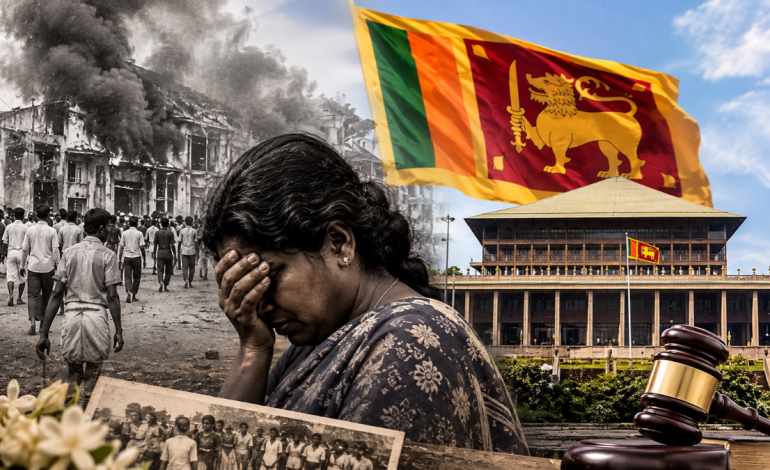
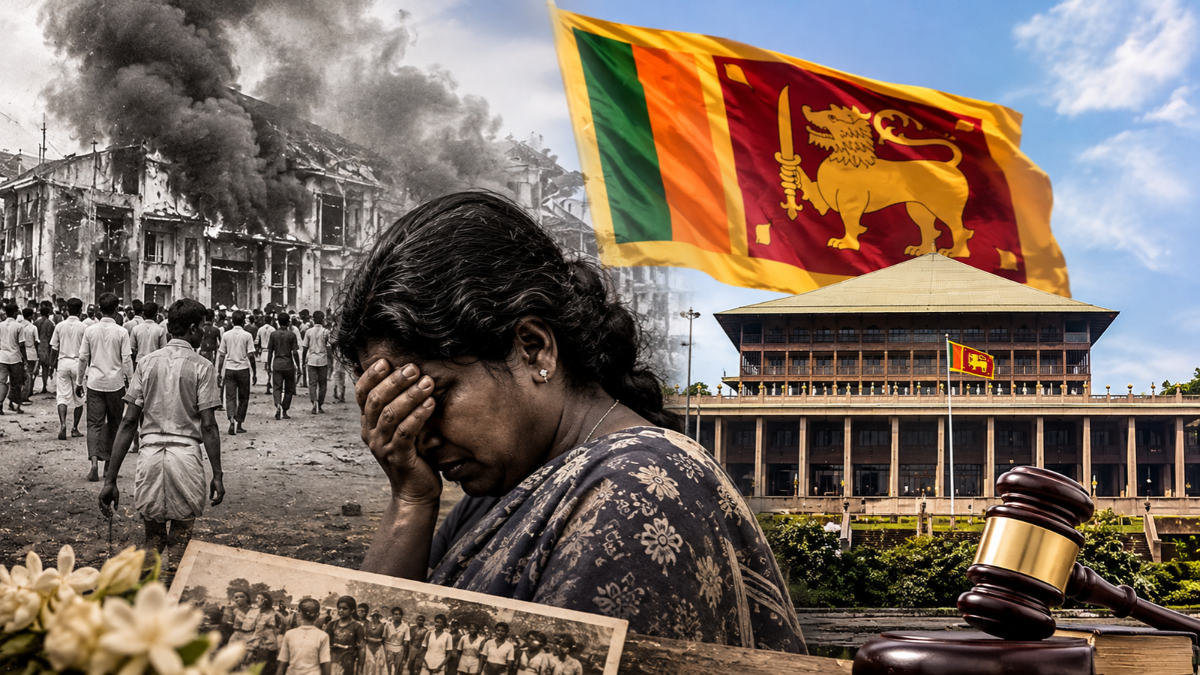
RNA Media illustration for representation.

New Delhi: Sri Lanka’s parliament has named a committee to study Black July, the anti-Tamil violence of 1983. The speaker, Jagath Wickramaratne, announced the 11-member panel on November 28.
The committee will be chaired by the women and child affairs minister, Saroja Paulraj. The panel aims to study the violence, report on its impact and recommend relief for those who suffered.
Mobs killed thousands of Tamils across the island in the last week of July 1983. Commentators widely treat that week as a turning point towards nearly three decades of civil war.
The committee draws members from both government and opposition benches. Its members include the justice minister, Harshana Nanayakkara, Eranga Gunasekara, Muneer Mulaffer, Thanura Dissanayake and Hiruni Wijesinghe.
Mano Ganesan, Selvam Adaikalanathan, G Srinesan, Suranga Ratnayake and Krishnan Kalaichelvi complete the line-up. Adaikalanathan, the Vanni MP who leads the Tamil Eelam Liberation Organization, had earlier pressed for a stronger form of inquiry.
The committee is expected to summon witnesses, demand records and take written and oral evidence. The human, economic and social losses of 1983 “have not yet been properly assessed”. Black July is widely seen as having set the country back by decades.
The push gained pace in October. On October 9, 51 government MPs handed the deputy speaker a signed proposal for a select committee.
That move followed Adaikalanathan’s own call for a presidential commission of inquiry. The government blocked his motion, and Nanayakkara argued that a select committee would let all parties take part.
The National People’s Power (NPP) MP Thanura Dissanayake presented the motion on November 3. Fellow NPP MP Bhagya Sri Herath seconded it.
The central dispute over July 1983 concerns intent. Did the violence erupt on its own, or did people in power plan it?
What happened in July 1983
President JR Jayewardene and his United National Party blamed a spontaneous Sinhala reaction to an attack in Jaffna. In a television address, Jayewardene offered victims no sympathy and announced a law against separatism.
Journalist DBS Jeyaraj argued that the mobs carried lists of Tamil-owned homes and businesses. He also said state vehicles transported rioters.
In 2001, the then president, Chandrika Kumaratunga, appointed a truth commission on ethnic violence. Its findings held that political authorities and the state orchestrated and manipulated the events of July 1983.
The violence also reached Welikada, a high-security prison in Colombo. Inmates killed 53 Tamil prisoners in two attacks, and only 19 of the 72 Tamil inmates survived.
The death toll remains disputed, and no single figure commands agreement. Reports on the committee’s appointment put the number of Tamils killed between July 23 and 30 at around 3,000.
More than 100,000 Tamils fled to India. About 130,000 more crowded into makeshift camps at home.
Tamil grievances built up for decades before 1983. The Official Language Act of 1956, known in Sri Lanka as Sinhala Only, replaced English with Sinhala as the official language.
A university standardization scheme followed in 1971. Critics argued that it was aimed at curbing the strong showing of Jaffna students.
On the night of May 31, 1981, a mob set fire to the Jaffna Public Library. A Daily Mirror column says some security personnel and two leading politicians accompanied the mob.
The library fire destroyed more than 97,000 volumes, including palm-leaf manuscripts.
On July 23, 1983, the Liberation Tigers of Tamil Eelam (LTTE) ambushed an army patrol at Thirunelvely in Jaffna. The attack killed Lieutenant Vaas Gunawardena and 12 other soldiers.
The government brought the bodies to Kanatte cemetery in Colombo for a joint funeral. At dusk on July 24, mobs moved out from the cemetery and began burning Tamil homes and shops.
That same Sunday, troops in the north shot dead 51 civilians across the Jaffna peninsula.
Black July reshaped Sri Lankan politics within months. Tamil United Liberation Front MPs refused to swear a Sixth Amendment oath renouncing support for a separate state.
They stayed away from parliament and lost their seats in October 1983.
The violence also pushed many young Tamils towards armed groups. Jeyaraj argues that it drove Tamils north, east and abroad, and gave India grounds to intervene.
International pressure pushed the government to restore order. By August, the violence had ceased, but the war it fed ran until May 2009.
Columnist Jehan Perera has argued that Black July must not be left out of official truth-seeking. He pointed to a mandate covering only the north and east from July 24, 1983 to May 18, 2009.
Timeline: from Sinhala Only to a select committee
- 1956: Parliament passes the Official Language Act, or Sinhala Only.
- 1971: The government introduces university standardization.
- May 31, 1981: A mob burns the Jaffna Public Library.
- July 1983: Jayewardene gives his interview to the Daily Telegraph.
- July 23, 1983: The LTTE kills 13 soldiers at Thirunelvely.
- July 24, 1983: Mobs leave the Kanatte funeral and start attacking Tamil property in Colombo.
- July 25, 1983: Jayewardene imposes a curfew, and inmates attack Tamil prisoners at Welikada.
- July 27, 1983: The violence peaks, and a second attack hits Welikada.
- July 28, 1983: Indira Gandhi sends PV Narasimha Rao to Colombo as her envoy.
- July 29, 1983: Killings resume amid rumours of Tigers in Colombo.
- October 1983: Tamil United Liberation Front MPs lose their seats under the Sixth Amendment.
- 2001: Kumaratunga appoints the truth commission on ethnic violence.
- September 2002: The commission completes its report on violence between 1981 and 1984.
- July 24, 2026: Prime Minister Harini Amarasuriya acknowledges Tamil suffering but offers no state apology.
- October 9, 2026: 51 government MPs propose a select committee.
- November 3, 2026: Thanura Dissanayake presents the motion in parliament.
- November 28, 2026: The speaker announces the 11-member panel.
Tamil MPs marked the 43rd anniversary in parliament on July 23. Batticaloa district MP Shanakiyan Rasamanickam said there had “still been no justice and no accountability”.
He added that the Tamil community still carries memories of the dead and the burned homes. Those memories persist, he said, despite four decades of political and social change.
Prime Minister Amarasuriya further acknowledged the destruction of Tamil lives, homes and property. Many Tamils noted that her speech stopped short of a formal apology on behalf of the state.
The committee’s first meeting will start its six-month clock. Parliament can extend that deadline if the panel needs more time.
Sri Lanka already runs an Office for Reparations. However, the country still lacks a credible judicial mechanism for accountability.