


Delhi’s air worsens before Diwali as severe pollution grips neighbourhoods across capital

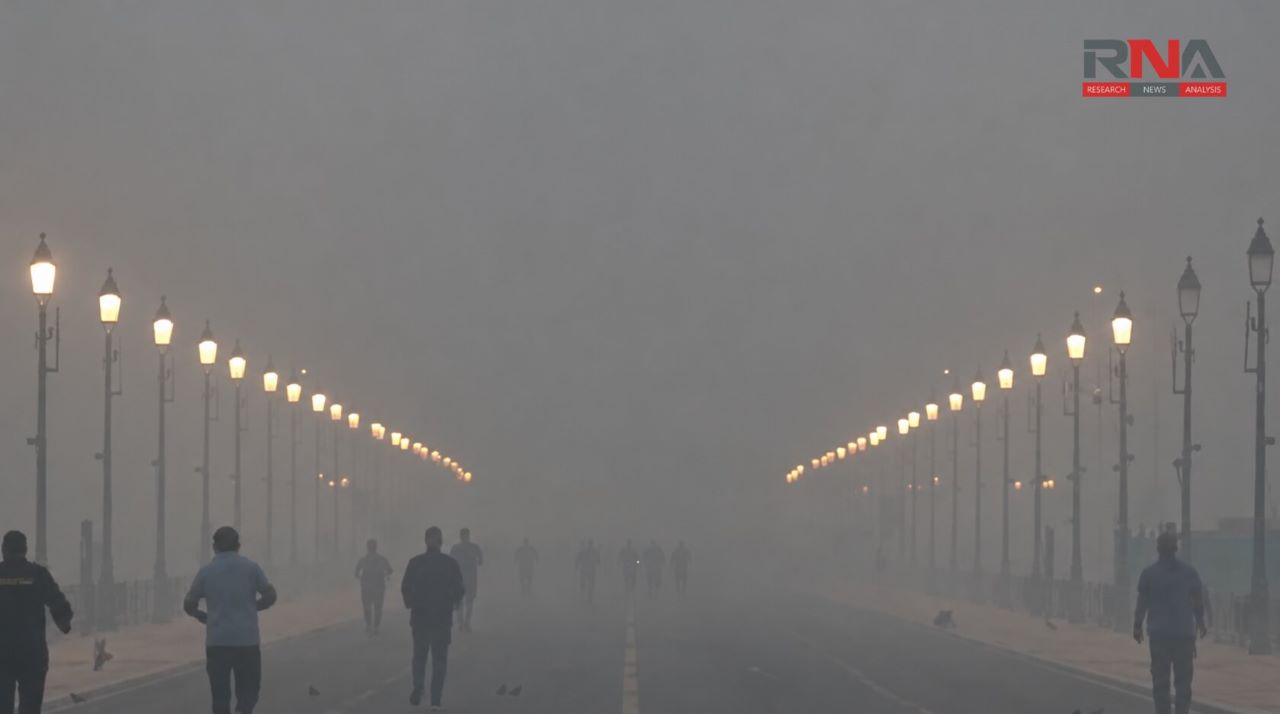
New Delhi: Delhi’s air quality deteriorated further on November 4, 2026, with several neighbourhoods recording severe pollution four days before Diwali, even as emergency controls remained in force across the National Capital Region (NCR). The capital’s citywide air quality index (AQI) stood at 373 at 7am, in the “very poor” category, while Punjabi Bagh and Jahangirpuri recorded readings of 452 and 450 respectively.
The worsening conditions have raised concerns about additional emissions during the festival and the prospect of a prolonged spell of unhealthy air. The government’s Air Quality Early Warning System forecast “very poor” conditions through November 6, followed by air quality ranging between “very poor” and “severe” over the subsequent six days.
Pollution levels varied substantially across the NCR, making the regional picture more complicated than a single headline figure suggests. At 7am, Gurugram recorded an AQI of 322, Noida 310, Greater Noida 255 and Ghaziabad 233, while Faridabad was relatively better at 128, according to CPCB data.
Individual monitoring stations, however, showed how much worse conditions could be within a city. Noida’s Sector 62 recorded 423 at 7am, placing it in the severe category despite the lower citywide average.
Later station readings on the Indian Institute of Tropical Meteorology’s monitoring portal showed little relief in several parts of Delhi. At 9am, Jahangirpuri stood at 451, Delhi Technological University at 435, Alipur at 423 and ITO at 421, while Dwarka Sector 8 had reached 402.
AQI.in reported a reading of 488 at 11am on November 4, ahead of Diwali on November 8. That private-platform figure should be distinguished from the CPCB-based citywide readings reported earlier in the morning.
Comparisons require attention to the monitoring source, location and observation time, particularly when a neighbourhood reading is placed alongside a city average. Under the CPCB’s national AQI framework, readings from 301 to 400 are classified as “very poor” and those from 401 to 500 as “severe”; the index combines information about monitored pollutants into a public-facing measure of air quality.
The deterioration has been rapid enough to trigger a stronger regional response before the festival. The Commission for Air Quality Management (CAQM) activated Stage II of the Graded Response Action Plan (Grap) on November 2, after Delhi’s AQI reached 324, directing agencies to implement the additional measures alongside Stage I controls already in force.
The Stage II measures include intensified mechanized road cleaning, water sprinkling and dust suppression, with particular attention to busy roads and pollution hotspots. Authorities have also been told to strengthen inspections of construction sites and increase parking charges to discourage private vehicle use.
The commission has advised staggered working hours for public offices and municipal bodies in Delhi and adjoining urban centres, including Gurugram, Faridabad, Ghaziabad and Gautam Budh Nagar. Resident welfare associations have been directed to provide electric heaters for security and other support staff to reduce the burning of biomass and waste for warmth.
A further construction-related intervention is scheduled to begin on November 5. According to an official environment ministry statement, the Union environment minister, Bhupender Yadav, announced that construction and demolition activities across the NCR would be halted from November 5 to 20 to curb pollution.
Weather conditions remain an important influence on how quickly emissions accumulate or disperse. The official forecast anticipated north-westerly winds on November 4, strengthening during the afternoon before weakening again in the evening, while continuing to project poor air quality over the following days.
Crop-residue burning is another contributor, although its influence changes with wind direction and other meteorological conditions. A forecast from the government’s Decision Support System, reported on November 3, projected that stubble burning’s share of Delhi’s PM2.5 pollution would rise from about 8.6 per cent on November 2 to 15.3 per cent on November 3; these were modelled estimates, not a measurement of the contribution on November 4.
The pollution episode also precedes a temporary relaxation of restrictions on certified green firecrackers. The Supreme Court has permitted their use on November 7 and 8, subject to safeguards, with the complete ban to resume on November 9, as RNA Media had reported.
The conditions include certification, product-specific QR codes, designated sale locations and air-quality monitoring. The court also called for compliance reports from the authorities and warned of action over failures to implement its directions.
For residents, the distinction between “very poor” and “severe” carries a practical health warning. The CPCB says prolonged exposure to very poor air increases the risk of respiratory illness, while severe pollution can affect healthy people and have serious consequences for those with existing respiratory or cardiovascular conditions.