
Bangladesh softens stand on Ganga water treaty, seeks renewal as December 12 deadline looms
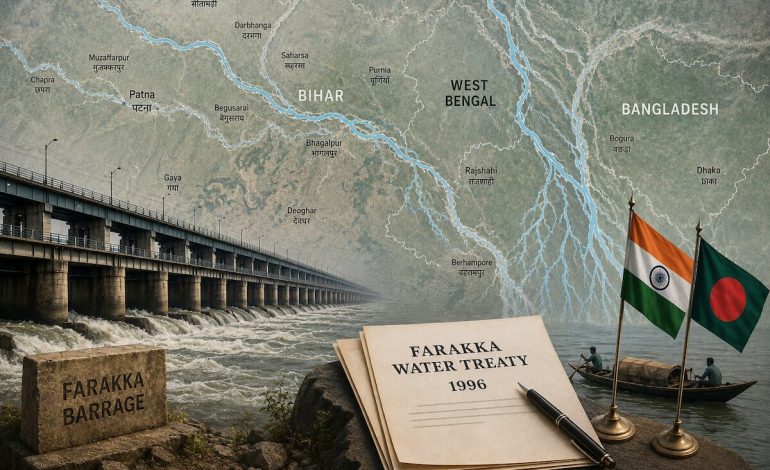
RNA Media illustration for representation.

New Delhi: Bangladesh has signalled a shift in its negotiating position on the Ganga water-sharing treaty with India, indicating its willingness to pursue a renewal of the existing agreement rather than insist on an entirely new arrangement. The apparent change comes as the 30-year-old treaty approaches its December 12 expiry, with New Delhi and Dhaka yet to begin formal negotiations over the future of one of South Asia’s most important transboundary water-sharing agreements.
The development emerged following the 91st meeting of the India-Bangladesh Joint Committee in Dhaka on Sunday, where officials reviewed the implementation of the 1996 agreement. Bangladesh expressed hope that India’s political leadership would take the necessary steps to initiate negotiations before the treaty expires, suggesting a more pragmatic approach to an increasingly time-sensitive diplomatic issue.
The finance and planning adviser to the Bangladesh government, Rashed Titumir, who also heads its 10-member technical committee on the treaty, said Dhaka had completed the preparations required for negotiations. According to the Times of India, he expressed hope that India would take effective measures to ensure equitable water-sharing between the two neighbours.
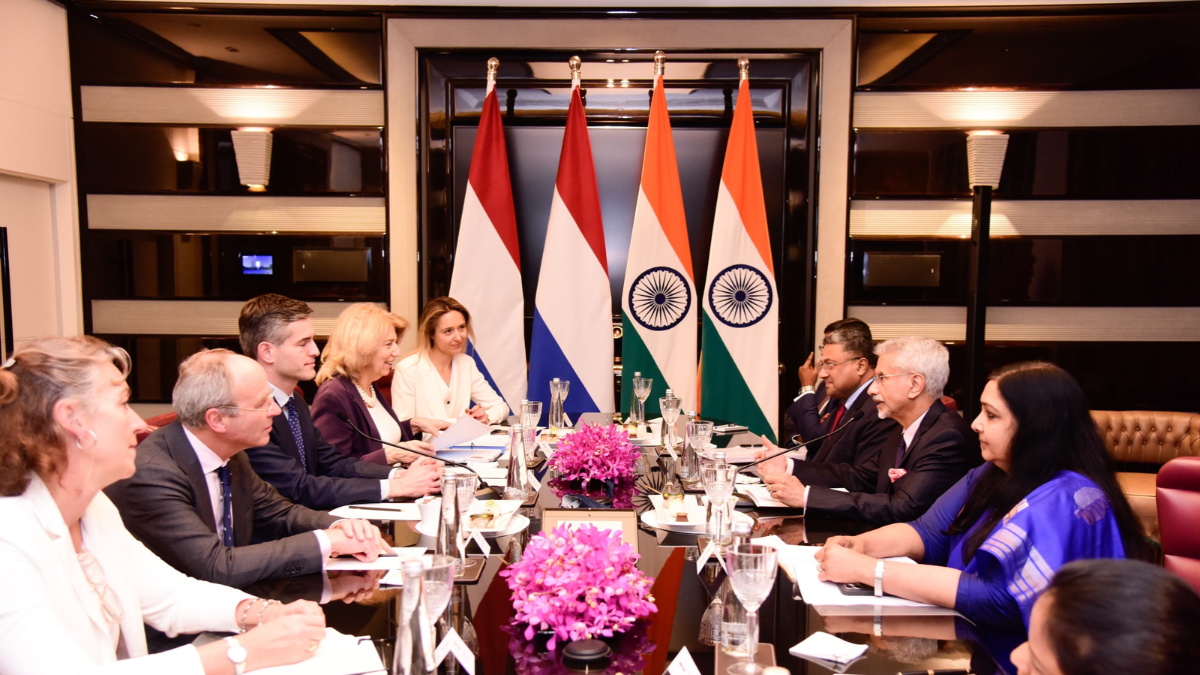
The meeting was attended by a four-member Indian delegation led by Sharad Chandra, the head of India’s Joint Rivers Commission, and a six-member Bangladeshi team headed by Anwar Kadir. Although the officials finalized the annual report on the treaty’s implementation for 2026, the discussions did not constitute formal negotiations on renewal or extension.
Dhaka changes its negotiating approach
Bangladesh’s latest position represents a departure from its earlier insistence on negotiating a fresh treaty containing stronger guarantees for water availability during the dry season. In September, the country’s water resources minister, Shahiduddin Chowdhury Anee, had explicitly advocated a new agreement rather than extending the existing framework, arguing that Bangladesh needed greater protection against shortages.
The renewed emphasis on extending the 1996 arrangement does not necessarily mean Dhaka has abandoned its demand for stronger safeguards. Instead, it suggests that Bangladesh may now be prioritizing continuity of the existing water-sharing mechanism over the potentially prolonged process of negotiating an entirely new treaty.
Dhaka has repeatedly pressed New Delhi to begin discussions, including through diplomatic communications in recent months. Bangladesh constituted its technical committee in June and subsequently requested India to establish a corresponding team, but the two sides have not announced a timetable for formal negotiations.
The latest appeal also places responsibility for advancing the process on the political leadership of both countries. Technical officials can assess river flows and implementation problems, but decisions on renewal, modifications or an interim extension require government-level agreement.
Why the Ganga treaty matters
The 1996 Ganga water-sharing treaty, signed on December 12, 1996, by the-then Indian prime minister, HD Deve Gowda, and his Bangladeshi counterpart, Sheikh Hasina, established a formula for distributing water at the Farakka barrage in West Bengal. It governs allocations during the lean season between January 1 and May 31, when declining river flows make water availability particularly important for agriculture, fisheries and domestic consumption.
Under the agreement, the two countries generally divide available water equally when flows at Farakka are 70,000 cusecs or lower, with different allocation formulas applying at higher discharge levels. It also provides each country with 35,000 cusecs during specified alternating ten-day periods between March 11 and May 10, although exceptionally low flows trigger emergency consultations rather than an unconditional supply guarantee.
This distinction is central to Bangladesh’s longstanding concerns because the treaty’s allocation arrangements depend substantially on the water actually available at Farakka. Dhaka has argued that a stronger guarantee would provide greater predictability during periods of severe scarcity, when agriculture, navigation and river ecosystems face increasing pressure.
The agreement also requires both governments to consult immediately if flows fall below 50,000 cusecs during any ten-day period. Although it provides for periodic reviews and renewal by mutual consent, it does not establish an automatic extension beyond its 30-year validity.
India’s concerns extend beyond diplomacy
For India, negotiations involve balancing commitments to Bangladesh against growing domestic water requirements, particularly in West Bengal and Bihar. Drinking-water supplies, irrigation, industrial consumption and the ecological health of the Ganga system are all relevant considerations that could influence New Delhi’s position.
In a written reply to the Lok Sabha on February 13, the government confirmed that formal bilateral discussions on renewal had not begun. It also said consultations with stakeholders, including West Bengal, had taken place and that drinking water and industrial requirements were being considered while formulating India’s position.
The negotiations are further complicated by changing rainfall patterns, rising water demand and concerns about the reliability of historical river-flow estimates. The treaty’s indicative allocation schedule was developed using hydrological observations from 1949 to 1988, raising questions about whether those assumptions adequately reflect present conditions.
An analysis by the Indian Council of World Affairs has highlighted the need to account for changing hydrological conditions in any future arrangement. A revised framework could therefore require updated scientific assessments alongside negotiations over allocation formulas and safeguards.
A wider diplomatic test
The dispute carries implications beyond Farakka because India and Bangladesh share 54 transboundary rivers, yet the Ganga remains the only river governed by a comprehensive bilateral water-sharing treaty. The unresolved Teesta water-sharing issue has already demonstrated how domestic political considerations and competing water demands can complicate agreements between the two neighbours.
With bilateral relations facing broader political strains, a prolonged impasse over the Ganga could introduce another source of friction into an already sensitive relationship. Conversely, a negotiated renewal could provide an opportunity to rebuild confidence through cooperation on a matter affecting millions of people in both countries.
The approaching deadline leaves three principal possibilities – renewal of the existing agreement, a mutually agreed interim arrangement, or expiry without an immediately effective replacement. The last outcome would remove the treaty’s established allocation framework and create fresh uncertainty over dry-season water-sharing, although cooperation could continue through bilateral diplomatic and technical channels.
For now, Bangladesh’s apparent flexibility offers a possible opening for negotiations, but there is no corresponding public commitment from New Delhi to extend the treaty on existing terms. With fewer than three weeks remaining before December 12, the immediate challenge is no longer simply determining how the Ganga’s waters should be shared, but whether both governments can agree on a framework before the current one expires.