


Balendra Shah arrives in New Delhi with $2 billion wish list as India-Nepal ties face crucial diplomatic test
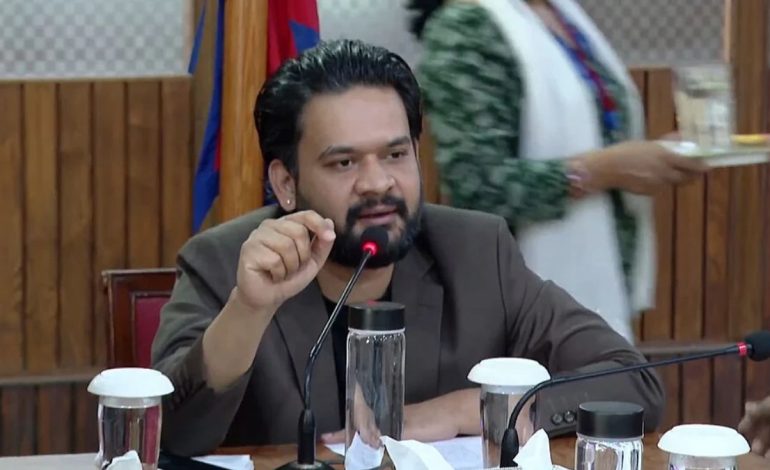
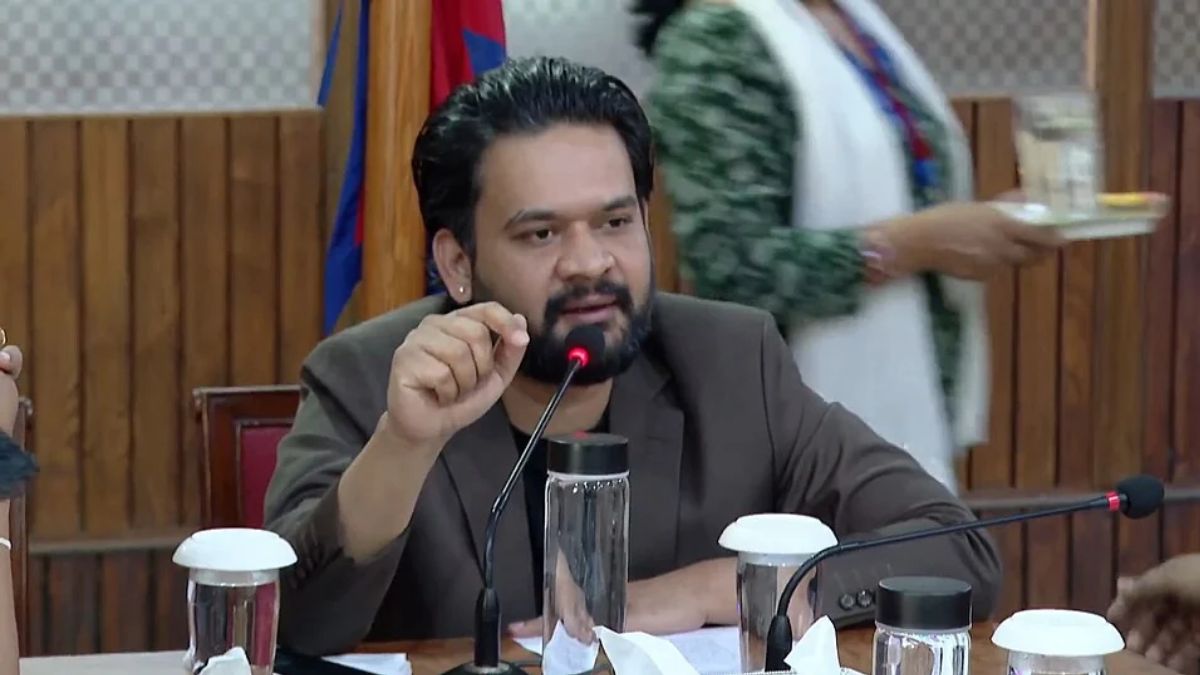
Nepal PM Balendra Shah. (Image courtesy: Wikimedia Commons)

New Delhi: Nepal’s prime minister, Balendra “Balen” Shah, arrived here in the national capital on Sunday for his first official bilateral visit since assuming office in March, setting the stage for wide-ranging talks with the prime minister, Narendra Modi, on Monday. The two-day visit is expected to focus on economic assistance, hydropower, infrastructure and connectivity, but its significance extends to rebuilding political trust between two neighbours whose close relationship has repeatedly been tested by territorial disputes and competing strategic interests.
Shah, 36, was received by the Union minister of state for commerce and industry, Jitin Prasada, on his arrival in the Indian capital, where he is leading a 34-member official delegation that includes senior ministers and government officials. The visit, undertaken at Modi’s invitation, comes as Kathmandu seeks substantial Indian financial support for reconstruction following devastating floods and renewed commitments on projects considered vital to Nepal’s economic recovery.
During the visit, Shah is scheduled to meet the president, Droupadi Murmu, and the external affairs minister, S Jaishankar, besides holding delegation-level discussions with Modi at Hyderabad House. He will also pay tribute to Mahatma Gandhi at Rajghat and participate in a Nepal-India Business Forum intended to promote investment, commercial partnerships and greater private-sector involvement in Nepal’s development.
One of Kathmandu’s immediate priorities is a proposed $2 billion economic assistance package, comprising approximately $1 billion in concessional credit, $500 million in grants and another $500 million for reconstruction and rehabilitation. As RNA Media reported on November 6, Nepal wants the financing to support electricity transmission networks, transport infrastructure and the rebuilding of facilities damaged by the catastrophic floods of August 26.
The disaster devastated parts of Nepal’s Bhotekoshi-Trishuli river system, causing extensive loss of life and destroying roads, bridges, settlements and power installations, making reconstruction a major test for Shah’s government. According to the Kathmandu Post, New Delhi has responded positively to the financial proposal, although negotiations over the precise amount, financing terms and individual projects have not been concluded.
Another difficult negotiation concerns Nepal’s longstanding demand for additional international flight routes through Indian airspace, particularly to improve access to its airports at Bhairahawa and Pokhara. Kathmandu wants the existing L626 corridor between Kathmandu and Mahendranagar to permit international flights in both directions, whereas the route currently allows aircraft to depart Nepal through the western corridor but not enter through it.
The disagreement involves operational and security considerations rather than simply the opening of another air corridor, with the two sides reportedly holding different positions on permitted flight altitudes. Nepali officials have also indicated reservations about an Indian proposal involving military aircraft at the Bagdogra entry point, suggesting that an agreement on aviation connectivity may require further technical negotiations.
Hydropower remains the most promising area for expanding economic cooperation, particularly because Nepal possesses substantial hydroelectric resources and India offers a large market for its surplus electricity. Under a long-term power-trade agreement signed in January 2024, the two countries agreed to work towards increasing Nepal’s electricity exports to India to 10,000MW within a decade, supported by investment in generation facilities and cross-border transmission infrastructure.
However, several major hydropower projects have encountered financing, regulatory or implementation difficulties, including projects involving Chinese contractors or investment. Nepal is also seeking greater access to India’s electricity market for projects such as Upper Tamakoshi, exposing the intersection between commercial energy cooperation and New Delhi’s concerns over third-country participation in strategically important infrastructure.
The talks could also produce announcements concerning railways, petroleum pipelines, border infrastructure and development projects, including the proposed passenger rail connection between Janakpur and Ayodhya. Agreements covering education, healthcare, agriculture, disaster management and emerging technologies are also being prepared, alongside a possible joint vision document setting out priorities for future cooperation.
Nevertheless, the visit carries political importance beyond its economic agenda because Shah represents a significant generational change in Nepal’s leadership. The former rapper and Kathmandu mayor became prime minister on March 27 this year, following the Rastriya Swatantra Party’s sweeping electoral victory after the youth-led protests of September 2025 had brought down the government led by KP Sharma Oli.
His nationalist political image has occasionally complicated relations with India, particularly over disputed territory along the western Himalayan frontier. The disagreements concern Kalapani, Lipulekh and Limpiyadhura, which Nepal claims as its territory, but India maintains are part of Uttarakhand, and tensions resurfaced in May when Shah suggested involving China and Britain in resolving the dispute – an approach New Delhi rejected in favour of established bilateral mechanisms.
Other unresolved questions include revisiting the 1950 Treaty of Peace and Friendship, the stalled Pancheshwar Multipurpose Project and the recruitment of Nepali Gorkhas into the Indian Army under the Agnipath scheme. The report of the bilateral Eminent Persons Group, established to recommend improvements in the relationship, also remains pending, illustrating how successive governments have struggled to resolve politically sensitive issues despite considerable progress in economic cooperation.
China adds another strategic dimension to the discussions, although Nepal has consistently sought to maintain productive relations with both of its much larger neighbours rather than align exclusively with either. For New Delhi, continued cooperation with Kathmandu is important not merely because of China’s growing regional presence, but also because the two countries share an open border, extensive family and commercial connections, and longstanding security interests.
Preparations for Shah’s visit included talks in Kathmandu between the Indian foreign secretary, Vikram Misri, and Nepal’s leadership earlier this month, reflecting efforts to identify deliverable outcomes before the prime ministers meet. As RNA Media noted in its assessment of the visit, bilateral relations combine considerable economic interdependence with disputes that have resisted resolution for decades.
For both governments, the immediate measure of success will therefore be the agreements concluded, the financing secured and the progress achieved on infrastructure and connectivity projects. More fundamentally, the Modi-Shah meeting will test whether the two neighbours can convert their longstanding diplomatic and economic relationship into a more predictable partnership, without allowing unresolved political differences to obstruct cooperation in areas where their interests substantially converge.