



Old-Fashioned Values, Freshly Told: Neeta Chaudhari’s Real Treasures for Children
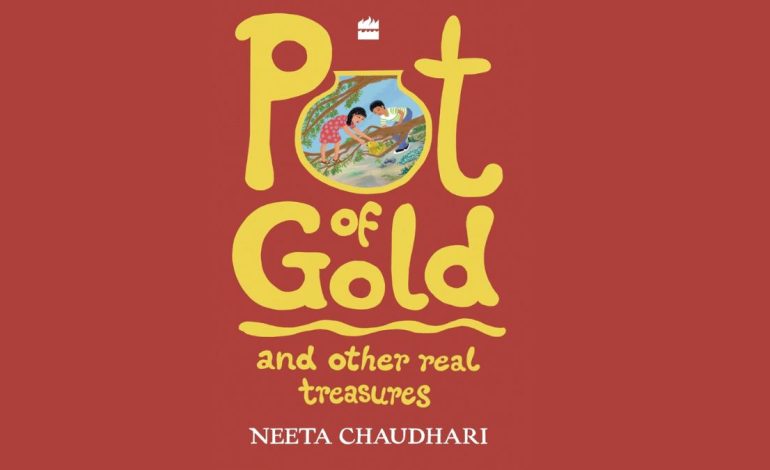
Neeta Chaudhari explores life’s lessons through 20 short stories.

It would be easy to dismiss a book subtitled “real treasures” as sentimental filler, the kind of collection that trades in tidy morals and forgettable prose. “Pot of Gold and Other Real Treasures,” Neeta Chaudhari’s anthology of twenty short stories for young readers, deserves a more generous reading than that title might suggest.
The strongest stories in the collection share a common structural instinct: they place an ordinary child in a situation slightly larger than themselves, and let the resolution arrive through the child’s own choices rather than adult intervention.
In “For the Love of Chocolate,” ten-year-old Nilu must decide whether to confess a theft to her grandmother, knowing it will implicate a friend who helped conceal it.
The story takes its time here, allowing guilt, fear, and eventually courage to build across several pages rather than resolving the dilemma in a single scene. It is one of the more emotionally sophisticated entries in the book, and a strong argument for reading it with, rather than simply to, a child.
Elsewhere, the collection allows itself to be simply funny. The opening run of stories, following seven-year-old Zain’s conviction that aliens have landed near his city — sparked by a dubious online article and a school rumour mill working at full tilt — plays out with genuine comic timing before its inevitable, gentle landing on a lesson about verifying sources.
Given how much of childhood (and, frankly, adulthood) is now spent parsing real news from forwarded nonsense, this story has aged well ahead of its target audience’s understanding of the problem, which is perhaps the collection’s most quietly contemporary touch.
Chaudhari writes with a light hand throughout, favouring dialogue and incident over description, which keeps the pacing brisk and the chapters short enough for a single sitting.
The Indian settings — pitha stalls, mango orchards, beehives on a farm, a train journey stocked with home-packed pooris — are rendered with enough specific, sensory detail to feel lived-in rather than generic, a detail that will likely resonate more with readers familiar with these contexts, though it does not exclude those who are not.
Taken as a whole, this is a remarkably well-assembled collection that understands its audience: children who want to be told a good story first, and who are perfectly capable of absorbing a lesson without being told what it is. Recommended for home and classroom libraries alike.