
Navy, Coast Guard scour Bay of Bengal for missing Andhra fishermen; Bangladesh, Myanmar alerted
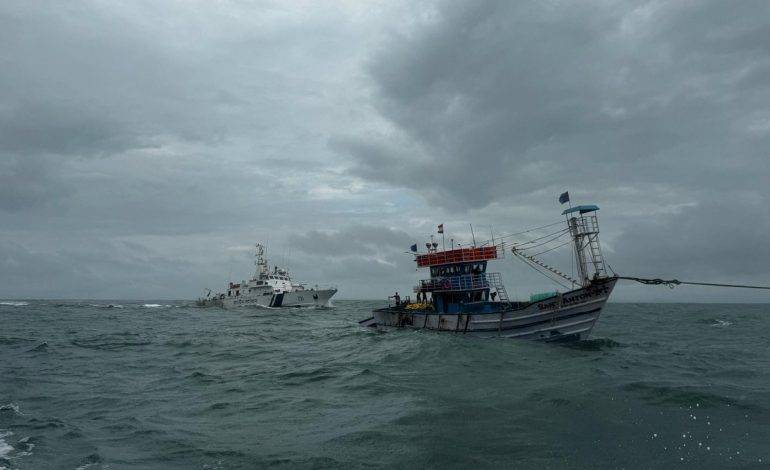
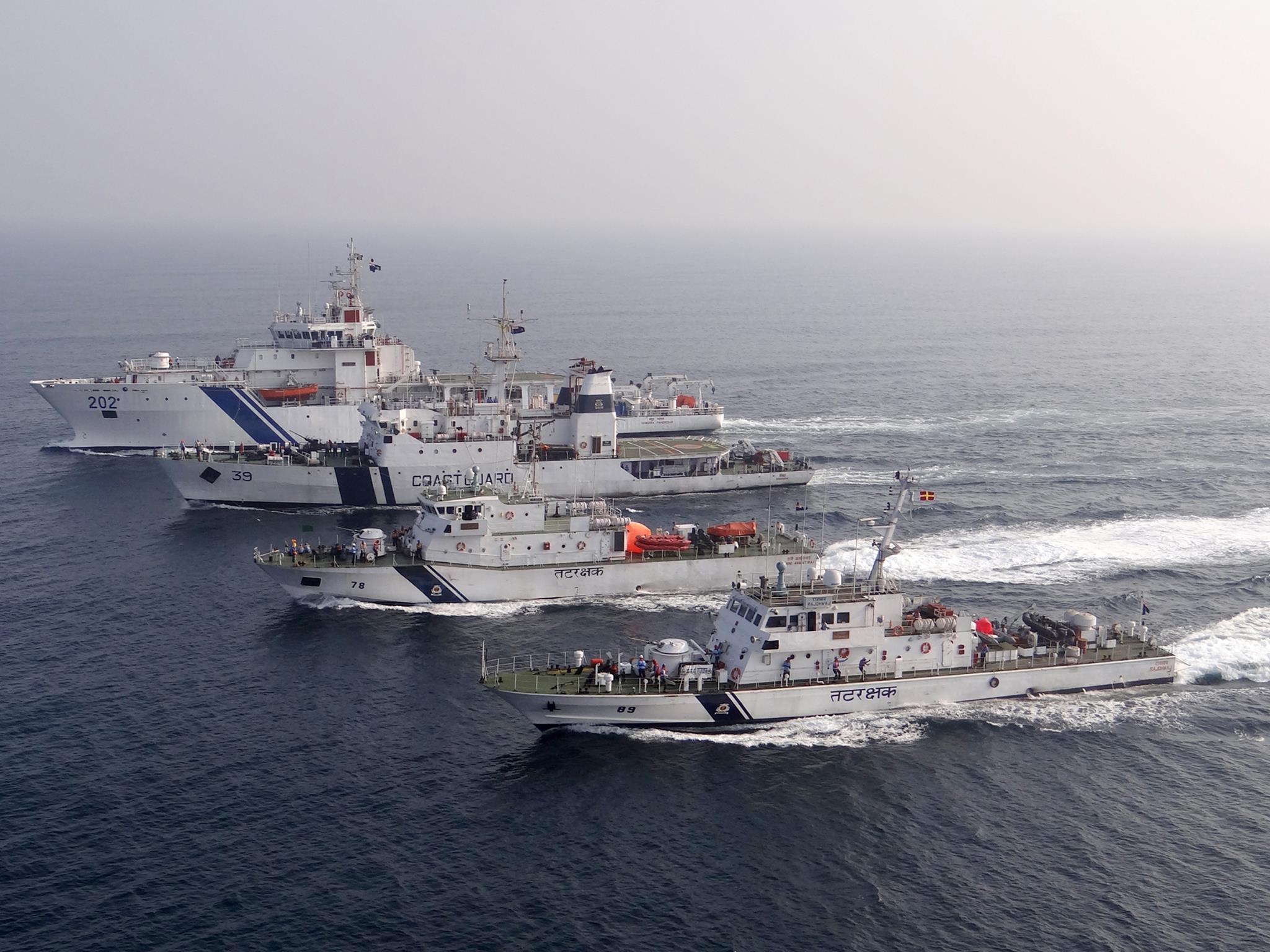
File photo of an Indian Coast Guard ship rescuing fishermen from a fishing boat in inclement weather. (Photo for representation.)

New Delhi: The Indian Navy and Indian Coast Guard have mounted an extensive sea-and-air search operation to locate seven fishermen from Andhra Pradesh’s Kakinada district who disappeared in the Bay of Bengal after encountering cyclonic weather conditions. Authorities in Bangladesh and Myanmar have also been alerted amid concerns that the fishing vessel may have drifted towards their waters, widening the scope of the maritime search and rescue operation.
The fishermen, who belong to Subbampeta village in the U Kothapalli mandal of Kakinada district, embarked on a fishing expedition on November 4 and were reportedly last spotted near Odisha’s Paradip port on November 18. With neither their mobile phones nor the vessel’s tracking equipment yielding any information about their whereabouts, maritime agencies have deployed ships, helicopters and surveillance systems to trace the missing boat.
The Kakinada district collector, MN Harendhira Prasad, said the district administration was working with naval and Coast Guard authorities to reconstruct the vessel’s movements and establish its possible location. The Andhra Pradesh government has also approached the Centre seeking additional assistance in tracing the fishermen and facilitating their safe return.
How the fishing expedition went wrong
According to officials, two motorized fishing boats from Subbampeta had set sail on November 4 for fishing grounds off the Odisha coast. The fishermen reportedly stopped at Visakhapatnam harbour around November 10–11 before resuming their expedition into deeper waters.
On November 14, the owner of the missing boat reportedly contacted his wife and informed her that the vessel was experiencing rough seas under cyclonic conditions. That conversation appears to have been among the last direct communications between the fishermen and their families.
While the other fishing boat returned on November 18, the vessel carrying the missing fishermen failed to make its way back. Information subsequently gathered by officials suggested that the fishermen had ventured nearly 200 kilometres offshore from Paradip, although their precise location when communication ceased remains unknown.
The families alerted the authorities on November 19, following which the state fisheries department formally sought the Coast Guard’s intervention. Search operations were subsequently coordinated among Coast Guard establishments in Kakinada, Odisha and Chennai, with the Navy providing additional support, according to reports on the rescue operation.
Search assumes international dimension
The possibility that strong winds and ocean currents may have carried the fishing vessel far from its last reported position has complicated the operation. Maritime authorities in Bangladesh and Myanmar have been provided with information about the missing boat and its occupants to facilitate efforts to locate them.
The involvement of neighbouring countries is particularly significant because a disabled vessel in the open sea can drift considerable distances over several days. Cyclonic disturbances can further alter surface currents and wind patterns, making it difficult for rescue coordinators to accurately estimate the position of a vessel that is no longer transmitting its location.
The chief minister of Andhra Pradesh, N Chandrababu Naidu, reviewed the situation on Tuesday and instructed officials to coordinate closely with central maritime agencies. The deputy chief minister, Pawan Kalyan, also directed the district administration to intensify the operation and maintain regular communication with the affected families.
The state agriculture and fisheries minister, Kinjarapu Atchannaidu, said information provided by the families indicated that the vessel had carried approximately 1,500 litres of diesel and provisions sufficient for 30 days. While this has given officials some grounds for optimism, the condition of the vessel and its remaining supplies could not be independently established.
Another 7 fishermen rescued off Kakinada
Meanwhile, in a separate incident, seven fishermen aboard a mechanized fishing boat that suffered an engine failure off the Andhra Pradesh coast on the night of November 23 were brought safely back to Kakinada Fishing Harbour.
The vessel had become immobilized in shallow waters approximately three kilometres off Krishnapuram along the Uppada-Tuni coastline. An emergency alert from the boat prompted local police, fisheries officials and maritime agencies to coordinate a rescue operation.
The two incidents have generated some confusion in media reports, with both involving fishermen from Kakinada district. However, the rescue of the second group does not mean that the fishermen who disappeared near Paradip have been located, as clarified in the latest report by Hindustan Times.
Challenges of maritime search and rescue
The disappearance highlights the vulnerability of Indian fishing communities operating far offshore, particularly during the October–December period, when the Bay of Bengal is susceptible to cyclonic disturbances. Small fishing vessels are especially vulnerable to mechanical failures, communication disruptions and adverse sea conditions.
The Coast Guard is the country’s principal agency responsible for coordinating maritime search-and-rescue operations, operating through maritime rescue coordination centres at Mumbai, Chennai and Port Blair. The Navy supplements these efforts with its wider operational reach, aviation assets and surveillance capabilities whenever required.
India has also been investing in indigenous technologies to improve maritime safety. The Indian Space Research Organization (Isro) has developed a second-generation distress alert transmitter that enables fishermen to transmit emergency messages through satellite communication and receive acknowledgements from rescue authorities.
As RNA Media reported earlier, the Indian Naval Academy has also developed a twin-drone rescue system designed to detect survivors at sea and deliver flotation devices. Such innovations could substantially improve maritime emergency response, although their effectiveness ultimately depends on timely distress alerts, reliable vessel tracking and the ability to locate survivors.
For the authorities searching the Bay of Bengal, however, the immediate challenge remains establishing the missing vessel’s position across a vast expanse of water. Nearly a week after its last reported sighting, the fate of its occupants remains uncertain.