

Russia bids to supply India five more S-400 squadrons in ₹50,000 crore air-defence push
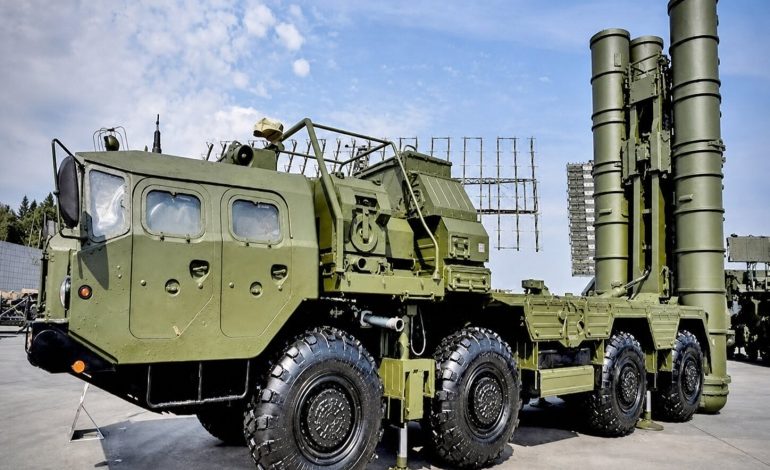
An S-400 battery. (File photo)

New Delhi: Russia has submitted a detailed proposal to supply India with five additional S-400 Triumf long-range air-defence squadrons, a purchase that could double the Indian Air Force’s planned inventory of the system. The Russian response to the Indian tender is being evaluated by the Ministry of Defence, with the proposed acquisition estimated to cost more than ₹50,000 crore, ANI reported, citing defence sources.
The proposal marks the latest stage of a procurement process that received preliminary clearance from the Defence Acquisition Council on March 27 this year. The council, chaired by the defence minister, Rajnath Singh, approved the acquisition of additional S-400 systems as part of military proposals collectively valued at ₹2.38 lakh crore, according to an official MoD statement.
The clearance, formally known as “acceptance of necessity” (AoN), allows the procurement to advance but does not constitute a contract. The Russian offer will have to undergo technical and commercial scrutiny, followed by price negotiations and final approval from the Cabinet Committee on Security before an agreement can be signed.
India contracted five S-400 squadrons from Russia in October 2018 under an agreement valued at about $5.43 billion, or roughly ₹40,000 crore at the exchange rate then. Four squadrons have since arrived, while the fifth is expected to be delivered by November after the original schedule was disrupted by prolonged delays.
Defence sources cited in the latest report said deliveries under a second contract could begin about three years after it is signed. However, neither the Indian nor Russian government has officially disclosed the proposed delivery schedule, configuration, missile package or provisions, if any, for domestic manufacturing and technology transfer.
The additional squadrons are expected to reinforce the outer layer of India’s air-defence network against threats from both its western and northern frontiers. Specific deployment locations are unlikely to be announced because the mobility, dispersal and survivability of such high-value systems are integral to their operational effectiveness.
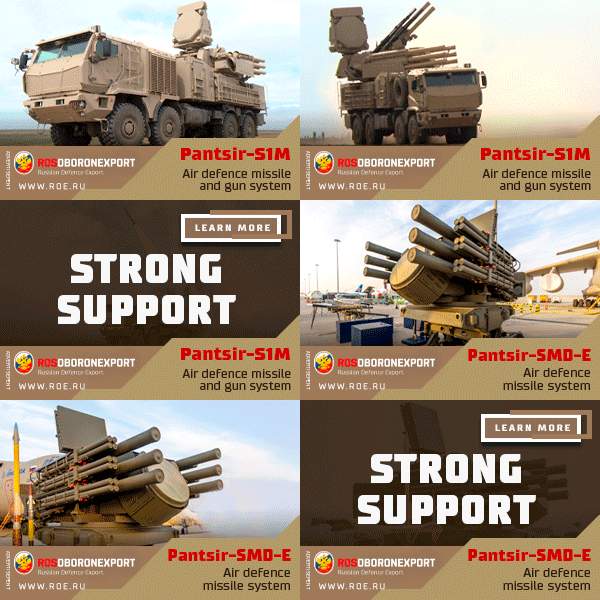
The S-400 combines long-range surveillance and fire-control radars with several types of interceptor missiles, allowing it to engage combat aircraft, airborne surveillance platforms, drones, cruise missiles and certain ballistic-missile threats at different distances. The MoD said the additional systems would help counter long-range aerial threats directed at strategically important areas.
India’s interest intensified after the S-400 was employed during Operation Sindoor, the four-day India-Pakistan military confrontation in May 2025. The chief of Indian Air Force, Air Chief Marshal Amar Preet Singh said last year that an S-400 interceptor had destroyed a Pakistani airborne surveillance aircraft at a distance of 314 kilometres, describing it as possibly the longest surface-to-air engagement recorded in combat. This was further reiterated recently by the chief of Western Air Command, Air Marshal Jeetendra Mishra.
Mishra also attributed several engagements involving Pakistani combat aircraft to the Russian system and said its reach forced adversary platforms to operate farther from Indian airspace. Pakistan has not confirmed these losses, and the precise results of the long-range engagements have not been independently verified because neither side has released supporting operational data.
Moscow had publicly acknowledged negotiations over further deliveries as early as September 2025. The head of Russia’s Federal Service for Military-Technical Cooperation, Dmitry Shugayev, said at the time that bilateral cooperation could be expanded through new S-400 supplies, although discussions had not then progressed beyond the negotiating stage.
The prospective purchase will run alongside India’s effort to develop an indigenous long-range air-defence system under Project Kusha. As RNA Media had reported, the Defence Research and Development Organisation conducted the maiden test-flight of Kusha interceptor on July 23, but the programme will require further developmental and user trials before it can be operationalized at scale.
Additional S-400 squadrons could therefore provide India with an established long-range capability while Kusha matures, rather than displacing the domestic programme. Together with shorter-range systems, fighter aircraft, ground-based radars and the Indian Air Force’s command-and-control network, the two systems are expected to form separate but complementary layers of India’s evolving national air and missile-defence architecture.