



Pakistan’s New Defence Laws: What Changes for Asim Munir and India?
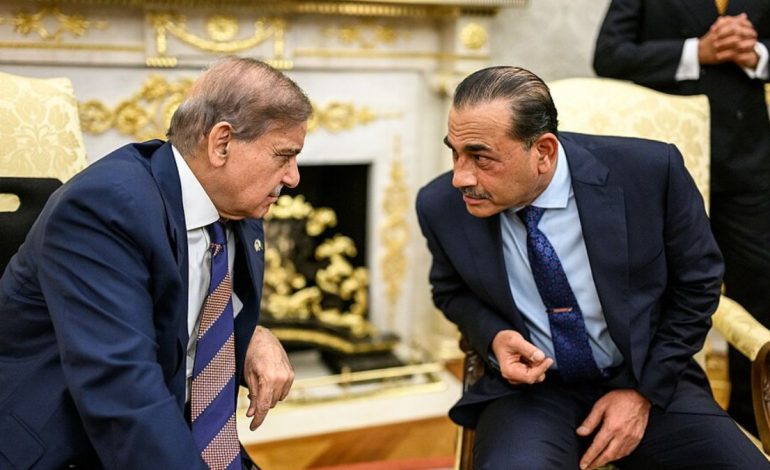
Field Marshal Asim Munir gets wider command powers under Pakistan’s new defence laws. Image credit: Wikimedia

New Delhi: Pakistan’s parliament on Thursday passed the Defence Forces Act, 2026 and amendments to the National Command Authority Act, 2010, giving statutory shape to changes introduced through the 27th constitutional amendment. The legislation sets out the powers and responsibilities of the chief of defence forces (CDF), a position held by Field Marshal Asim Munir alongside his role as Pakistan’s chief of army staff.
According to the Pakistani media citing their sources, the two measures are part of a wider restructuring of Pakistan’s military command system. The changes remove the chairman of the joint chiefs of staff committee (CJCSC) from the earlier structure and place the CDF at the centre of operational coordination among the army, navy and air force.
What has Pakistan changed?
The Defence Forces Act, 2026, provides for a defence forces headquarters and establishes the legal framework governing the CDF. Under the legislation, the CDF has operational command and control of the armed forces and is accountable to the federal government in matters relating to that command, according to Pakistan’s Express Tribune.
The act also gives the CDF powers connected with multi-domain integration, operational coordination, liaison and the joint conduct and oversight of military matters. It further provides powers under relevant laws to retire, release or dismiss personnel, approve or reject resignations and retain personnel in service, subject to the constitutional exceptions specified in the legislation.
The legislation also allows the CDF to exercise other powers and perform duties assigned by the federal government. The government is to frame rules and regulations for implementing the Act, while the CDF can issue directions and orders to give effect to its provisions.
The second measure amends the National Command Authority Act, 2010 to reflect the new military command arrangement. References to the chairman of the joint chiefs of staff sommittee have been replaced by references to the chief of army staff and chief of defence forces.
What does this mean for FM Asim Munir?
The latest legislation does not create the CDF position from scratch. That change was made through Pakistan’s 27th constitutional amendment, which provided for the army chief to concurrently serve as chief of defence forces and removed the CJCSC position from the command structure.
FM Munir was subsequently notified as Pakistan’s first CDF in December 2025. His appointment placed him in charge of the army while also giving him the CDF role created by the constitutional changes.
What Pakistan’s parliament has now done is establish the statutory framework for that position. The result is a clearer division of responsibilities within Pakistan’s new command structure, with the CDF given operational command and control of the armed forces and responsibility for joint military coordination.
The change is significant because the earlier CJCSC arrangement did not give the chairman the same operational command over the three services. The new system instead places those operational responsibilities with the CDF, while retaining separate service chiefs for the army, navy and air force.
What happens to Pakistan’s strategic command?
The restructuring also creates a commander of the national strategic command, replacing the earlier position associated with the CJCSC structure. According to the reports, the prime minister appoints the commander on the recommendation of the army chief and CDF for a three-year term, with the possibility of one additional three-year term.
That is separate from the CDF’s role. The CDF has operational command and control of the armed forces, while the national strategic command forms part of Pakistan’s strategic military architecture.
The amendment to the National Command Authority Act is important in this context because the law governs Pakistan’s National Command Authority, the institution responsible for the country’s strategic command arrangements. The changes align that legislation with the military structure established through the 27th Amendment.
Why was the legislation passed so quickly?
The legislation moved through parliament amid objections from opposition lawmakers, who criticized the government’s decision to introduce the bills as part of a supplementary agenda.
Pakistan’s opposition leader Allama Raja Nasir Abbas questioned the urgency, asking, “What is the emergency? Is this how legislation is carried out?” He said lawmakers needed time to examine the text before voting.
Mahmood Khan Achakzai similarly asked for more time, saying, “At least give us two or three days so that they can be debated.” Opposition lawmakers subsequently boycotted the voting process and walked out of the House.
Pakistan’s law minister, Azam Nazeer Tarar, defended the government’s approach. Responding to calls for further discussion, he said, “Tell me, what mathematical formula is there that we need to sit down and discuss?”
The National Assembly and Senate nevertheless passed the two measures on Thursday.
Does the new structure matter for India?
For India, the immediate significance is the institutional change rather than the creation of a new military capability. Pakistan now has a command structure in which the army chief also serves as CDF, with the CDF exercising operational command and control of the armed forces.
That gives the office held by FM Munir a wider formal remit than the army chief’s position alone. It also means that India’s assessment of Pakistan’s military leadership will have to take into account the responsibilities attached to the CDF position, particularly its role in joint operational coordination.
But the wider India-Pakistan relationship cannot be understood through this legislation alone. The history of the relationship shows that changes in political engagement and formal agreements have often existed alongside serious military tensions.
The Simla Agreement of 1972 committed India and Pakistan to settle differences through peaceful means and bilateral negotiations, while also calling for respect for each other’s territorial integrity and sovereignty.
The Lahore Declaration of 1999 followed the Vajpayee-Nawaz Sharif summit and set out commitments towards peace and stability, including measures concerning nuclear risks. India’s official record describes the Lahore Declaration and accompanying documents as a roadmap for deeper relations between the two countries.
Yet the Lahore process was followed within months by the Kargil conflict. The Ministry of External Affairs has described the Kargil conflict as a major diplomatic victory for India and has recorded Pakistan’s role in the conflict in its account of India’s foreign policy.
The Agra Summit in July 2001, was another attempt at high-level political engagement. Then prime minister, Atal Bihari Vajpayee and Pakistan president, Pervez Musharraf held talks, but the meeting ended without a joint agreement, according to India’s official foreign-relations record.
India has also continued to describe the Simla Agreement as a central framework for its bilateral engagement with Pakistan. In an MEA publication, the government said India’s relations with Pakistan would be conducted within the framework of the Simla Agreement and Lahore Declaration, while describing Simla as the “bedrock” of bilateral relations.
What does this latest development mean for New Delhi?
The latest legislation does not by itself signal a change in India’s policy towards Pakistan. What it does is make Pakistan’s new military command structure more clearly defined in law, with FM Munir holding both the army chief and CDF positions and the CDF given operational command and control across the armed forces.
For New Delhi, that makes the military chain of command an important part of understanding Pakistan’s security establishment. The experience of Simla, Lahore, Kargil and Agra also means that India’s assessment of Pakistan is likely to remain based on both political engagement and the conduct of its military establishment, rather than on formal agreements alone.
Against this backdrop, the new laws represent a structural change in Pakistan’s defence establishment, but not a break from the broader reality India has dealt with for decades, which is the fact that political dialogue and military realities have remained closely intertwined in India-Pakistan relations.