Pakistan tightens media access rules, orders foreign journalists to leave POK
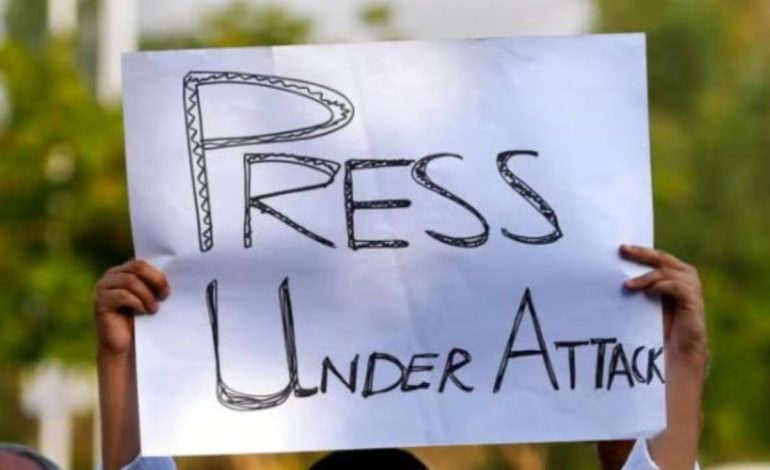
Pakistan tightens media access rules as press freedom concerns grow. Image Credit: AIR

New Delhi: Pakistan has introduced new restrictions on foreign journalists operating in the country, requiring government permission before they travel outside Islamabad, Karachi and Lahore. The move comes as Pakistan-occupied Kashmir (POK) sees continuing protests and holds assembly elections due to conclude on August 10.
Under the Foreign Media Facilitation Guidelines 2026, foreign journalists, Pakistani nationals working for foreign media, freelancers and local contributors must obtain a no objection certificate (NOC) before reporting from anywhere outside the three cities. Pakistan has also reportedly ordered foreign journalists in POK to leave immediately.
Why now?
POK has seen months of protests demanding greater autonomy and constitutional reform, led by the Joint Awami Action Committee (JAAC). The unrest turned deadly during a JAAC-led long march from Rawalakot to Muzaffarabad in late July, with reports citing at least 30 civilians killed and 33 others injured after Pakistani security forces allegedly used lethal force against protesters, the figures could not be independently verified.
The assembly elections are being held against this backdrop, with the first phase on July 28 already marred by violence even as results were declared. Protesters and the JAAC have boycotted the polls, while internet restrictions in the region have made independent verification of events on the ground difficult.
Reports suggest the government’s external publicity wing sent foreign media organizations a message ordering journalists in POK to leave, after international outlets, including the BBC, published reports from inside the region.
Al Jazeera’s website reportedly became inaccessible in Pakistan after its correspondent filed a report from Muzaffarabad. Pakistan’s information ministry called the report “yellow journalism,” though no formal ban was announced.
The new rules
The NOC requirement effectively places reporting from most parts of Pakistan under government approval. Journalists say obtaining the clearance can already take weeks or even months, while the new guidelines do not specify how long the process should take or whether rejected applications can be appealed.
The guidelines also allow authorities to suspend or revoke a journalist’s accreditation if their reporting is deemed to be against Pakistan’s ideology, sovereignty, national security or public order. Critics argue that these provisions are vaguely worded and could be used to restrict independent reporting.
Pakistan’s response
Pakistan’s information ministry has said journalists are not banned from travelling, and that the guidelines only regulate accreditation and coordination. Officials describe the rules as an administrative mechanism meant to verify journalists and facilitate access, and say a new travel permit system is being developed.
Legal experts, however, argue the guidelines have no statutory backing and are only executive instructions that cannot legally impose new obligations on journalists.
Dawn editor Zaffar Abbas described the restrictions as unprecedented, saying he had not witnessed such curbs in more than 40 years of journalism. Political commentator Mustafa Nawaz Khokhar said the rules would “choke international media” and create more space for misinformation.
The committee to protect journalists (CPJ), said two independent Pakistani journalists were detained on August 1 and taken to an undisclosed location. It added that several other journalists had been summoned to court under laws criminalising the spread of “false and fake information”.
Human rights watch described the new restrictions as an “alarming step” against press freedom. The Pakistan federal union of journalists (PFUJ) has also urged the government to withdraw the guidelines.
India’s reaction
India has strongly criticized Pakistan’s actions in POK. The ministry of external affairs called the POK elections “a complete farce” and alleged the region is witnessing violence, intimidation, communication blackouts and repression.
Members of the Kashmiri diaspora held protests in the UK, including in Bradford, condemning Pakistan’s crackdown in POK.
Journalists and rights advocates say the new rules could limit independent reporting from sensitive regions, delay coverage of breaking news, and make it harder for international media to verify events on the ground, particularly in POK.