India expresses ‘deep concern’ over reported demolition of century-old Hindu temple in Pakistan. Why the Siraj shrine matters to Pakistani Hindus
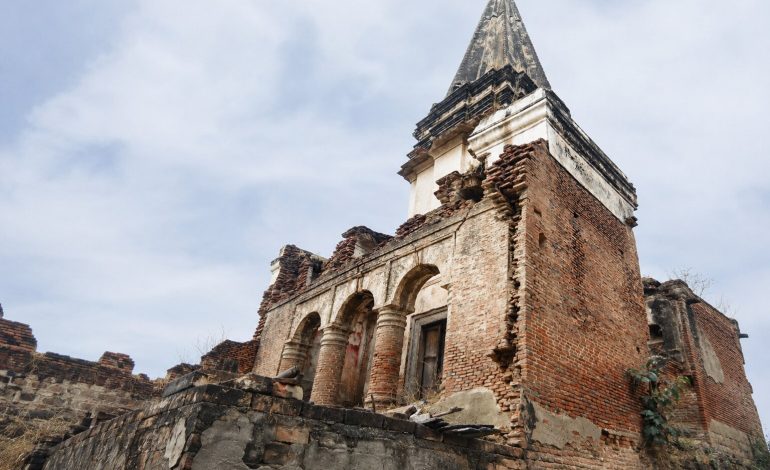
A digitally enhanced photo of a dilapidated Hindu temple at Narowal in Pakistan’s Punjab province. (Photo for representation via Google Earth/ilam or fun)

New Delhi: India expressed “deep concern” over the destruction of a more than century-old Hindu temple in Pakistan’s Punjab province, condemning the episode as a “reprehensible act of vandalism” and seeking a prompt and transparent investigation. New Delhi also called for the restoration of the shrine at Siraj village in Narowal district, where Pakistani officials and minority-rights activists have offered sharply conflicting accounts of how it was reduced to rubble.
In an official statement posted on X, on Wednesday night, the External Affairs Ministry unequivocally condemned the destruction of the Hindu place of worship and called upon Pakistan to establish responsibility for what happened. New Delhi said the episode had again raised questions about the Pakistani authorities’ approach towards protecting the religious and cultural heritage of minority communities.
The temple, estimated to be between 100 and 125 years old, stood on roughly 1,000 square metres of land in Siraj village, about 130 kilometres from Lahore. It was found destroyed on August 21, but the circumstances remain disputed. Local community representatives say it was deliberately pulled down, while the Pakistani authorities maintain that the ageing structure collapsed during torrential rain.
According to an investigation by Pakistan’s Dawn newspaper, the Pakistan Masiha Millat Party, a minority-rights organization, alleged that people involved in the destruction subsequently removed bricks, metal fittings from the temple’s shikhara and other material from the property. The party’s chairman, Aslam Parvez Sahotra, and local residents approached Punjab’s additional home secretary on August 28, seeking action against the alleged perpetrators and officials accused of failing to safeguard the site.
The controversy is closely connected to a longstanding dispute over the surrounding property, portions of which had been leased by Pakistan’s Evacuee Trust Property Board to an adjoining madrassa. Sahotra said the board’s deputy administrator in Sialkot cancelled the lease on January 29, 2026, after rent allegedly remained unpaid and ordered the occupants’ eviction and the sealing of the premises, but the directive was not enforced.
Documents reproduced by the Pakistani human-rights publication Voicepk present an even more complicated administrative trail, although their allegations have not been independently established. An application submitted to a commission working under Pakistan’s supreme court alleged that another ETPB administrator granted tenancy rights over the place of worship to Madrasa Owaisya Ta’leem-ul-Quran on July 15, prompting an appeal to the board’s chairman on July 30.
The application claimed that people supporting the madrassa used the severe weather on August 21 as cover to demolish the structure and erase its physical traces. It also alleged that officials had received prior warnings about threats to the property, but Voicepk said the relevant eviction order and an April 11 police report cited by activists could not immediately be independently verified.
Samuel Pyara, who heads the rights group Implementation of Minority Rights Forum, visited the site on August 24 and challenged the rain-collapse explanation, pointing to what appeared to be hammer marks on bricks, the removal of valuable building material and a madrassa banner displayed on the temple’s boundary wall. These observations raise questions that require forensic and documentary examination, but they do not by themselves conclusively establish who brought down the structure.
The Evacuee Trust Property Board has rejected allegations of deliberate demolition, with an official, Iftikhar Rana, telling Dawn that torrential rain caused the old structure to collapse. Rana acknowledged that land adjoining the temple had been leased to a seminary but maintained that the temple property itself was never included in that arrangement.
The Punjab government has supported the board’s account, saying the provincial minister for minority affairs, Ramesh Singh Arora, inspected the location and found that part of a dilapidated temple had fallen because of heavy rain. Arora said the administration had initiated restoration and repair work, while describing suggestions that the temple was intentionally demolished for the madrassa’s expansion as unverified.
The minister also said the government led by the chief minister, Maryam Nawaz Sharif, was restoring 50 gurdwaras, 15 temples and more than 100 churches under a provincial programme. That assertion, however, does not resolve the central questions at Siraj – whether the temple was structurally assessed before August 21, whether the disputed occupation was lawful and why earlier orders concerning the property were apparently not enforced.
Local Hindu representatives have demanded reconstruction of the shrine and removal of all unauthorized occupation from its land. Rattan Lal Arya, a member of the Narowal District Peace Committee and the Pak Dharam Astan Hindu Committee, has said the continued presence of the madrassa has made community members apprehensive about visiting the site.
Why the Siraj temple matters to Pakistani Hindus
Despite its reported age, the temple has left a surprisingly thin documentary trail: no credible published record reviewed for this report identifies its founder, presiding deity or original name. Rana conceded that the shrine “carries no name” in the ETPB’s records, making it important to distinguish verifiable history from unsupported descriptions now circulating online.
The estimate that it was between 100 and 125 years old would place its construction broadly in the closing decades of British-ruled Punjab or the early 20th century. References to its shikhara, metallic crown, associated quarters and sizeable compound nevertheless show that this was a recognizable temple complex rather than an improvised or recently established place of worship.
Its significance lies less in any documented status as a major pilgrimage centre than in what it represented for a small and geographically dispersed Hindu population. The temple was a surviving physical link to Narowal’s pre-Partition religious landscape and evidence of communities whose homes, shops, shrines and social institutions once formed part of the region’s everyday life.
That local importance is magnified by the shortage of usable Hindu places of worship in Narowal. A detailed Dawn report published in 2023 said the district had about 1,253 Hindu residents but no functional temple, forcing families to conduct worship at home or travel to Sialkot, Lahore or Rawalpindi for festivals and important ceremonies.
Community members told the newspaper that Narowal city had two temples and Zafarwal another five, but these were no longer available for regular worship and had been rented or put to other uses. One former temple was reportedly being used as a cattle enclosure and fodder store, illustrating how the loss of a religious property can occur gradually through neglect and repurposing as well as through sudden physical destruction.
For Hindus, a functioning temple is not confined to the daily performance of puja; it can also provide a shared setting for marriages, festival observances, prayers following a death and the transmission of traditions to younger generations. Where a minority community is scattered and small, such a place also serves as one of the few public spaces in which its religious identity can be expressed collectively rather than confined to private homes.
Voicepk’s more recent reporting places Narowal’s Hindu population at around 1,600 and quotes community representatives as claiming that dozens of temple properties across the district have become homes, shops or livestock shelters. It also records the practical difficulties Hindus encounter in conducting funeral rites and reaching cremation grounds, placing the Siraj dispute within a wider problem of access to essential religious infrastructure.
The temple’s fate is consequently a test of Pakistan’s domestic legal commitments as much as a bilateral diplomatic issue. Article 20 of the Pakistani constitution protects citizens’ right to practise their religion and allows religious denominations to establish, maintain and manage their institutions, while Article 36 requires the state to safeguard the legitimate rights and interests of minorities.
The Pakistani supreme court reinforced those obligations in its landmark June 19, 2014, judgment on minority rights, directing the authorities to establish a professionally trained force to protect minority places of worship. The Siraj matter has now been referred to a commission associated with the implementation of that judgment, giving Pakistani institutions an opportunity to examine the competing accounts transparently.
The ETPB itself was established to administer religious, charitable and educational properties left by Hindus and Sikhs who migrated to India after Partition. Its officially stated responsibilities include managing Hindu and Sikh religious places and facilitating worshippers during festivals, making the preservation of a temple under its control a core institutional duty rather than an act of discretion.
A credible resolution would require an independent examination of the debris, rainfall and structural records; publication of the complete lease and appeal files; an inventory of missing architectural material; and meaningful participation by the local Hindu community in reconstruction. Until those steps are taken, the promise to restore the temple will not settle whether its disappearance resulted from extreme weather, prolonged official neglect, deliberate demolition – or a combination of these factors.