
In Paris, Modi says India, France to launch TRISHNA satellite in 2027, highlights expanding strategic partnership
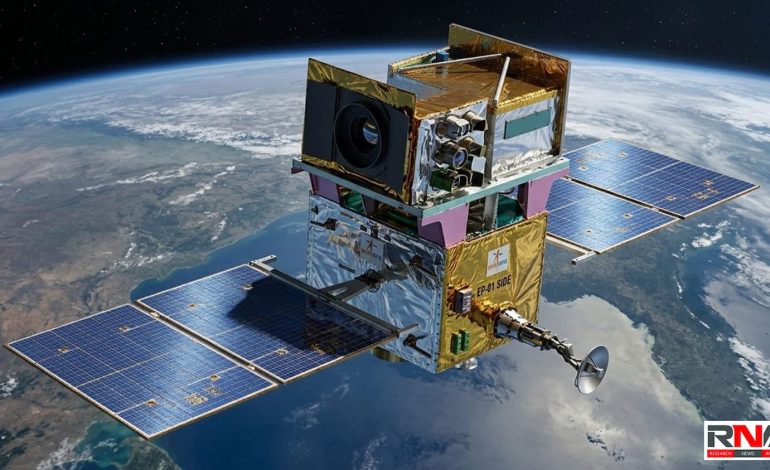
A realistic illustration made from an Isro-released CAD image of the TRISHNA satellite.

New Delhi: The prime minister, Narendra Modi, has announced that India and France will jointly launch the TRISHNA Earth-observation satellite next year, describing the mission as another milestone in the steadily expanding strategic partnership between the two countries.
Addressing members of the Indian diaspora in Paris during the concluding phase of his visit to France, Modi said the forthcoming satellite mission would contribute to global efforts in water management, climate monitoring, and food security. The project, jointly developed by the Indian Space Research Organisation (Isro) and France’s National Centre for Space Studies (CNES), is among the most significant ongoing collaborations in the space sector between New Delhi and Paris.
The announcement comes at a time when India and France are broadening cooperation across defence, space, advanced technologies, artificial intelligence, innovation, civil nuclear energy, and Indo-Pacific security. During his latest visit, Modi held extensive talks with the president of France, Emmanuel Macron, in Nice, where both leaders reviewed the full spectrum of bilateral ties under the recently elevated “Special Global Strategic Partnership”. They also reiterated their commitment to deeper cooperation in defence co-development, co-production, and emerging technologies.
The visit included the joint inauguration of the Bharat Innovates 2026 initiative in Nice, a flagship event bringing together start-ups, venture capital firms, research institutions, and technology leaders from both countries. The programme forms part of the India-France Year of Innovation and reflects a broader effort to strengthen collaboration in critical and emerging technologies.
India and France have in recent years transformed their relationship beyond the traditional defence domain. Although military cooperation continues to be one of the core elements of the partnership, the partnership now covers areas like maritime security, cybersecurity, renewable energy, artificial intelligence, innovation, and space exploration. There have been indications that both countries are also interested in cooperating in human spaceflight and space situational awareness among others.
Against this backdrop, the planned launch of the TRISHNA satellite is being viewed as a flagship scientific mission with global relevance, particularly as climate change, water stress, and food security emerge as major international challenges.
What is the TRISHNA satellite project?
TRISHNA is the short form for Thermal infraRed Imaging Satellite for High-resolution Natural resource Assessment. It is a joint Earth-observation mission being developed by Isro and CNES. The project represents the latest chapter in a space partnership that has already produced successful collaborative missions such as Megha-Tropiques and SARAL.
Unlike conventional Earth-observation satellites that primarily capture visible imagery, TRISHNA will employ advanced thermal infrared imaging technology to measure land-surface temperatures with high precision. This capability will allow scientists to monitor water use, crop health, soil moisture, vegetation stress, and ecosystem changes on a near-global scale.
The mission is expected to operate in a Sun-synchronous polar orbit at an altitude of roughly 761 kilometres. Designed for an operational life of around five years, it will repeatedly observe the same locations at regular intervals, enabling researchers to track environmental changes over time.
One of TRISHNA’s primary objectives is to improve the monitoring of agricultural water consumption. Accurate information on crop water requirements can help governments and farmers manage irrigation more efficiently, particularly in regions facing increasing water scarcity. The satellite’s data will also support drought assessment, agricultural planning, and food-security strategies.
Beyond agriculture, TRISHNA is expected to contribute significantly to climate science. By measuring variations in land-surface temperatures, scientists will be able to better understand heatwaves, urban heat islands, forest stress, glacier dynamics, coastal ecosystems, and broader climate-related changes. Such data can improve climate models and strengthen adaptation policies.
The mission also has implications for disaster management. Thermal observations can assist in detecting wildfires, monitoring drought conditions, assessing environmental degradation, and tracking the impacts of extreme weather events. In a warming world, such capabilities are becoming increasingly important for governments and international organizations.
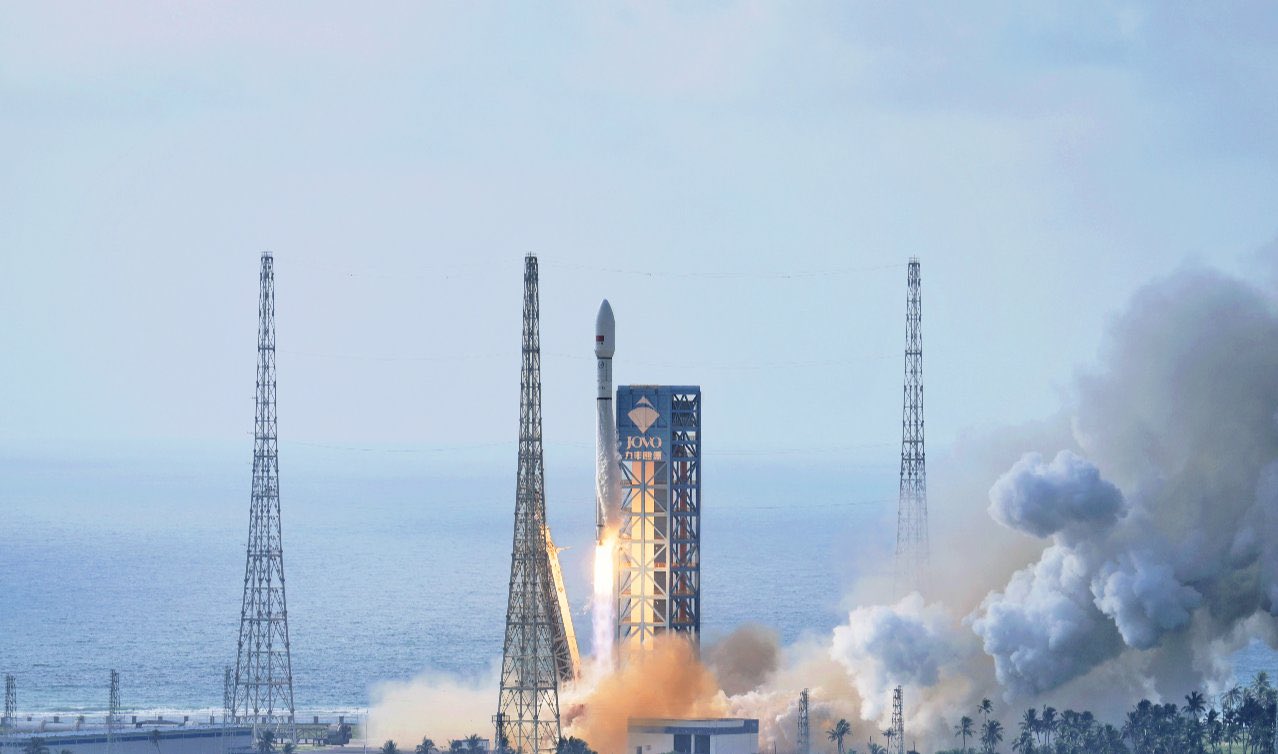
Under the mission architecture, Isro is responsible for the satellite platform and launch services, while CNES is contributing key payload technologies and scientific expertise. The satellite is expected to be launched aboard an Indian Polar Satellite Launch Vehicle from the Satish Dhawan Space Centre in Sriharikota.
Strategically, TRISHNA illustrates how the India-France relationship has evolved from a buyer-seller framework into one centred on joint development of advanced technologies. This mission takes advantage of India’s strengths in affordable space engineering, and France’s skills in infrared imaging and Earth observation.