
In Indonesia, Modi and Prabowo elevate New Delhi-Jakarta partnership with defence, maritime and critical minerals push
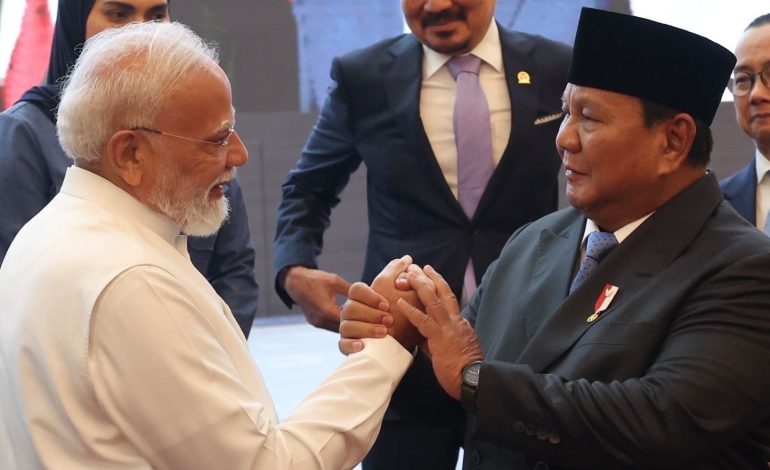
Indonesian President Prabowo Subianto welcomes Prime Minister Narendra Modi at the country’s parliament in Jakarta. (Photo: X/@narendramodi)

New Delhi: The prime minister, Narendra Modi, concluded a three-day state visit to Indonesia on Tuesday after holding wide-ranging talks with the country’s president, Prabowo Subianto, that significantly expanded cooperation in defence, maritime security, critical minerals, trade, technology and cultural ties. The visit, the first bilateral visit by an Indian prime minister to Indonesia since Prabowo assumed office, produced one of the most comprehensive packages of agreements between the two strategic partners in recent years and reinforced New Delhi’s efforts to strengthen its engagement with Southeast Asia under its Act East Policy and MAHASAGAR vision.
The centrepiece of the visit was the summit meeting between Modi and Prabowo at Jakarta’s Merdeka Palace, where the two leaders reviewed the full spectrum of bilateral relations before overseeing the signing of more than a dozen agreements and memorandums of understanding spanning defence, maritime cooperation, energy security, critical minerals, digital technologies, artificial intelligence, healthcare, education, agriculture, culture and space. Both leaders also issued an extensive joint statement outlining an ambitious roadmap for deepening the comprehensive strategic partnership between the two countries.
Landmark defence cooperation
The most consequential outcome of the visit was Indonesia’s decision to procure India’s BrahMos supersonic cruise missile system, making it the second Southeast Asian country after the Philippines to acquire the jointly developed India-Russia weapon. The agreement marks India’s biggest strategic defence breakthrough in Indonesia and further strengthens New Delhi’s growing profile as a defence exporter in the Indo-Pacific.
Alongside the BrahMos agreement, the two countries also concluded arrangements involving the Astra beyond-visual-range air-to-air missile and agreed to expand cooperation in defence manufacturing, military training, defence research and industrial partnerships. The two sides committed themselves to increasing interaction between their armed forces, enhancing defence exchanges and exploring new opportunities for joint production.
The defence agreements reflect increasing strategic convergence between New Delhi and Jakarta at a time when both countries are seeking stronger indigenous defence capabilities while maintaining strategic autonomy in an increasingly contested Indo-Pacific.
Maritime security
Maritime cooperation featured prominently during the discussions. India and Indonesia reaffirmed their commitment to ensuring a free, open, inclusive and rules-based Indo-Pacific founded on international law, including the United Nations Convention on the Law of the Sea.
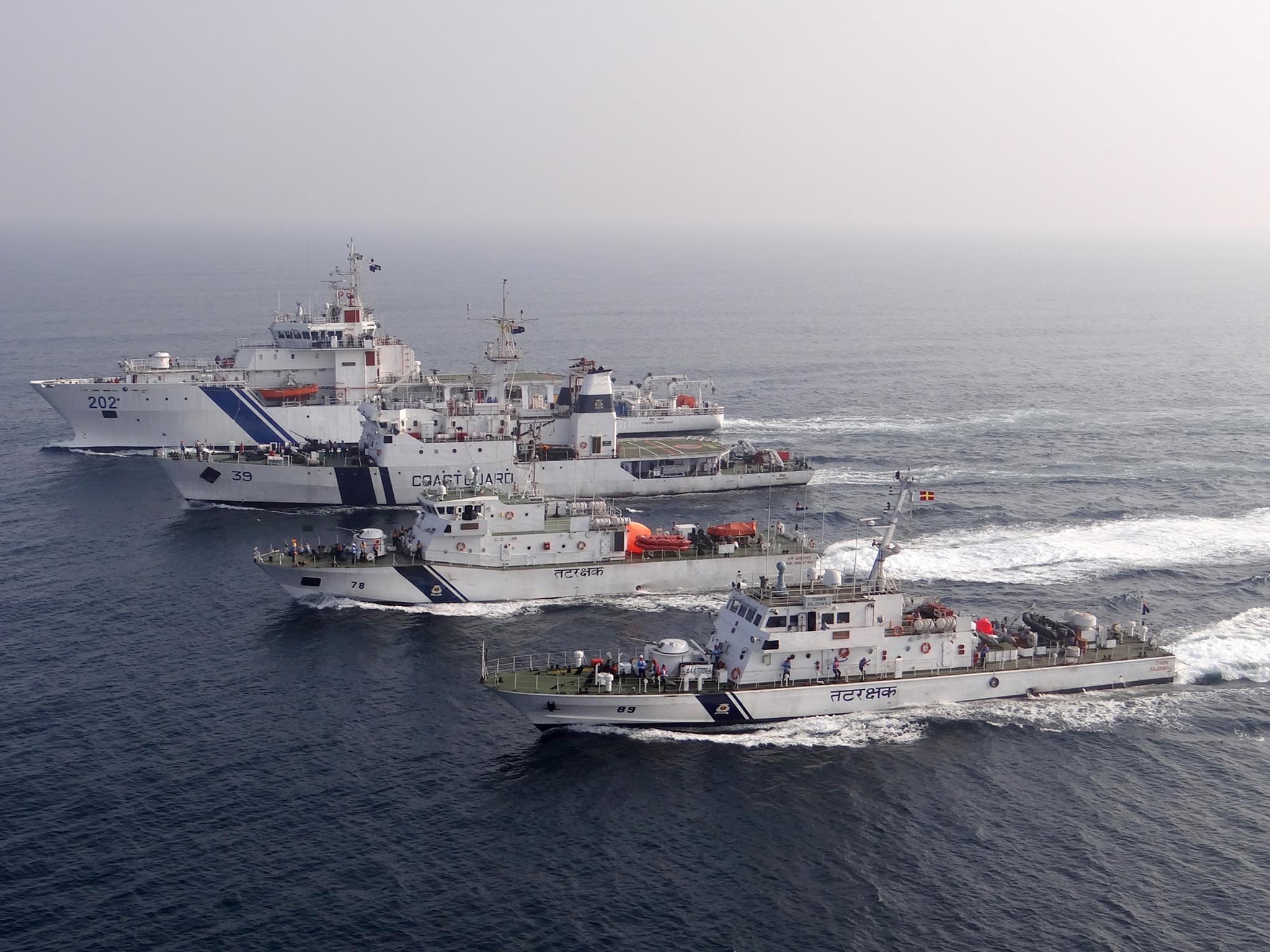
Both governments agreed to strengthen naval cooperation, improve coast guard coordination, intensify maritime domain awareness and increase collaboration against piracy, illegal fishing and transnational maritime crimes. They also reiterated their commitment to developing the strategically important Sabang Port near the entrance to the Strait of Malacca, which occupies a critical position overlooking one of the world’s busiest shipping lanes.
The renewed emphasis on Sabang assumes added geopolitical importance because of its proximity to India’s Andaman and Nicobar Islands and the increasing strategic competition across the eastern Indian Ocean.
Critical minerals, trade, tech
Recognizing the growing importance of resilient supply chains, India and Indonesia agreed to establish closer cooperation in critical minerals, an area that has acquired strategic significance because of the global transition towards clean energy technologies and advanced manufacturing.
The two countries also decided to deepen cooperation in digital technologies, artificial intelligence, semiconductor ecosystems, renewable energy and sustainable industrial development. Discussions covered measures to increase bilateral trade, facilitate investments and improve connectivity between businesses.
Indonesia remains India’s largest trading partner within Asean after Singapore in several sectors, while India continues to be an important market for Indonesian coal, palm oil and other commodities. New Delhi, meanwhile, sees Indonesia as a crucial partner in securing access to critical mineral resources essential for electric vehicles, batteries and advanced electronics.
Expanding space and scientific cooperation
The visit also produced new agreements in the space sector. India and Indonesia agreed to strengthen cooperation in satellite technology, remote sensing, earth observation, disaster management and capacity building.
Scientific collaboration is expected to expand through exchanges between research institutions and greater cooperation in emerging technologies, reflecting both governments’ efforts to diversify bilateral engagement beyond traditional diplomatic and commercial areas.
Shared regional, global positions
The summit demonstrated growing convergence on several international issues. The joint statement underlined support for a stable, peaceful and inclusive Indo-Pacific and reaffirmed both countries’ commitment to Asean centrality.
The two leaders called for reforms of global governance institutions, including the United Nations security council, making them more representative of contemporary geopolitical realities. They also pledged closer coordination in multilateral forums, including the G20, BRICS and the East Asia Summit.
Indonesia expressed support for India’s zero-tolerance approach towards terrorism and both countries reiterated the need for stronger international cooperation against terrorism in all its forms. They also emphasized respect for sovereignty, territorial integrity and peaceful settlement of disputes in accordance with international law.
Parliament address
During the visit, Modi addressed Indonesia’s Parliament, where he spoke of the centuries-old civilizational links connecting the two countries and argued that historical ties should provide the foundation for a modern strategic partnership.
He highlighted India’s economic transformation, technological progress and democratic credentials while advocating more equitable global governance, easier access to technology for developing countries and greater cooperation among emerging economies.
The prime minister also underlined the importance of maintaining freedom of navigation, promoting inclusive development and preserving stability across the Indo-Pacific.
Cultural diplomacy
The two governments placed considerable emphasis on their shared civilizational heritage. Modi and Prabowo jointly launched initiatives for the conservation and restoration of the historic Prambanan Temple complex and announced commemorative programmes marking the Rabindranath Tagore-Ki Hadjar Dewantara Year, celebrating the intellectual and cultural links between India and Indonesia.
The leaders stressed that people-to-people contacts, educational exchanges and tourism would remain important pillars of bilateral relations.
Addressing members of the Indian diaspora in Jakarta, Modi described India as one of the principal engines of global economic growth and said the country’s development was being driven by the principles of “Reform, Perform and Transform”. Referring to the popularity of Indian culture in Indonesia, he remarked that the longstanding cultural affinity between the two nations offered a strong foundation for expanding strategic cooperation in the coming decades.
Visit’s significance
Modi’s Indonesia visit represents an important milestone in India’s Indo-Pacific diplomacy. While defence cooperation, particularly the BrahMos agreement, attracted the greatest attention, the broader outcome lies in the comprehensive expansion of bilateral engagement across security, maritime affairs, technology, supply chains and critical minerals.
For India, the agreements strengthen its Act East Policy, reinforce its position as an emerging defence exporter and enhance its strategic footprint near the Strait of Malacca. For Indonesia, the partnership provides access to advanced defence capabilities, diversified technology partnerships and stronger cooperation with a major Indo-Pacific power without compromising Jakarta’s long-standing policy of strategic autonomy.
The visit therefore marks not merely the conclusion of another bilateral summit but the beginning of a more mature phase in India-Indonesia relations, characterised by deeper strategic coordination, expanding economic engagement and growing convergence on regional and global challenges.