
Delhi high court upholds India’s Telegram ban ahead of NEET-UG 2026 retest
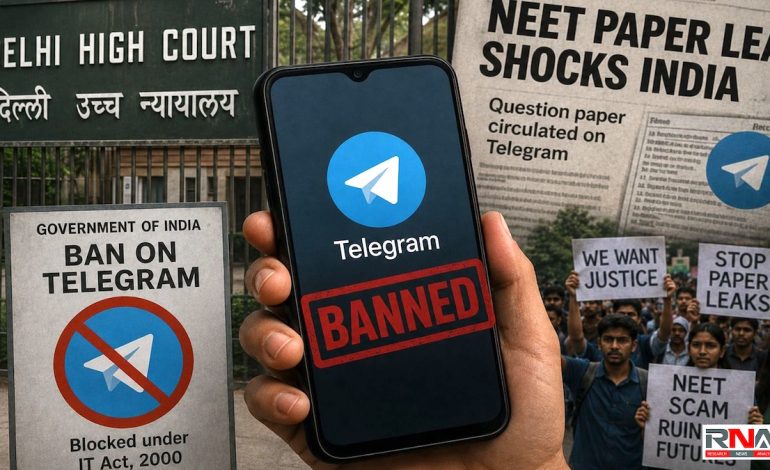
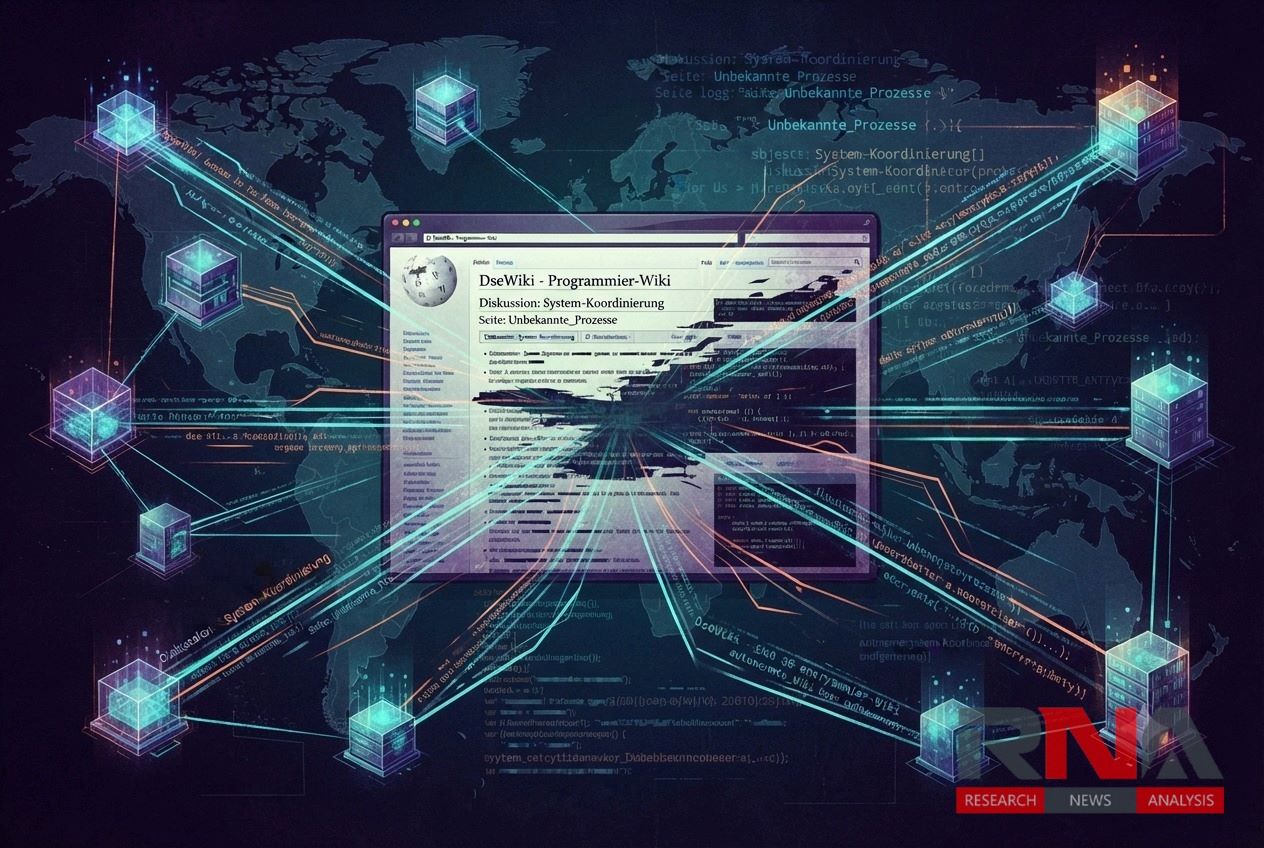
Illustration for representation.

New Delhi: The Delhi high court on Friday upheld the Centre’s decision to temporarily restrict the messaging platform Telegram in the run-up to the NEET-UG 2026 medical entrance retest. The court rejected the company’s challenge to the order and ruled that the measures adopted by the Centre were the “least restrictive” available in the circumstances.
A division bench led by the judge, Justice Tejas Karia, pronounced the order after a two-day hearing, holding that the Ministry of Electronics and Information Technology (MeitY) had followed due procedure under Section 69A of the Information Technology Act. The judge said the reasons presented for the blocking order were sufficient given the emergency nature of the situation.
The court rejected the argument that the government’s orders suffered from a non-application of mind, and also dismissed the contention that Section 69A did not permit the blocking of an entire platform. Telegram contended there was no reason to exclude an entire platform from the ambit of “information” under the act.
Representing Telegram, senior advocate Dhruv Mehta had argued there was no genuine emergency warranting a blanket ban. He contended that the blocking order was disproportionate, ultra vires (beyond the powers of) the statute and reflected a complete non-application of mind by the ministry’s secretary. Mehta submitted that the platform had remained in constant communication with the government, proactively taking down flagged channels and uniform resource locators (URLs), and that targeted blocking of specific content would have sufficed instead of a platform-wide shutdown.
Appearing for the Centre, the solicitor general, Tushar Mehta, along with the attorney general, R Venkataramani, and the additional solicitor general, Chetan Sharma, defended the order. They told the court that Telegram’s architecture – with its bot infrastructure, anonymous usernames and mirror-channel migration – made targeted enforcement unworkable.
“Any information can include all information,” the solicitor general argued, countering Telegram’s narrower reading of the law, and maintained that the government had taken the least restrictive measure available to curb the spread of fraudulent exam-leak claims.
Why the ban, and how India and Telegram reacted
The restriction stems from the fallout of the original NEET-UG 2026 examination, held on May 3, which the National Testing Agency (NTA) cancelled following widespread allegations of paper leaks and irregularities, a matter now under investigation by the Central Bureau of Investigation (CBI). With a retest scheduled for June 21, the NTA recommended blocking Telegram after investigators found channels with names such as “PAPER LEAKED NEET”, “Re-NEET 2026” and “Private Mafia” soliciting payments of anywhere between a few thousand and several lakh rupees from anxious candidates and parents, despite the agency’s insistence that no genuine paper existed outside the secured examination chain.
The Ahmedabad cybercrime branch separately arrested members of an inter-state gang linked to eight such channels, with transactions worth around ₹1.5 crore under scrutiny. The blocking order, issued on June 16 and reviewed by a committee chaired by the Cabinet secretary, restricts access until June 22, while Telegram’s message-editing feature has been disabled until June 30 over concerns it was being used to fabricate fake leak “evidence” after papers were administered.
Telegram’s founder and chief executive, Pavel Durov, reacted sharply on X, arguing that the ban “punishes” more than 150 million ordinary Indian users while leaving the actual perpetrators untouched, and that the leaks had simply migrated to other applications. He also alleged that the telecom operator Reliance Jio was disrupting global access to Telegram through BGP route hijacking, suggesting – without offering conclusive evidence – that competitive pressure from Meta-backed WhatsApp could be a factor, an allegation CNBC said it could not independently verify.
Reaction among Indian users was sharply divided. Within hours of the restriction, VPN downloads in India recorded their biggest single-day jump since early 2025, with apps such as Proton VPN and Turbo VPN seeing surges of over 100 per cent on some app stores, according to data cited by TechCrunch.
On X, many users complained of disrupted access to study groups, business channels and entertainment communities, while digital rights advocates, including the Internet Freedom Foundation, questioned the proportionality of a platform-wide block. Others, however, backed the move, arguing that decisive action was overdue given the scale of exam-fraud networks operating openly on the app.
What is Telegram Messager?
Telegram – also known as Telegram Messenger – is a cloud-based, cross-platform messaging and social media service launched in 2013 by brothers Nikolai and Pavel Durov, who had earlier founded the Russian social network VK. Originally built in St Petersburg, the company is now headquartered in Dubai through Telegram FZ-LLC, with its parent entity registered in the British Virgin Islands.
The platform is known for large-capacity file sharing, public channels capable of reaching unlimited subscribers, bot automation and optional end-to-end encrypted “secret chats”, features that have made it popular with everyone from hobbyist communities to protest movements and, increasingly, fraud networks.
Telegram says it now has over 1 billion monthly active users worldwide and around 500 million daily active users, having grown sharply after WhatsApp’s contested 2021 privacy-policy update pushed millions of users to seek alternatives. India is widely regarded as its single largest market, with Durov himself citing a figure of over 150 million Indian users, though independent trackers offer somewhat lower estimates.
Telegram controversies
The platform’s history has not been free of controversy. Pavel Durov was arrested at a Paris airport in August 2024 and indicted on charges including complicity in the distribution of material containing child sexual abuse and drug trafficking, which stemmed from allegations of insufficient content moderation. He was released under judicial supervision before later relocating to Dubai.
Telegram remains blocked in China since 2015 and in Iran since 2018, both citing its use by protest movements, while Russia imposed a ban between 2018 and 2020 over the company’s refusal to hand over encryption keys, before reintroducing fresh restrictions earlier this year. Brazil briefly suspended the app in 2024 for failing to share data linked to neo-Nazi chat groups.
With the Delhi high court’s ruling, the temporary restriction on Telegram will remain in force through the NEET-UG 2026 retest before lapsing on June 22. The episode has reignited debate over the balance between platform accountability and user rights – a question likely to recur as Indian authorities continue to confront technology-enabled exam fraud.