
After Riyadh airport attack kills 12 and injures hundreds, Saudi-led coalition vows retaliation
This digitally enhanced screenshot of a video posted on X shows smoke billowing out of the terminal of the Riyadh airport after being hit by a missile.

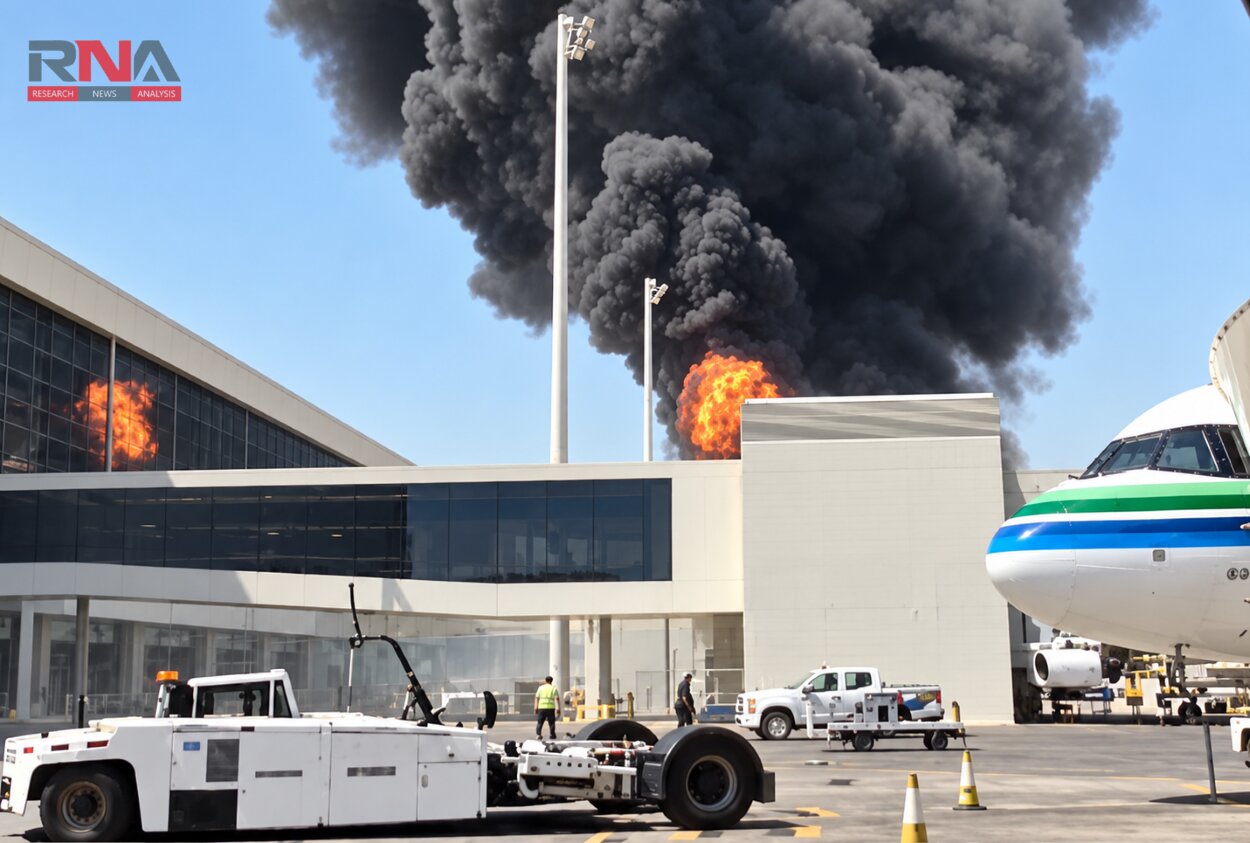
New Delhi: The Saudi-led coalition fighting in Yemen has pledged a decisive response after an attack on Riyadh’s King Khalid International Airport killed 12 people and injured 309 on Saturday. The coalition blamed Yemen’s Iran-backed Houthis for the strike on a passenger terminal, while India condemned the repeated attacks on civilian infrastructure and called for them to stop immediately.
As RNA Media had reported earlier, the dead included four Saudi citizens, two Bangladeshis and one national each from the United States, Egypt, Jordan, Syria, Palestine and Sudan. The injured were taken to several hospitals, with some in serious condition, underscoring the international human cost of the attack on one of the kingdom’s principal aviation gateways.
The coalition’s spokesperson, Major General Turki al-Malki, described the targeting of civilian travellers and airport staff as a war crime and said its response would comply with international humanitarian law. The coalition’s announcement did not specify the timing or scope of the threatened military action.
Although Saudi-led forces attributed the attack to the Houthis, the group had not claimed responsibility for this particular strike at the time of its report. The attack was the third on the airport that week and, according to the news agency, the deadliest in Saudi Arabia in more than a decade.
A regional official told AP that a missile struck the complex housing terminals 3 and 4, which serve domestic flights. Airport operations were suspended, disrupting services and forcing airlines to divert or cancel flights.
The closure was subsequently extended into October 11, according to flight-tracking information cited by news agencies. The suspension compounds several days of disruption to Saudi aviation as successive attacks have brought the conflict deeper into the kingdom.
In its statement condemning the attacks, India’s ministry of external affairs said strikes against civilians and civilian infrastructure were “completely unacceptable” and must cease immediately. New Delhi expressed solidarity with Saudi Arabia in defence of its sovereignty and called for an early restoration of peace and normalcy in the region.
The escalation has direct implications for India’s approximately 2.74 million citizens in Saudi Arabia, as well as passengers travelling between the two countries. In an earlier advisory, the Indian embassy in Riyadh urged nationals to remain vigilant, stay indoors when necessary and follow instructions issued through official Saudi channels.
Indian airlines had already curtailed services following the preceding attacks, with Air India and Air India Express announcing cancellations through October 10 and Akasa Air cancelling its Kochi–Riyadh services on October 8. The renewed airport closure leaves further uncertainty over travel, while the embassy has directed Indian nationals to its official channels for updates.
The US president, Donald Trump, said Washington was considering whether to join Saudi strikes against the Houthis, without announcing a decision. The US secretary of state, Marco Rubio, confirmed that an American citizen was among those killed and demanded an end to the attacks, while the UN secretary-general, António Guterres, also condemned the strike.
The airport attack comes as Saudi Arabia provides air support to Yemeni government forces trying to reverse Houthi territorial gains along the Red Sea coast. The fighting has revived a conflict that had become less intense following a UN-brokered truce in 2022, with renewed hostilities this year bringing attacks on Saudi airports, energy facilities and shipping.
The battle for the Red Sea coastline carries consequences beyond Yemen because it affects access to the Bab al-Mandab Strait, the southern gateway to the Red Sea. Houthi attacks on shipping there have added pressure to Gulf energy supplies already affected by the wider conflict involving Iran and insecurity around the Strait of Hormuz.
Saudi-backed forces have reported recovering territory near Bab al-Mandab, but the military position remains contested. Reuters said it could not independently verify a Saudi claim that the area had been cleared of Houthis, and reported continued fighting near positions overlooking the coastal corridor.
The violence is also testing Saudi Arabia’s efforts to maintain its role as an international business destination. Organizers said the World Petroleum Congress and Future Investment Initiative would proceed this month, despite flight disruption and heightened security concerns surrounding travel to Riyadh.