


West Bank on the boil: Eisenkot brands settler attacks ‘Jewish terrorism’, turns heat on Netanyahu’s allies
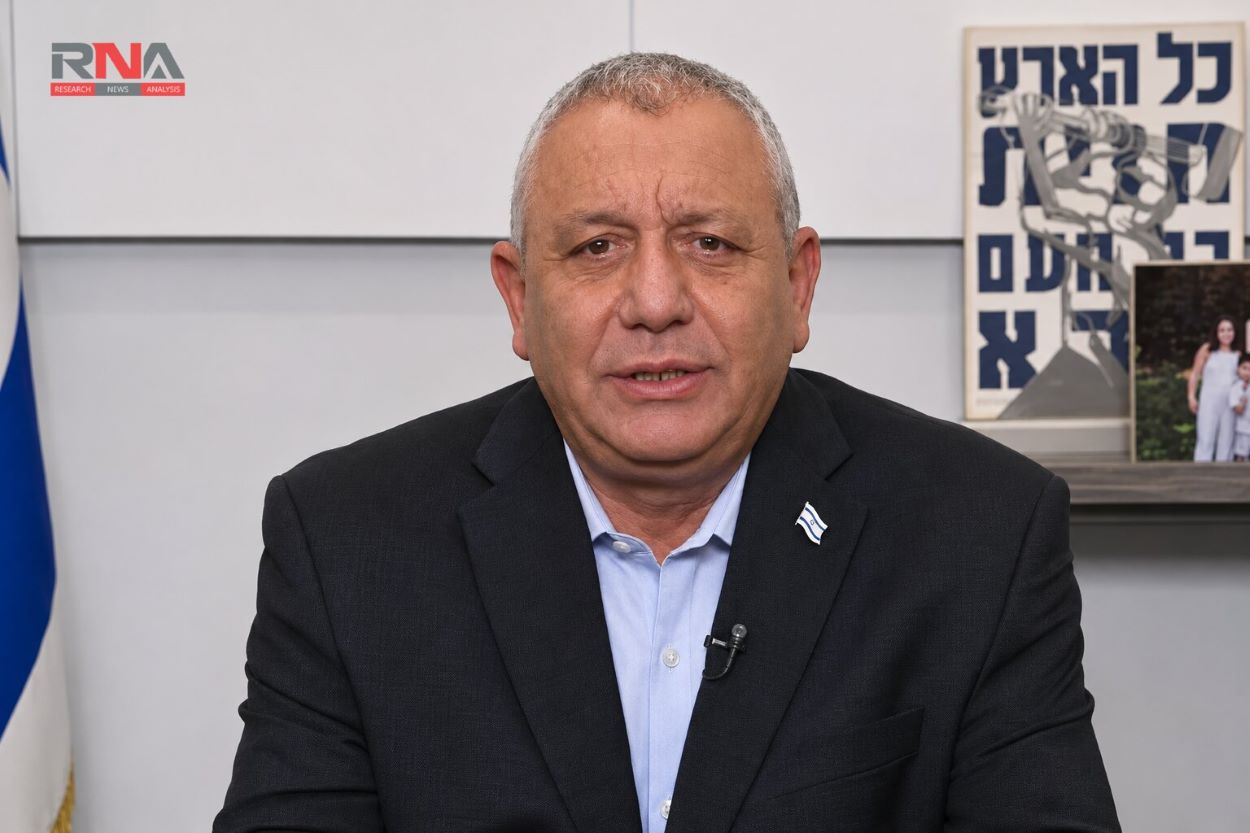
Gadi Eisenkot. (Digitally enhanced screenshot of a video posted on X.)

New Delhi: Israel’s opposition leader and former military chief, Gadi Eisenkot, has denounced a fresh wave of attacks by extremist Israeli settlers on Palestinian communities in the occupied West Bank as “Jewish terrorism”, accusing senior members of the caretaker government of fostering a climate of lawlessness. His remarks have sharpened the political confrontation with the caretaker prime minister, Benjamin Netanyahu, at a time when Israel is grappling with a leadership crisis and mounting international pressure over its settlement policies.
The condemnation followed a series of arson and vandalism incidents on Sunday, in which Palestinian homes and vehicles were targeted and properties defaced with racist graffiti. The attacks have renewed concerns within Israel’s political and security establishments that escalating settler violence could destabilize the West Bank, divert military resources and further damage the country’s international standing.
According to reports by Reuters and Times of Israel, several Palestinian communities were targeted, including Kafr Malik, Deir Abu Mashal and Deir al-Sudan near Ramallah. Around a dozen vehicles and several homes were set ablaze, although no injuries were immediately reported.
Israeli police announced investigations into the incidents, while the Israel Defence Forces (IDF) condemned the violence. There was no immediate confirmation of arrests in connection with the attacks.
Eisenkot takes aim at Netanyahu’s far-right allies
Eisenkot, who heads the centre-right Yashar party and has been entrusted with forming Israel’s next government, held the policies of the national security minister, Itamar Ben-Gvir, and the finance minister, Bezalel Smotrich, responsible for the deteriorating situation. He argued that extremist violence was not merely a law-and-order problem but a direct threat to Israel’s national security, regional stability and diplomatic relations.
The former IDF chief called for the deployment of counterterrorism instruments against violent settlers, including operations by Israel’s domestic intelligence agency, Shin Bet, and the use of administrative detention. The latter allows suspects to be held without trial and has historically been used overwhelmingly against Palestinians.
The defence minister, Israel Katz, discontinued the use of administrative detention against Jewish settlers after assuming office in November 2024. Eisenkot’s demand effectively calls for a reversal of that policy, highlighting the increasingly contentious question of whether Israeli and Palestinian perpetrators of politically motivated violence should face comparable security measures.
Ben-Gvir rejected the accusations, suggesting that Eisenkot was attempting to win over Arab political parties whose parliamentary support could prove crucial to his bid to form a government. Smotrich, meanwhile, has long advocated settlement expansion and the annexation of the West Bank.
Other opposition figures, including Yair Lapid and Yair Golan, also condemned the violence, with the latter warning that unchecked attacks could trigger another Palestinian uprising, or intifada. Significantly, the agriculture minister, Avi Dichter, a member of Netanyahu’s Likud party and a former Shin Bet chief, also advocated stronger counterterrorism measures against extremist settlers.
A security crisis amid a political deadlock
The controversy comes at a particularly sensitive juncture in Israeli politics following the inconclusive parliamentary election on October 27, 2026, which deprived Netanyahu of his majority. The newly elected Knesset was sworn in on November 10, but negotiations over the formation of a government have yet to produce a breakthrough.
Israel’s president, Isaac Herzog, subsequently tasked Eisenkot with assembling a governing coalition. However, securing a majority in the 120-member Knesset could require support from Arab lawmakers unless Eisenkot reaches a power-sharing agreement with Netanyahu.
For the former military chief, the West Bank violence has emerged as an issue through which he can challenge the Netanyahu administration’s national security credentials. The debate also exposes a fundamental division within Israel over whether unrestricted settlement expansion strengthens the country’s security or creates additional strategic vulnerabilities.
The Israeli military has warned that violence by Jewish extremists is undermining its counterterrorism operations in the West Bank. Additional military deployments to contain such incidents could stretch Israeli security resources and increase the possibility of wider confrontations with Palestinians.
Settler violence reaches alarming levels
Violence against Palestinians in the West Bank has intensified considerably since the Hamas-led attacks on Israel on October 7, 2023. The escalation has coincided with the expansion of Israeli settlements, establishment of unauthorized outposts and increasing restrictions on Palestinian access to agricultural land.
According to the United Nations Office for the Coordination of Humanitarian Affairs, more than 1,600 settler attacks resulting in casualties or property damage were documented across 275 Palestinian communities between January and August 2026. The daily average during this period stood at 6.7 incidents, compared with five in 2025.
A Human Rights Watch report published on November 23 said the UN had documented 397 settler attacks resulting in casualties or property damage between October 1 and October 26 alone. This represented the highest monthly figure since the UN began maintaining such records in 2006.
An estimated 750,000 Israelis now live in settlements and outposts across the occupied West Bank, including East Jerusalem. The proliferation of these settlements has increasingly fragmented Palestinian territory, complicating the establishment of a geographically contiguous and economically viable Palestinian state.
International pressure mounts on Israel
The latest violence comes days after Britain and Australia announced fresh punitive measures targeting individuals and organizations associated with settlement expansion and abuses against Palestinians. The British government announced sanctions against eight companies involved in settlement activities on November 17, while Australia imposed sanctions on three individuals and four organizations the following day.
The international legal position on Israeli settlements is reflected in the UN security council Resolution 2334, adopted in December 2016, which declares them illegal under international law. Israel disputes this interpretation and maintains that the territory’s final status should be determined through negotiations.
For countries such as India, which maintains extensive strategic and defence relations with Israel while consistently supporting a negotiated two-state solution, developments in the West Bank carry wider diplomatic implications. Continued settlement expansion and extremist violence threaten to erode the territorial and political foundations of a settlement to the decades-old Israeli-Palestinian conflict.
Eisenkot’s intervention has brought an increasingly uncomfortable security question into the mainstream of Israeli politics – whether violence perpetrated by Israeli extremists is itself becoming a significant threat to the country’s security. How the next government addresses that question could have profound consequences for Israel’s internal stability, relations with its international partners and the prospects for lasting peace in West Asia.