
US tightens naval blockade on Iran, targets oil transfers at sea as Hormuz faces fresh crisis

File photo for representation.

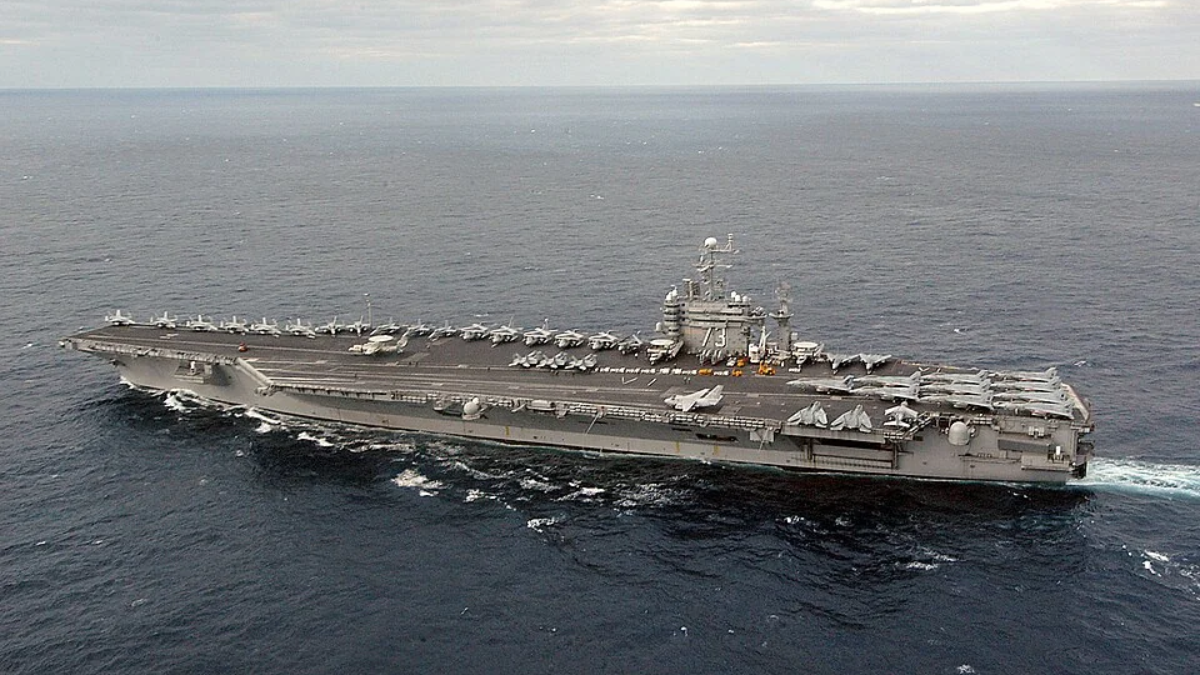
New Delhi: The United States has significantly expanded its naval blockade of Iran by extending enforcement measures to vessels receiving Iranian oil and other cargo through ship-to-ship transfers, closing a potential escape route that Tehran has used to circumvent restrictions on its maritime trade. The decision, announced on November 18, raises the possibility of direct confrontations between American warships and Iranian-linked tankers, with potentially serious consequences for energy supplies, commercial shipping and regional security.
Under the revised restrictions, the US military can intercept vessels suspected of collecting cargo from ships that originally loaded at Iranian ports, even when the receiving vessels have never entered Iranian territorial waters. The measure effectively extends Washington’s blockade beyond Iran’s coastline to offshore cargo transfers, complicating Tehran’s efforts to maintain oil exports through intermediaries and its network of tankers operating under international sanctions.
According to a maritime security advisory issued by US naval authorities, vessels suspected of violating the blockade may be stopped, boarded, diverted or seized, with force authorized under applicable legal provisions if they refuse lawful instructions. The warning introduces a more aggressive enforcement framework at a time when Iranian attacks on commercial shipping and American military operations have already created considerable uncertainty across the Persian Gulf.
The latest restrictions build on a blockade first imposed on April 13 this year temporarily lifted in June following a preliminary understanding between Washington and Tehran, and reinstated on July 14 after negotiations collapsed. American authorities maintain that the operation is intended to restrict Iran’s oil revenues and increase pressure on Tehran to end attacks on regional shipping and return to negotiations.
How Iran’s offshore oil-transfer network operates
Ship-to-ship transfers allow petroleum cargoes to be moved between tankers without entering a conventional port, a procedure widely used in legitimate international shipping but also exploited to conceal the origin of sanctioned oil. Iranian-linked operators have previously combined such transfers with changes in vessel identification, opaque ownership structures and manipulation of automatic identification system signals to make shipments harder to trace.
The effectiveness of these methods has become increasingly important for Tehran since the blockade disrupted its traditional export routes, particularly those serving Chinese refiners. Before the US-Israeli war began in February, Iran exported approximately 1.5 million to two million barrels of crude daily, with China accounting for most purchases.
Evidence of renewed offshore transfers emerged this week when maritime monitoring organization United Against Nuclear Iran reported that the tanker Olym transferred approximately 200,000 barrels of Iranian crude to another vessel, Hao Fan, south of Kharg Island on November 17. However, the organization’s November 20 shipping assessment cautioned that the transfer’s purpose remained uncertain, and there was no confirmation that the cargo had successfully escaped the blockade.
The same assessment identified at least 54 tankers carrying Iranian petroleum products along the country’s coastline, illustrating the scale of the shipping backlog created by American restrictions. Although several smaller vessels carrying liquefied petroleum gas have reportedly crossed the blockade line, monitors have not confirmed any crude-laden tanker successfully departing the Gulf of Oman without encountering American enforcement since the blockade resumed.
Tehran weighs retaliation as Washington increases pressure
Iran’s Islamic Revolutionary Guard Corps (IRGC) has repeatedly rejected Washington’s ability to impose a comprehensive economic blockade and warned that attacks on Iranian vessels would invite retaliation. Commentary published by the Iranian news agency Fars on November 18 proposed assembling a convoy of tankers to challenge the blockade, potentially accompanied by threats against energy infrastructure in neighbouring Gulf countries.
Such proposals, however, should not be confused with an officially authorized Iranian military operation, and Tehran has not publicly committed to executing the suggested convoy strategy. Military analysts generally assess that Iran cannot defeat the US Navy in a sustained confrontation, although its missile capabilities, drones and ability to disrupt commercial shipping give it considerable options for imposing economic costs.
Washington has simultaneously intensified financial pressure on Iranian petroleum networks through its Operation Economic Outcast campaign, targeting intermediaries involved in oil sales and revenue collection. On Saturday, the US treasury announced sanctions against four individuals accused of facilitating Iranian oil transactions, extending the campaign beyond physical interdiction to the financial arrangements supporting Tehran’s exports.
The central strategic difficulty is that stronger American enforcement may reduce Iran’s export earnings without necessarily compelling Tehran to accept Washington’s negotiating terms. A prolonged blockade could instead increase Iranian incentives to threaten neighbouring oil installations, attack commercial vessels or intensify pressure on the Strait of Hormuz.
Hormuz crisis carries wider consequences for India
The confrontation has implications well beyond Iran because the Strait of Hormuz ordinarily carries roughly one-fifth of global oil consumption and a substantial share of international liquefied natural gas trade. Continued attacks and restrictions have disrupted movements through the waterway, with the Financial Times reporting that vessel transits during the week ending November 18 fell by approximately 15 per cent compared with the preceding week.
For India, the principal concerns include higher energy-import costs, volatile freight and insurance rates, and the safety of Indian merchant sailors working aboard vessels operating in the Gulf. The risks were highlighted in a recent RNA Media report concerning an Indian seafarer missing after an attack on the tanker MT Tara Gas, which also examined New Delhi’s demand for uninterrupted navigation.
India also faces a complicated diplomatic environment as the US attempts to isolate Iranian maritime trade, with Washington’s restrictions carrying implications for third-country shipping operators and intermediaries. Earlier, RNA Media reported American sanctions against a Chandigarh-linked network accused of facilitating false vessel registrations connected with Iran’s oil fleet.
The consequences could become considerably more serious if Iran attempts to extend maritime disruption towards the Bab al-Mandab, linking the Gulf confrontation with shipping routes connecting the Red Sea and the Indian Ocean. For Washington and Tehran, the immediate question is whether the tightened blockade can create sufficient economic pressure for a diplomatic breakthrough without provoking military retaliation that further destabilizes international energy markets.
The United States retains overwhelming conventional naval superiority, but maintaining a blockade across complex international shipping networks is substantially harder than preventing vessels from leaving Iranian ports. With both governments facing increasing economic and strategic pressures, the next confrontation over an Iranian oil shipment could determine whether the dispute remains an exercise in maritime coercion or develops into another major regional military escalation.