
US Seahawk helicopter makes emergency landing in Arabian Sea; US-Iran Doha talks end without breakthrough
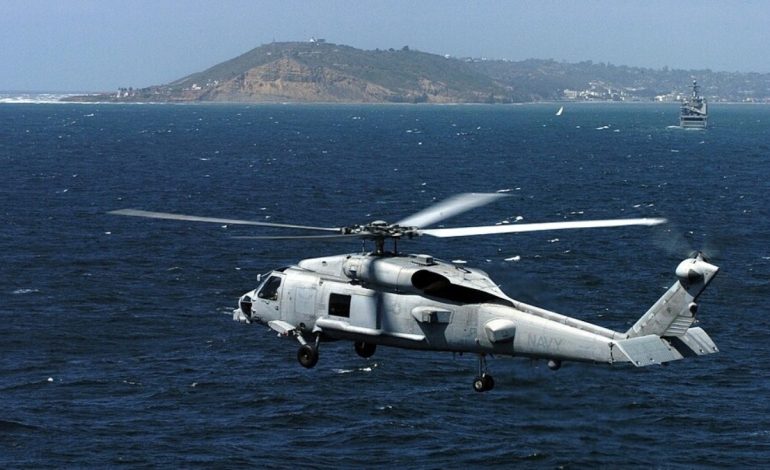
US Seahawk helicopter makes emergency landing in Arabian Sea. (Image courtesy: Wikimedia)

New Delhi: A search operation is underway after a United States Navy MH-60S Seahawk helicopter made an emergency landing in the Arabian Sea on Wednesday, leaving one US service member missing and three others injured, the US military said. Three injured personnel are reported to be in stable condition.
The US Navy’s 5th Fleet said there was no indication that the emergency landing was caused by hostile action. The helicopter was deployed aboard the USS George HW Bush aircraft carrier, which is operating in the region.
US Navy assets have been mobilised to locate the missing crew member. Emergency water landings are among the most challenging situations for helicopter crews, as helicopters can become unstable and overturn after entering the water. The incident comes as American forces in the region continue operating under heightened security amid periodic flare-ups despite the ceasefire between the US and Iran.
US-Iran talks focus on interim deal
Separately, Iran and the US concluded another round of indirect talks in Doha without announcing any significant breakthrough toward a broader peace agreement. According to reports, negotiators spent two days working on issues linked to the interim agreement announced two weeks ago.
The talks focused on restoring maritime traffic through the Strait of Hormuz and the release of frozen Iranian funds rather than addressing broader political disputes.
Qatar’s foreign ministry said the discussions resulted in positive progress on matters related to the June ceasefire memorandum and built on the outcomes of an earlier summit held in Switzerland. The ministry also said the next round of talks will take place after the funeral of the late supreme leader, Ayatollah Ali Khamenei, who is scheduled to be buried on July 9.
Speaking in Washington, the US president, Donald Trump, said he was encouraged by the pace of the negotiations and expressed confidence that future discussions on Iran’s nuclear programme would move forward. However, reports said nuclear issues were not part of the latest negotiations, describing the sessions as technical discussions focused on implementing existing commitments. The US vice-president, JD Vance, said nuclear-related talks would be taken up separately at a later stage.
The negotiations were conducted indirectly through Qatari and Pakistani mediators. Iran’s delegation was led by deputy foreign minister Kazem Gharibabadi, while neither side announced that any outstanding differences had been resolved.
The Strait of Hormuz remains central to the ongoing discussions because of its importance to global energy supplies. The ceasefire has allowed partial resumption of commercial shipping but there remains uncertainty over what future security arrangements will be and what tolls Iran will impose on shipping once the current toll-free period expires.