

US raises interest rates for first time in three years as oil prices fuel inflation. How will Americans be affected?
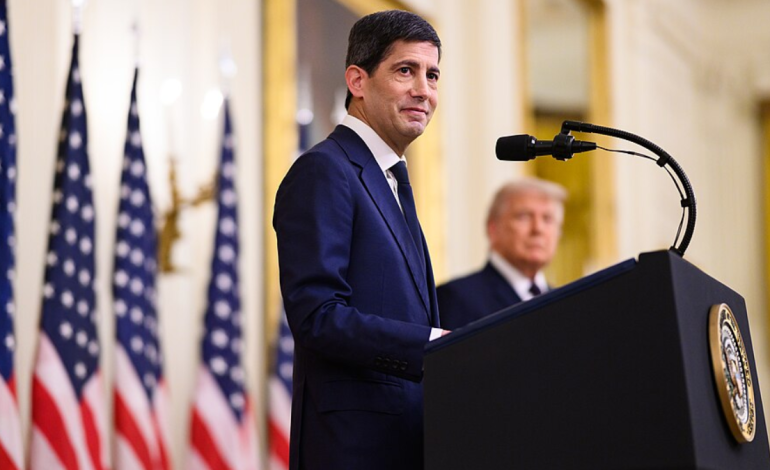
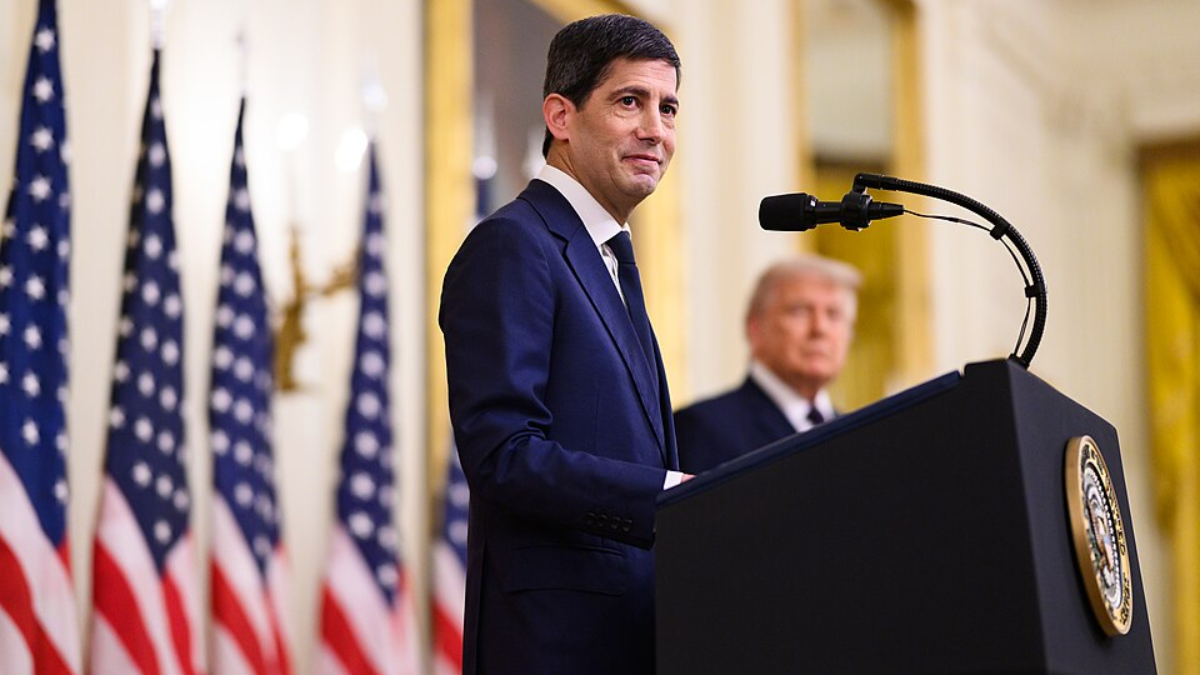
US Federal Reserve Chairman Kevin Warsh. (Image courtesy: Wikimedia)

New Delhi: Americans are facing a fresh squeeze on household and business costs as fuel prices surge and borrowing becomes more expensive. The latest move by the United States central bank comes as the Iran conflict keeps crude oil prices elevated and threatens to push inflation further away from the level policymakers want.
The United States federal reserve increased its main interest rate by 25 basis points on Wednesday, moving it to 3.75 per cent–4 per cent. The increase is the first upward move in more than three years and comes at a time when the economy is still showing signs of strength.
The biggest concern for policymakers is that expensive energy can affect far more than what people pay at petrol stations. Higher fuel costs can raise the expense of transporting food, raw materials and manufactured goods, eventually putting pressure on prices across the economy.
That risk has increased sharply since the escalation of the war involving the US, Israel and Iran. Brent crude was trading around $109 a barrel on Tuesday, while the average US petrol price had reached $4.36 a gallon, up from $4.06 a month earlier, according to the American Automobile Association, as cited by Al Jazeera.
Diesel has also reached record levels, with the national average at $6.31 a gallon. Because diesel is widely used by trucks and commercial transport, a prolonged increase could make it more expensive for businesses to move everything from vegetables to steel and cement.
Inflation is still a problem
The energy shock comes when US inflation is already running above the federal reserve’s preferred level. Consumer prices increased 0.4 per cent in August, the biggest monthly increase in four months, while prices were 3.4 per cent higher than a year earlier.
The federal reserve wants inflation to settle around 2 per cent. Kevin Warsh, chair of the US federal reserve, said inflation had remained above that level for more than five years, although he acknowledged that the central bank cannot directly control prices for oil, food or individual products.
Instead, interest rates are one of the main tools available to the central bank. Higher rates make borrowing more costly, which can reduce spending and investment and, over time, ease demand that is contributing to price increases.
What changes for Americans
The impact of the decision will be felt differently depending on whether people are borrowing or saving money. Credit cards, personal loans and some other forms of borrowing can become more expensive, while savers may benefit from higher interest payments.
Major US banks including JPMorgan, KeyCorp and BNY have already increased their prime lending rate to 7 per cent from 6.75 per cent. The prime rate influences the cost of several types of consumer and business loans.
Homebuyers are also facing an expensive borrowing environment. The average rate for a 30-year fixed mortgage is 6.76 per cent, while a 15-year mortgage averages 6.09 per cent, according to Freddie Mac.
People who already have fixed-rate mortgages generally will not see their monthly payments change because of Wednesday’s decision. New buyers and homeowners seeking to refinance, however, could face higher costs if mortgage rates rise further.
The rate increase also highlights the disagreement between the White House and the federal reserve over how much borrowing should cost. The United States president, Donald Trump, has repeatedly called for lower rates, arguing that cheaper credit would support investment and economic activity.
Trump renewed that demand after the latest decision, saying US interest rates should be 1 per cent or lower. He later said he continued to have confidence in Warsh but criticized the federal reserve board as “hostile”.
Trump had also repeatedly attacked former Fed chair Jerome Powell for not lowering rates. His administration previously launched a criminal investigation involving Powell, which the former chair said was being used as a pretext to undermine the federal reserve’s independence.
Markets had changed their expectations
Investors had not always expected the latest increase to be as likely as it became in the days before the announcement. The CME FedWatch tool showed a 92.3 per cent probability of a 25-basis-point hike before the decision, compared with 40 per cent a week earlier.
The change followed stronger-than-expected price data and the rapid increase in energy costs. Markets therefore increasingly anticipated that policymakers would prioritise inflation control despite pressure from the White House for lower rates.
The Federal Reserve’s projections point to the possibility of another rate increase before the end of the year. Officials expect rates could move to 4per cent-4.25 per cent, while a small majority see them reaching 4.25 percent-4.5 per cent next year.
Policymakers expect inflation to gradually move towards the 2 per cent target over the coming years, with rate cuts projected later in the decade. Whether that path holds will depend heavily on the duration of the energy shock and whether higher fuel costs begin spreading into other parts of the economy.