US military deaths in Iran war higher than Pentagon’s count, report alleges; Hegseth denies cover-up
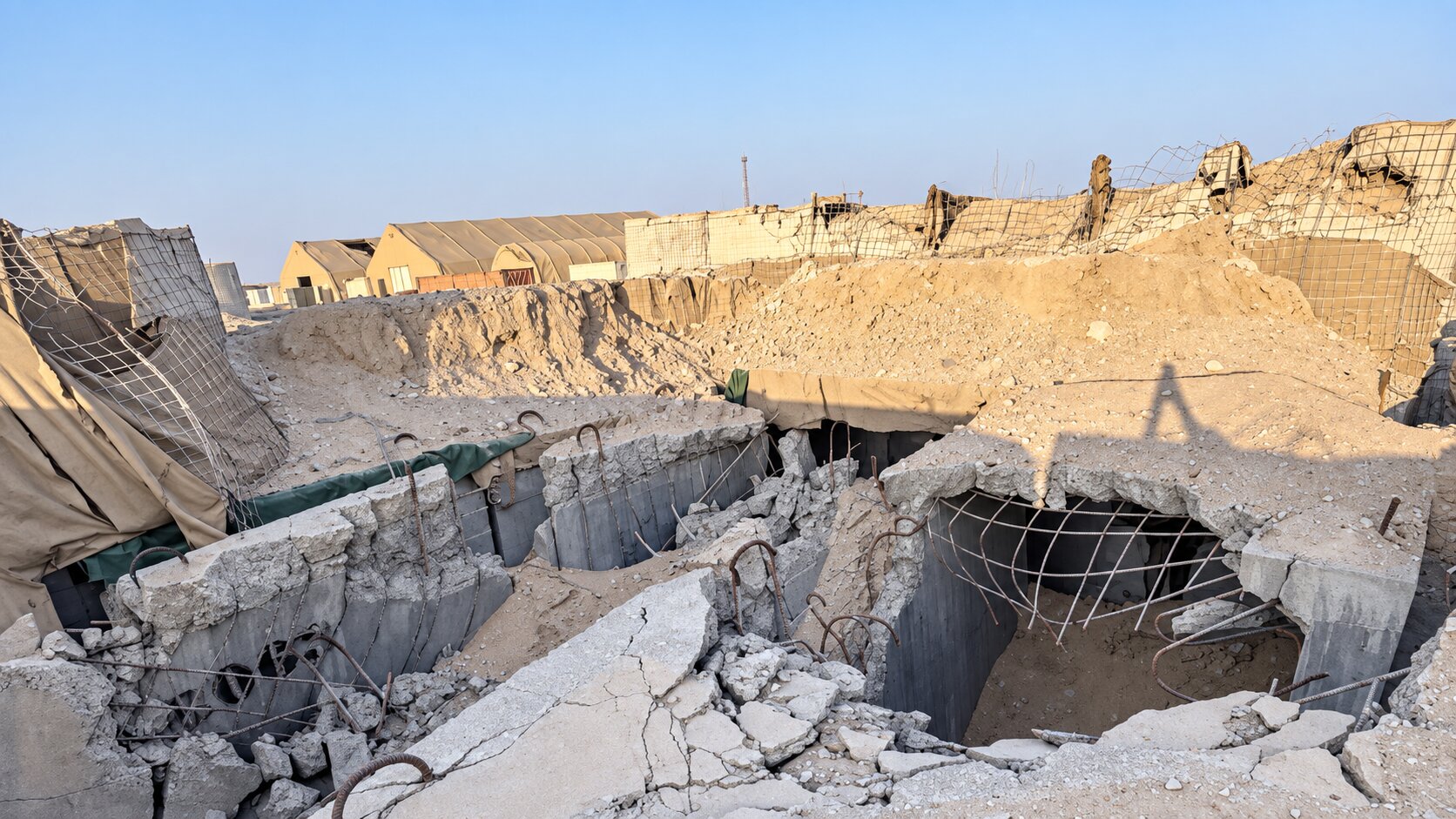
Digitally enhanced screenshot of a video posted on X showing a destroyed underground bunker in a US base in Kuwait after an Iranian missile strike.

New Delhi: At least 22 American military personnel have died in the Middle East since the United States entered the war against Iran, four more than the Pentagon has publicly acknowledged, according to US officials cited by the Washington Post. The claim has opened a fresh dispute over casualty transparency as the conflict’s human and financial costs continue to rise.
Five officials familiar with the US defence department’s internal casualty data placed the death toll at 22, compared with the 18 fatalities recorded in the Pentagon’s public database as of Friday. A sixth official gave a possible toll of 23, although some of the additional deaths might not have resulted directly from combat.
The officials spoke anonymously because they were not authorized to discuss internal figures, leaving the circumstances surrounding the additional deaths unclear. Their identities and the dates, locations and causes of their deaths have also not been made public.
The US defence secretary, Pete Hegseth, rejected the report in a post on X, calling it “a complete lie”. The Pentagon, however, did not explain the apparent gap between its public database and the figures attributed to officials with access to internal casualty records.
One official also said three American contractors deployed in the region had died since the conflict began. Contractor fatalities are not generally counted alongside uniformed military casualties in the Pentagon’s “Defense Casualty Analysis System”, or DCAS.
The United States and Israel launched coordinated military operations against Iran on February 28 this year, opening a wider conflict that has subjected American bases across the Middle East to Iranian missile and drone attacks. Washington calls its campaign Operation Epic Fury, although renewed fighting after a short-lived July ceasefire has been recorded separately under a category called Overseas Operations.
The Pentagon’s database lists 14 deaths under Operation Epic Fury and four under Overseas Operations, producing the officially disclosed total of 18. Critics argue that dividing casualties between the two categories makes the overall cost of the same continuing conflict harder for the public to follow.
Two further service members are known to have died in the region during missions that the Pentagon classified as unrelated to the Iran campaign. Sergeant Devin Seibel died in a training accident in Irbil, Iraq, on May 31, while Major Sorffly Davius died after a medical emergency in Kuwait on March 6.
Seibel had been assigned to Operation Inherent Resolve, the continuing campaign against the Islamic State group, and Davius was deployed under Operation Spartan Shield, a regional partnership and deterrence mission. Their deaths illustrate the difficulty of determining which fatalities should formally be attributed to a war when personnel serving on separate missions operate from bases exposed to the same hostile attacks.
That distinction carries consequences beyond public accounting. The US military conducts a line-of-duty investigation after a service member’s death, and its conclusions can affect the benefits and financial support available to surviving family members.
The dispute follows earlier criticism of the Pentagon’s handling of Iran-war casualty information, including the temporary omission of four combat deaths from its official tally. Democratic lawmakers who previously served in the military are now pursuing legislation intended to prevent the manipulation or selective presentation of casualty data.
More than 820 American personnel have been wounded in action since the war began, according to the public casualty system. A large number suffered traumatic brain injuries during Iranian strikes on US military installations, injuries whose symptoms can emerge gradually and therefore may not be included in initial battlefield assessments.
The controversy has emerged as public and congressional support for the campaign weakens. A September Reuters/Ipsos survey found that 28 per cent of Americans approved of the US president, Donald Trump’s, handling of Iran, while 62 per cent disapproved.
Seven Republican lawmakers joined Democrats on September 15 to pass a largely symbolic House measure seeking to halt the war. The vote reflected widening concern in Congress over the duration of hostilities, their legal basis and the absence of a durable political settlement.
The financial burden has also expanded sharply. US Central Command estimated that the campaign had cost approximately $43.6 billion by early September, including about $28 billion to replace expended munitions and more than $4.3 billion for damaged or lost equipment, according to a separate document reviewed by Washington Post.
That estimate excludes the full cost of repairing American military facilities damaged across the region. The scale of expenditure, combined with more than 800 wounded personnel and questions over the death toll, has intensified demands for the Pentagon to provide a complete and consistent public accounting of the war.