
US-Iran conflict widens as Tehran claims strikes on US bases, Hormuz tensions escalate
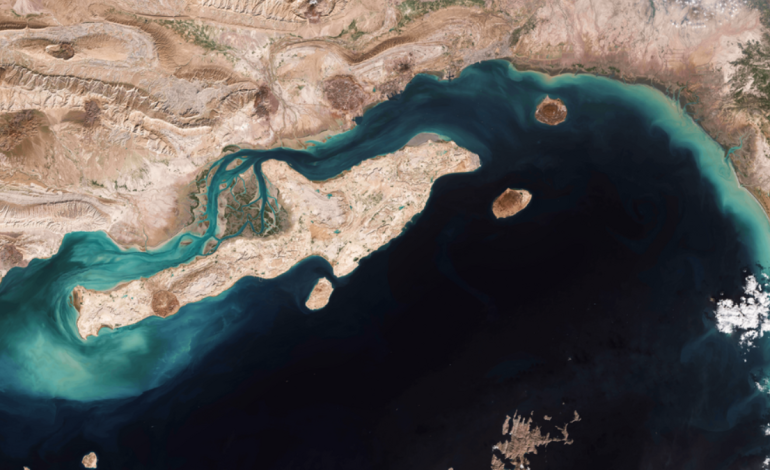
Hormuz tensions escalate. (Image courtesy: Wikimedia)

New Delhi: The confrontation between the United States and Iran intensified sharply after Tehran claimed it had struck a US military base in Jordan, opening a new front in a conflict that has rapidly expanded beyond Iranian territory. The reported attack came alongside Iranian military operations in the Strait of Hormuz, where commercial shipping has increasingly become a target amid mounting regional tensions.
The developments prompted a swift American response. US Central Command (Centcom) announced another series of strikes on Iranian military infrastructure, describing the operation as a direct response to attacks on international shipping and American interests in the region. The reports said nearly 140 military targets were hit during the latest wave of airstrikes.
Jordan attack widens the battlefield
According to Reuters, Iran’s Revolutionary Guards said on Sunday they had destroyed a command-and-control centre and drone hangars at a US base in Jordan, while also targeting a US military radar site in Kuwait, aircraft carrier support and refuelling platforms in Oman, and a fighter jet maintenance centre and command-and-control facility in Qatar.
Hours after the reported strike, US forces carried out fresh attacks across southern Iran. According to Centcom, the strikes targeted facilities linked to missile operations, drone infrastructure and other military assets believed to support Iran’s regional operations.
US defence secretary, Pete Hegseth defended the strikes in a post on X, writing, “Iran made a poor choice. Now they pay.”. President Donald Trump also signalled that Washington was prepared to maintain military pressure while insisting that diplomatic channels remained open.
The latest operation marks the third major round of American strikes in recent days, underscoring the rapid pace at which both sides have escalated military action.
Iran tightens grip on Strait of Hormuz
Alongside military exchanges, Iran’s Islamic Revolutionary Guard Corps (IRGC) announced that it had tightened control over the waterway after stopping a commercial vessel that allegedly failed to comply with navigation instructions. Tehran later declared that the strait would remain closed until further notice.
According to the UKMTO, a container ship sustained damage and caught fire near the Omani coast, forcing its crew to abandon the vessel. Separately, Iranian state media claimed another vessel had been targeted in the Strait of Hormuz, while US Centcom blamed Tehran for attacks on commercial shipping.
In response to the deteriorating security situation, Washington advised merchant vessels to avoid the northern shipping lane and instead travel through Oman’s territorial waters where possible.
Qatar, Bahrain and UAE activate air defences
The latest military exchanges also triggered security alerts across the Gulf Explosions were reported over Doha as air defence systems intercepted incoming projectiles, while Bahrain activated nationwide warning sirens and instructed residents to move to shelters. The United Arab Emirates confirmed that its air defence units were responding to missile and drone threats.
The incidents have fuelled concerns that countries hosting American military facilities could increasingly become part of the conflict if hostilities continue.
Iran, Oman hold talks on Strait of Hormuz security
Iranian foreign minister, Abbas Araghchi met his Omani counterpart in Muscat to discuss mechanisms for maintaining safe navigation through the Strait of Hormuz. Oman, which has frequently acted as a mediator between Tehran and Washington, said both sides agreed to continue technical and political consultations aimed at preventing further disruption to international shipping.
Meanwhile, Trump maintained that negotiations with Iran would continue despite the latest fighting, suggesting Washington remains open to dialogue even as military operations expand.