
US charges five over alleged Russian assassination and terror-financing network reaching into Washington
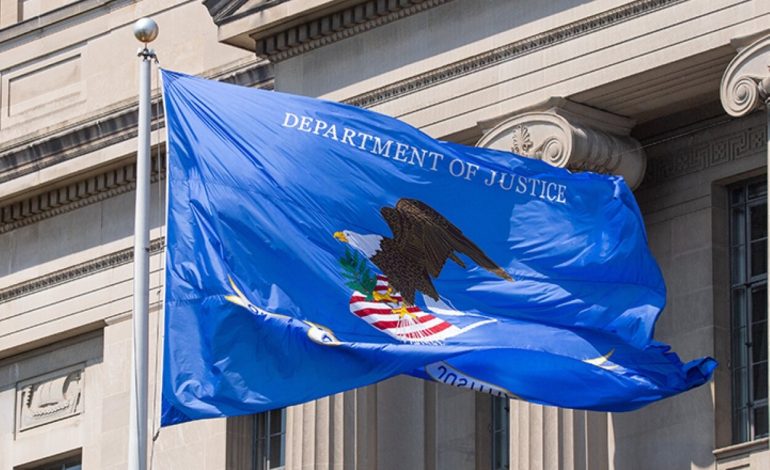
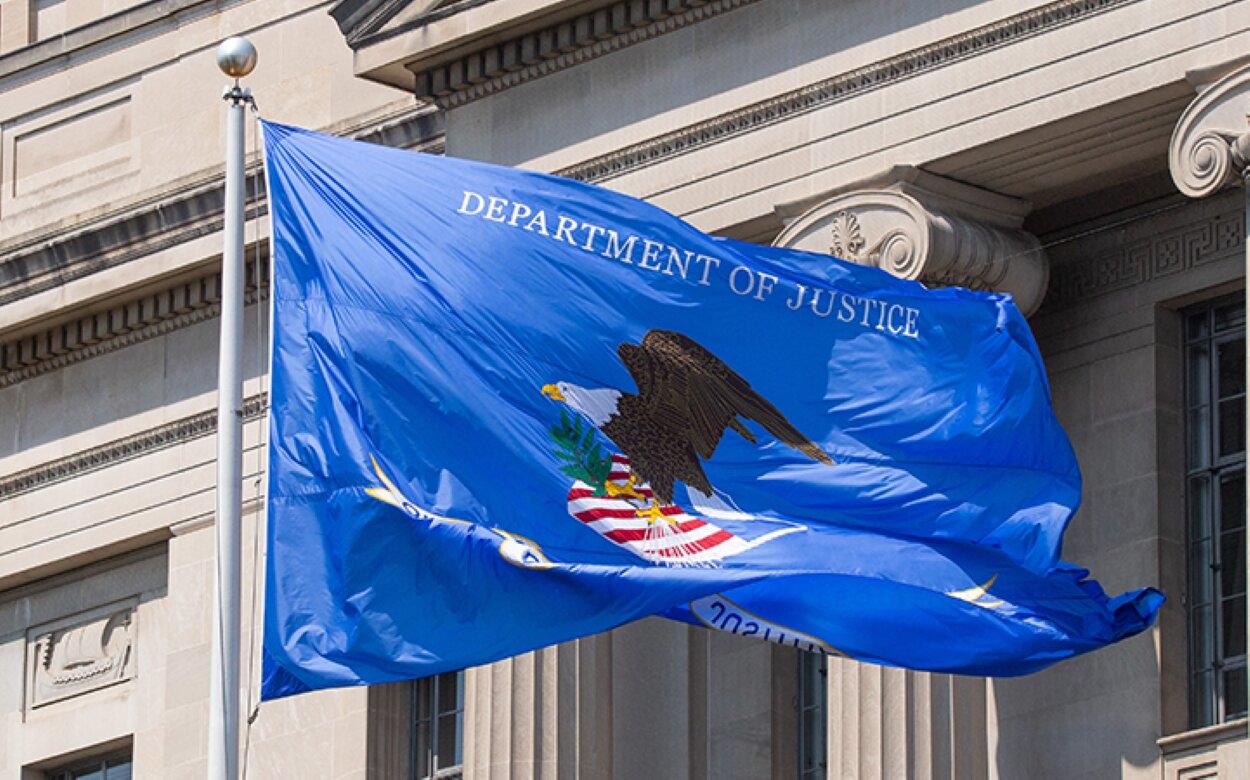
The United States Department of Justice building in Washington, DC.

New Delhi: The United States has unsealed criminal charges against five people accused of working for Russian intelligence to plan murders, terror attacks and sabotage across three continents. Among the alleged plots was an attempt to kill a Kremlin critic living within a few kilometres of the White House.
The US justice department announced the indictment at a news conference in Washington on Tuesday. The attorney general, Todd Blanche, said the case showed the reach of what officials called a Russian-directed assassination operation that had tried to recruit people inside the US to carry out killings on American soil.
The five defendants are alleged members of what prosecutors have named the “RIS Network” – a group they say has operated since at least 2024 on behalf of Russia’s intelligence services. Three are described as senior figures: Yuri Khrameev, 63, a former Russian intelligence colonel known to associates as “Colonel Yuri”; his son, Kirill Khrameev, 27, a serving officer of the Federal Security Service, or FSB; and Oemis Romagoza Durruthy, 35, a Cuban national living in Russia who allegedly arranged travel and logistics for the network’s operations.
The other two defendants, Yaidel Delgado Suarez, 35, who goes by the alias “Viking”, and Angel Eduardo Castro, 22, are both described as recruiters who worked to find people inside the United States willing to carry out surveillance and killings for payment. Suarez and Castro are Cuban and Venezuelan nationals respectively.
According to the indictment, the network’s most recent scheme unfolded this summer. Suarez is said to have recruited a US-based individual to surveil a prominent Russian dissident believed to be living in the Washington, DC, area, providing addresses and detailed instructions in exchange for between $1,000 and $1,500.
Once the surveillance was completed and photographs handed over, Suarez and Castro allegedly raised the stakes considerably. They are accused of offering the recruit $40,000 to “eliminate” the dissident, and of asking whether he knew someone else who could carry out the killing after he balked at doing it himself.
A similar plot targeting a Russian critic in Lithuania unfolded the previous year, prosecutors say. Kirill Khrameev is alleged to have first recruited a US citizen to photograph the target’s address for $200, before introducing him to his father, who then allegedly offered $25,000 for the killing – reportedly describing the target as someone “spreading dirt” about Russia and “distorting history”.
When that recruit refused, Yuri Khrameev allegedly suggested lesser acts of sabotage instead, including setting fire to a warehouse or an electrical substation. He is said to have framed the request as part of a broader campaign against countries seen as supporting Ukraine, telling the recruit he was offering “serious money for serious work”.
The indictment also links Durruthy to attacks beyond the recruitment schemes. He is accused of coordinating an attack in Prague in June 2024 and another in Lithuania that September, arranging travel and maintaining contact with those who carried them out. Prosecutors say he later obtained images of the Washington dissident’s residence that were passed on for this year’s surveillance operation.
All five defendants face a charge of conspiring to finance terrorism, which carries a maximum sentence of 20 years in prison. Khrameev, Suarez and Castro face an additional charge of conspiracy to commit murder for hire, punishable by up to ten years. All five remain at large, and the Justice Department has stressed that an indictment is merely an allegation, with guilt to be determined in court.
Officials from the FBI’s New York and Washington field offices, which led the investigation along with US homeland security investigations, described the operation as a direct challenge to American sovereignty. The assistant attorney general for national security, John Eisenberg, said the case reflected a wider pattern of foreign intelligence services attempting to operate inside the United States, while the US attorney for the southern district of New York, Jamie McDonald, called the network “brazen” in scope.
Russia’s embassy in Washington has not responded to the allegations. The Kremlin spokesman, Dmitry Peskov, told reporters that Moscow would not comment without seeing credible evidence, a position consistent with Russia’s long-standing denial of running assassination operations on foreign soil, including within the US and across Europe.
The case adds to a growing list of sabotage and intimidation operations that western security agencies have attributed to Russian intelligence since the invasion of Ukraine, ranging from arson attacks on logistics hubs to campaigns against exiled critics of the Kremlin.