





Ukraine drones hit St Petersburg oil sites as Trump’s energy ceasefire unravels
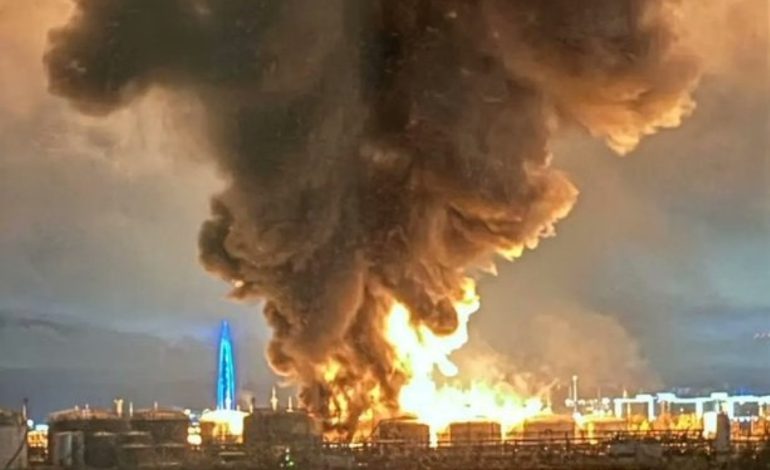
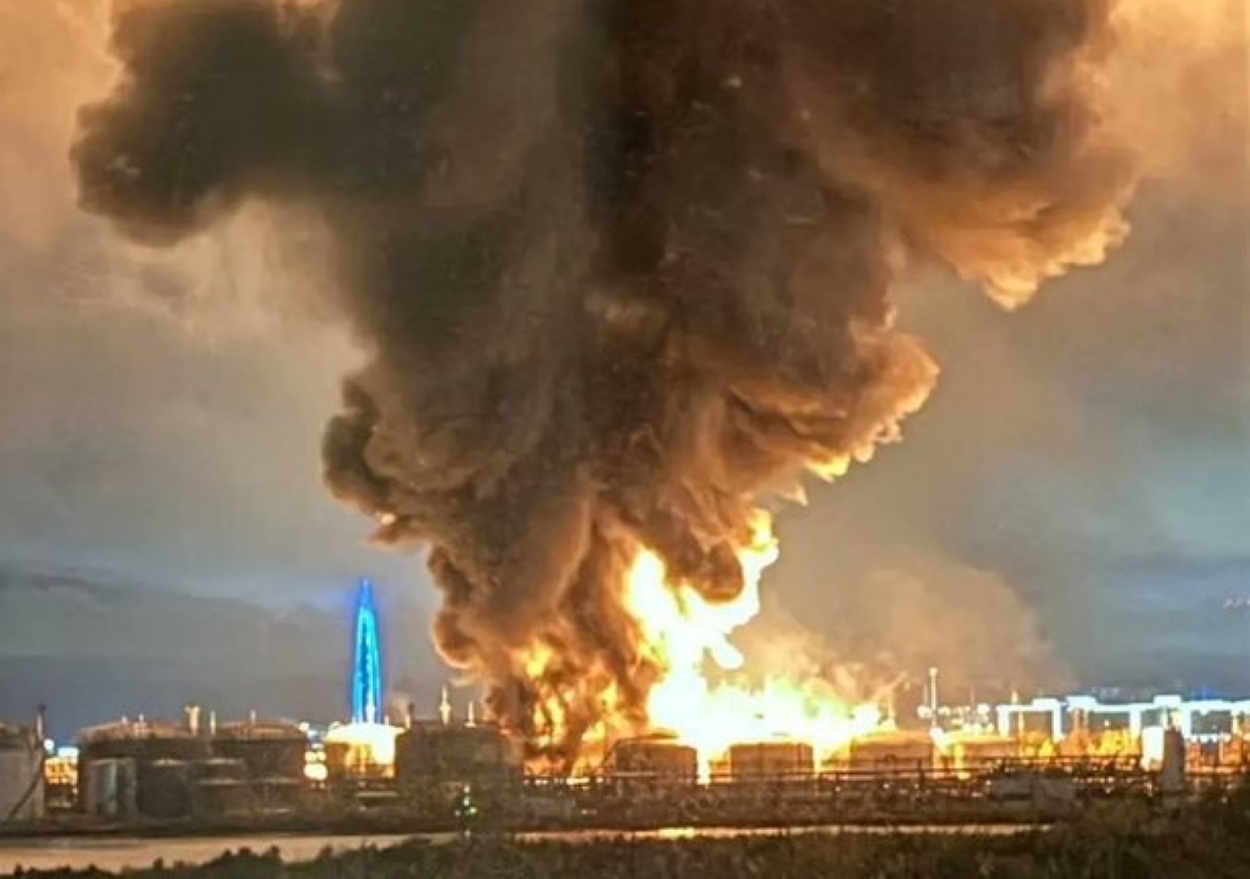
This photo shared on X by @HormuzLetter shows an oil depot in St Petersburg on fire after being hit by Ukrainian drones.

New Delhi: Ukrainian drone strikes set oil facilities ablaze in St Petersburg on Sunday as renewed attacks on energy infrastructure exposed the fragility of a ceasefire announced by the US president, Donald Trump. The bombardment came as Kyiv challenged Washington’s easing of pressure on Moscow, arguing that Russia was continuing to attack Ukrainian electricity supplies despite the proposed halt.
The city’s governor, Alexander Beglov, said fires broke out at the Petersburg Oil Terminal and the Ruchi oil depot, with initial reports putting the casualties at one person killed and five wounded. An Ozon logistics facility and a data centre belonging to the technology company VK were also targeted, according to the Associated Press report, which cited statements from the companies.
Russia’s defence ministry claimed its forces destroyed 1,015 Ukrainian drones across 15 Russian regions, Russian-occupied Crimea and the Black Sea. The figure indicated the reported scale of the assault, although the ministry’s interception claims could not be independently verified from the available reporting.
The Ukrainian president, Volodymyr Zelenskyy, said Russia had carried out 76 attacks on Ukraine’s energy, oil and gas sectors in the week since Trump announced an “energy ceasefire”. He identified substations in Vinnytsia, Zhytomyr, Khmelnytskyi and Odesa as targets of the latest strikes.
The status of that arrangement remains unclear: Reuters reported that neither Kyiv nor Moscow had confirmed the ceasefire agreement announced by Trump. This leaves a distinction between Washington’s declaration of an understanding and a mutually acknowledged agreement governing which facilities would be protected.
Ukraine resumed its attacks after a brief pause, with the renewed campaign deepening its dispute with Washington over the value of striking Russian energy assets. The Financial Times reported that the US, which had previously supplied targeting information, had repeatedly pressed Kyiv to stop attacks on Russian refineries before allowing Moscow to export diesel to ease pressure on global markets.
The disagreement sharpened after Trump announced a diesel supply deal with Russia on October 9, following a conversation with the Russian president, Vladimir Putin. Trump presented the arrangement as a way to bring down fuel costs for American consumers, particularly farmers and truckers, ahead of the US midterm elections.
The agreement marked a significant change from the US ban on Russian energy imports introduced after Moscow’s full-scale invasion of Ukraine in February 2022. It also followed legislation intended to tighten restrictions on the energy revenues supporting Russia’s war effort, creating a conflict between Washington’s sanctions policy and its immediate fuel-price priorities.
The wider supply problem extends beyond Ukraine’s strikes: the war in Iran has disrupted energy markets, while damage to Russian refineries prompted Moscow to restrict diesel exports. AP cited the International Energy Agency as estimating that Russian diesel production had fallen by about 30%, illustrating why refinery attacks have consequences beyond the battlefield.
The price benefit of the arrangement is nevertheless uncertain, with energy specialists questioning whether redirecting Russian supplies would substantially increase global availability. Michael Lynch of the Energy Policy Research Foundation told AP that existing buyers might simply have to seek replacement supplies elsewhere, limiting the reduction in prices.
The dispute also threatens the broader relationship on which Ukraine depends for military support. Zelenskyy intended to continue striking Russian energy targets because Moscow’s attacks had persisted, placing Kyiv’s military calculations increasingly at odds with Washington’s diplomatic and economic priorities.
Meanwhile, the civilian toll continued in Ukraine, where local officials reported that Russian attacks on Zaporizhzhia killed a woman and wounded at least two people, including a six-year-old girl. Residential buildings and an educational institution were among the damaged properties.



