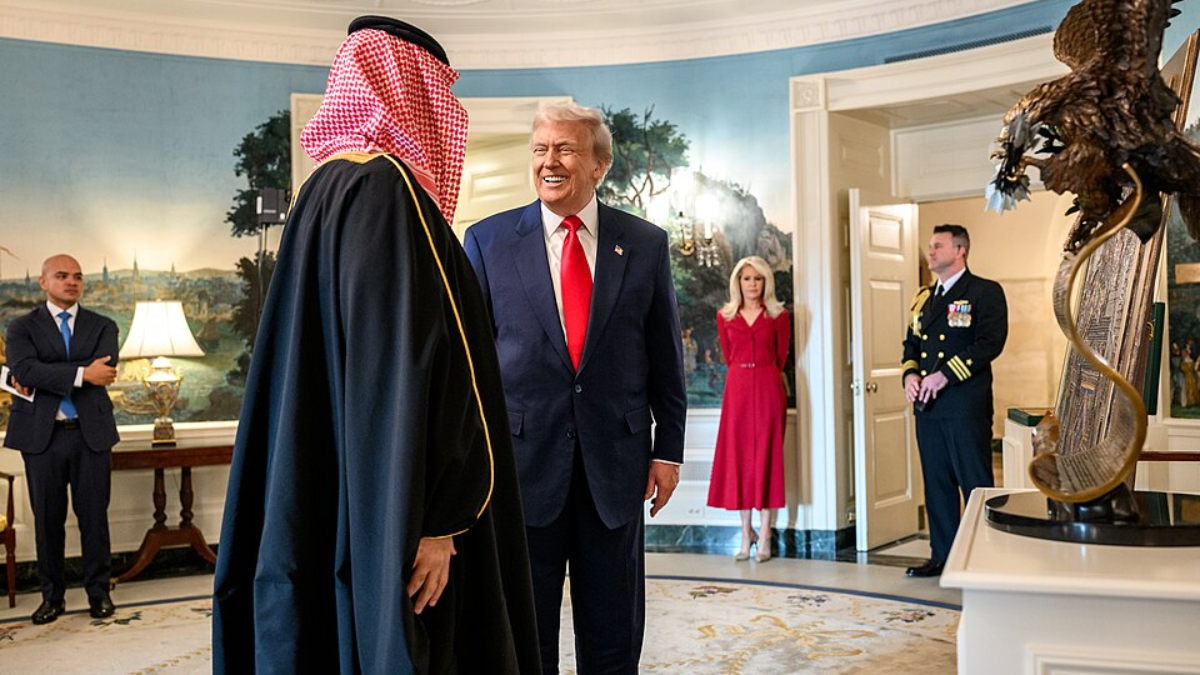




Trump’s Saudi nuclear deal faces senate challenge over enrichment rules
Trump’s Saudi nuclear deal faces senate challenge. (Image courtesy: Wikimedia)

New Delhi: Saudi Arabia’s plans to develop civilian nuclear energy have run into opposition in the US Congress, with two democratic senators warning that the terms of a proposed deal could increase the risk of nuclear weapons spreading across the Middle East. Jeff Merkley and Edward Markey introduced a resolution on Thursday to block the agreement, arguing that Saudi Arabia should not receive US nuclear technology without stronger limits and inspections.
The resolution sets up a possible Senate vote after November 29. Under US law, the agreement can take effect after a 90-day congressional review period unless Congress passes a resolution to stop it.
The disagreement centres on two conditions that the senators want Saudi Arabia to accept. They want the kingdom to give up uranium enrichment and the reprocessing of spent nuclear fuel, and to agree to broader inspections by the International Atomic Energy Agency (IAEA).
Both processes can be used for civilian nuclear energy, but they can also be relevant to the development of nuclear weapons. Merkley and Markey argue that allowing Saudi Arabia to pursue these activities without stronger safeguards could make it more difficult to ensure that its nuclear programme remains peaceful.
Merkley said the United States must ensure that civilian nuclear cooperation does not create a route to weapons development. Markey warned that the agreement could increase the risk of a nuclear arms race in the region.
The resolution, if passed by Congress, would block the proposed agreement. Introducing it, however, does not itself stop the deal.
Why are Iran and UAE part of concern?
The senators say the consequences could extend beyond Saudi Arabia. They pointed to the United Arab Emirates (UAE), which accepted restrictions on uranium enrichment and spent nuclear fuel reprocessing in its nuclear agreement with the United States.
They warned that the UAE could seek to renegotiate those commitments if Washington gives Saudi Arabia more favourable terms. The UAE’s agreement allows it to seek renegotiation if the United States grants another Middle Eastern country more favourable nuclear cooperation terms.
Iran is another concern. The senators argue that Tehran could resist future restrictions on its nuclear programme if Saudi Arabia is allowed capabilities that Iran is asked to give up.
The Saudi crown prince, Mohammed bin Salman, has previously said that Saudi Arabia would develop nuclear weapons if Iran acquired them. The senators see this position as an additional reason to demand stronger safeguards.
What could Riyadh gain from the deal?
The proposed deal would create a framework for Saudi Arabia to cooperate with the United States on civilian nuclear energy. Riyadh could gain access to American technology, equipment and expertise as it develops its nuclear sector.
A nuclear energy programme could give Saudi Arabia another source of electricity and help it broaden its energy options. The agreement could also open opportunities for US companies to supply technology and take part in future Saudi nuclear projects.
The disagreement is over whether these benefits should come with stricter conditions. The senators argue that Saudi Arabia should face safeguards comparable to those accepted by other US partners to reduce the risk of nuclear technology being used for weapons.